

Will Cold Drawn Stainless Steel Wire Rust Under Normal Working Conditions
2026-11-25
YS supplies precision Cold Drawn Stainless Steel Wire with controlled surface finishes and consistent mechanical properties for spring manufacturing, filtration hardware, and general industrial assembly. Its corrosion protection comes from a thin chromium-rich passive film, yet cold working during production alters surface microstructure, which changes how the material responds to moisture, contaminants, and everyday atmospheric exposure.
The cold drawing process boosts tensile strength and dimensional accuracy but introduces localized residual stress on the wire surface. In standard indoor or inland outdoor environments with low chloride levels, the passive layer regenerates readily and prevents visible rust. When the surface is scratched, contaminated with iron particles, or placed in coastal and chemical settings, this protective film may break down and trigger pitting or rust staining.
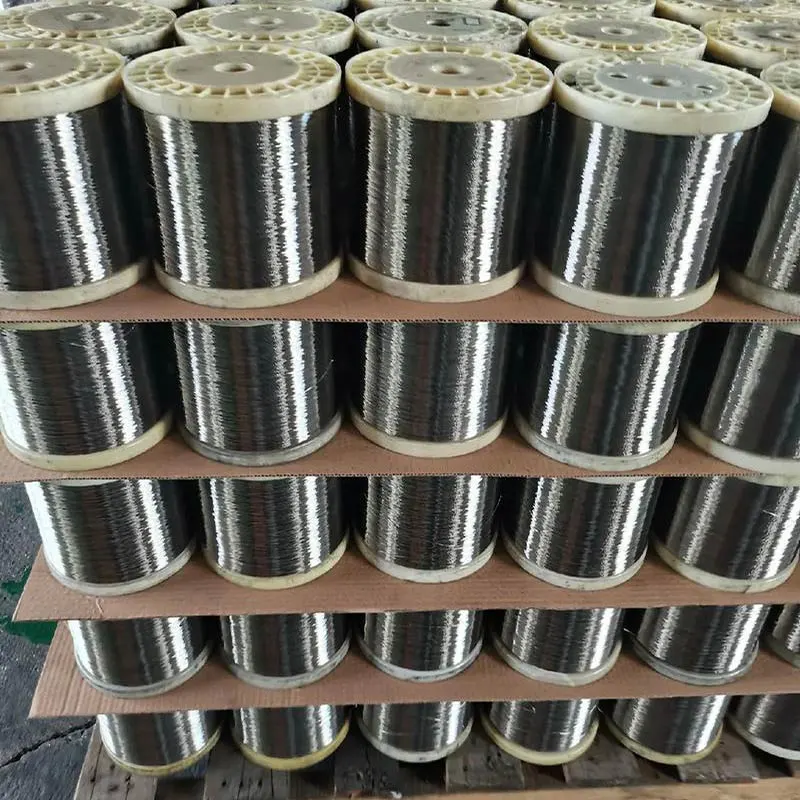
Grade Performance for Cold Drawn Stainless Steel Wire
表格
| Grade | Corrosion Performance in Normal Conditions | Limitations |
|---|---|---|
| 201 | Fair for dry indoor use | Easily stains in humid or salty air |
| 304 | Excellent for inland atmospheric environments | Prone to pitting in coastal chloride conditions |
| 316 | Superior corrosion resistance | Still vulnerable to stagnant saltwater immersion |
Practical Rust Prevention Checklist
- Select the proper alloy grade from YS according to your working environment
- Keep the surface clean of carbon steel debris, dust, and chemical residues
- Avoid deep scratches that penetrate the passive oxide layer
- Apply passivation treatment after cutting, bending, or secondary machining
Cold Drawn Stainless Steel Wire FAQ
Q: Does cold drawing itself make Cold Drawn Stainless Steel Wire more likely to rust? A: Cold drawing does not automatically make the wire rust-prone, but it creates residual surface stress. Stress combined with chloride contamination accelerates pitting corrosion. Proper post-drawing cleaning and passivation from reputable producers like YS can offset this effect and restore reliable corrosion resistance.
Q: What is the difference between rust stain and actual structural corrosion on Cold Drawn Stainless Steel Wire? A: Surface rust stains, also called tea staining, often come from transferred carbon steel particles and do not penetrate deeply into the substrate. True pitting corrosion creates permanent cavities that weaken the wire and may expand under continuous moisture exposure. Stains can usually be removed with approved stainless steel cleaners, while pitting damage cannot be repaired.
Q: Can Cold Drawn Stainless Steel Wire marked 304 be safely used in coastal outdoor projects? A: It is not the best long-term choice. While 304 grade Cold Drawn Stainless Steel Wire works well under normal inland conditions, airborne salt chlorides break down its passive film over months or years. For coastal installations, YS recommends upgrading to 316 grade for stable, long-lasting corrosion resistance.
No stainless steel variant is completely rust-proof, and the performance of your Cold Drawn Stainless Steel Wire always depends on grade selection, surface handling, and surrounding atmosphere. Matching the alloy to your operating environment and following simple maintenance rules will preserve appearance and mechanical integrity for years. If you need grade recommendations, surface treatment options, material test certificates or bulk pricing for YS Cold Drawn Stainless Steel Wire, please contact us to connect with our technical and sales team.