

Why is the EPDM layer critical for achieving a watertight seal in galvanized steel bonded washers
2026-04-09
When fastening metal roofing, cladding, or industrial panels, even a micro-gap around the fastener can lead to water ingress, corrosion, and structural damage. The Galvanized Steel EPDM Bonded Sealing Washer solves this problem by combining two materials with distinct roles. While the galvanized steel provides mechanical strength and cathodic protection, the EPDM layer is the true hero of watertight sealing. Without it, steel‑to‑steel contact would leave microscopic channels for moisture. G‑LAND has engineered this component to ensure that the EPDM rubber compresses under load, filling every irregularity on the substrate surface.
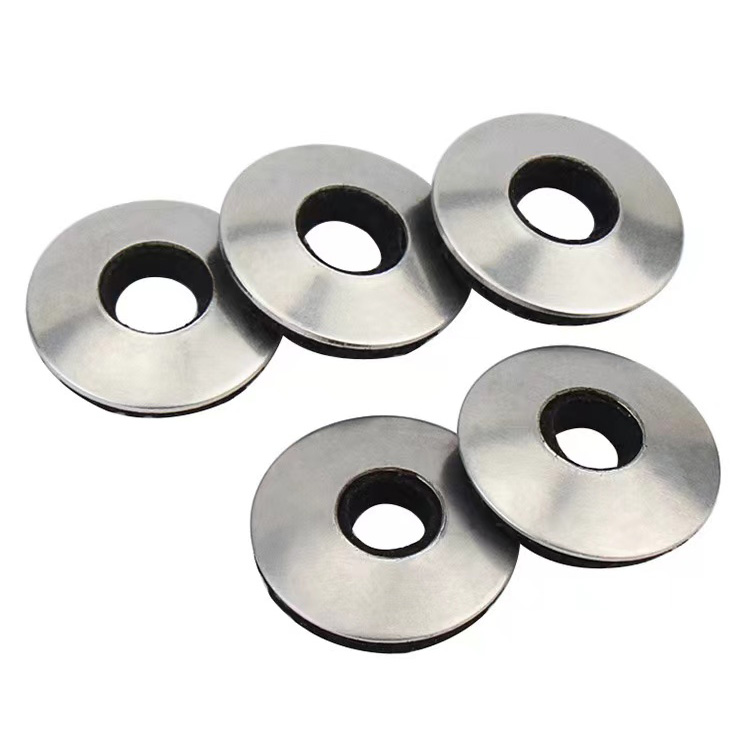
The sealing mechanism explained
The EPDM layer functions as a dynamic gasket. When torque is applied to the screw, the rubber deforms elastically, creating a continuous barrier against water, dust, and chemicals. Unlike neoprene or silicone, EPDM exhibits exceptional resistance to UV radiation, ozone, and temperature swings from -40°C to +120°C. This means the seal remains flexible and effective for decades, even on exposed roofs.
| Property | EPDM Layer Contribution | Galvanized Steel Contribution |
|---|---|---|
| Water exclusion | Complete elastic compression | Rigid load distribution |
| Weather resistance | Ozone/UV resistant | Corrosion protection via zinc |
| Temperature tolerance | -40°C to +120°C | Structural integrity |
| Longevity | >20 years | >20 years (with intact zinc) |
Why other washers fail without EPDM
Nylon or plain steel washers cannot conform to surface roughness. Over time, vibration loosens them, and water seeps through. The Galvanized Steel EPDM Bonded Sealing Washer from G‑LAND eliminates this risk because the rubber is chemically bonded to the steel, preventing rotation or extrusion during tightening.
FAQ – Galvanized Steel EPDM Bonded Sealing Washer
Question 1: Can the EPDM layer lose its sealing ability after repeated freeze-thaw cycles?
Answer: No. EPDM rubber retains elastic memory down to -40°C. Unlike cheaper rubbers that crack, G‑LAND uses high‑density EPDM with a low glass transition temperature. Laboratory tests show over 500 freeze‑thaw cycles without measurable leakage. The material returns to its original shape after each thaw, maintaining a watertight seal for the life of the assembly.
Question 2: How does the bonding between EPDM and galvanized steel affect long-term performance?
Answer: The bond prevents “creep” – the tendency of rubber to slide out from under the washer flange. G‑LAND applies a proprietary heat‑activated adhesive that chemically links the EPDM to the zinc coating. Even under 15 Nm of torque, the two layers act as one. If the bond fails, water can wick between the layers, but with proper bonding, the Galvanized Steel EPDM Bonded Sealing Washer remains monolithic for over 20 years.
Question 3: Is the EPDM layer compatible with bitumen or oil-based sealants used on metal roofs?
Answer: Yes, but with caution. EPDM has excellent resistance to polar substances like water, dilute acids, and alkalis. However, prolonged contact with petroleum oils, diesel, or bitumen solvents can cause swelling. For roofs treated with bituminous coatings, G‑LAND recommends a separate compatibility test or using a barrier primer. In standard dry or water‑exposed environments, no issue occurs.
Practical advantages in installation
| Installation Factor | Benefit of EPDM Layer |
|---|---|
| Misaligned holes | Rubber fills gaps up to 1.5 mm |
| Over‑torquing | Elastic buffer prevents steel galling |
| Ribbed or profiled panels | Conforms to valleys and crests |
Conclusion and contact
The EPDM layer is not an accessory – it is the functional core of any Galvanized Steel EPDM Bonded Sealing Washer. Without it, water will always find a path. With G‑LAND bonded washers, engineers achieve verified IP68‑equivalent sealing.
Contact us today for technical datasheets, free samples, or bulk pricing. Our engineering team provides installation guidance and custom sizes for your project requirements. Reach G‑LAND through the website contact form or call your regional representative.