

Why Is the D-type Round Condenser Tube Becoming the Go-To Choice for Modern Heat Exchange Systems?
2026-01-15
When I first started looking closely at condenser tube performance in real industrial environments, I noticed a recurring theme: buyers were no longer satisfied with “good enough.” Efficiency losses, vibration issues, and inconsistent heat transfer kept coming up in conversations. That was also when Sinupower began to appear more naturally in my field of view, not as a loud brand name, but as a manufacturer quietly solving practical problems. Their approach to the D-type Round Condenser Tube reflects what many engineers and procurement teams are actually asking for today.
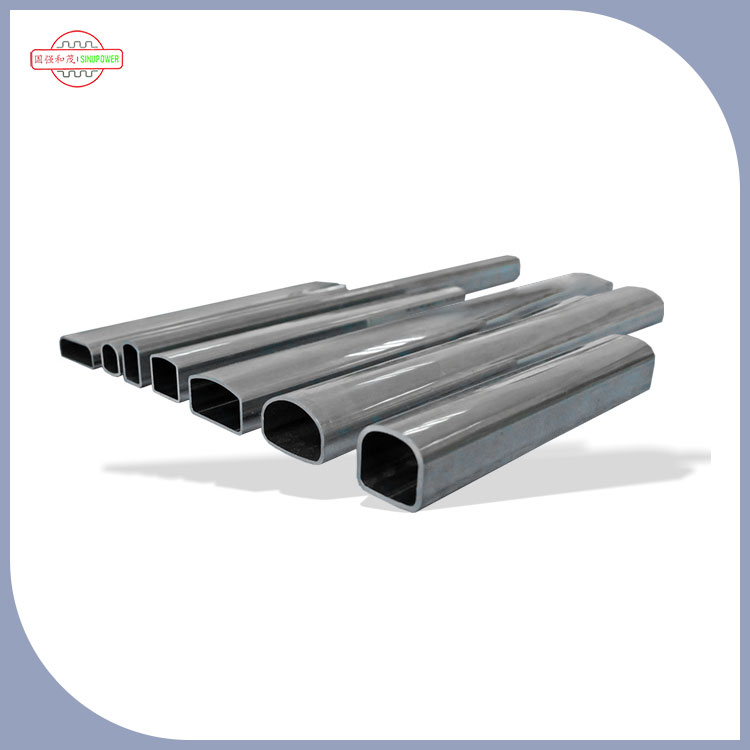
What Real-World Problems Does a D-type Round Condenser Tube Actually Solve?
From my experience, traditional round tubes often struggle in applications where fluid stability and heat transfer efficiency are equally critical. The D-type Round Condenser Tube introduces a flat side that changes how fluids behave inside the system. This is not a cosmetic difference; it directly affects turbulence, surface contact, and long-term operational stability.
- Reduced flow-induced vibration in high-speed systems
- More predictable heat transfer performance
- Better resistance to mechanical fatigue over time
- Improved compatibility with compact condenser layouts
How Does Tube Geometry Influence Heat Transfer Efficiency?
I used to underestimate how much tube shape mattered until I compared performance data across different condenser designs. With a D-type Round Condenser Tube, the flat surface increases effective contact with adjacent components, while the curved section maintains smooth flow characteristics. This balance often leads to higher thermal efficiency without increasing pumping energy.
| Design Aspect | Conventional Round Tube | D-type Round Condenser Tube |
|---|---|---|
| Flow Stability | Moderate | High, especially at variable loads |
| Heat Transfer Area | Standard | Optimized through flat-side contact |
| Vibration Control | Limited | Significantly improved |
| System Lifespan | Dependent on operating conditions | More stable under long-term operation |
Why Do Engineers Prefer This Tube Design in Condensers?
In discussions with system designers, one concern comes up repeatedly: reliability under continuous operation. The D-type Round Condenser Tube offers a structural advantage that reduces micro-movements inside tube bundles. That may sound minor, but over thousands of operating hours, it can mean fewer shutdowns and less maintenance.
- Consistent alignment within tube sheets
- Lower risk of wear caused by resonance
- Adaptability to different condenser configurations
How Does Material Quality Affect Long-Term Performance?
Geometry alone is never enough. What I appreciate in a well-made D-type Round Condenser Tube is the attention to material selection and forming accuracy. Poor tolerances can cancel out the benefits of the design. This is where manufacturers with controlled production processes, like Sinupower, tend to stand out through consistency rather than claims.
Uniform wall thickness, clean internal surfaces, and stable dimensional control all contribute to predictable thermal behavior. Over time, this translates into energy savings that are measurable, not theoretical.
Is a D-type Round Condenser Tube Worth Considering for Your Next Project?
If your current condenser system struggles with vibration, uneven heat transfer, or premature tube wear, then exploring a D-type Round Condenser Tube is a logical next step. I have seen how small structural changes can unlock noticeable improvements, especially in demanding industrial and power-generation environments.
Choosing the right tube is not about chasing trends; it is about matching design intent with operational reality. That is exactly why more buyers are re-evaluating their options and asking better questions.
If you are planning a new condenser project or upgrading an existing system, now is a good time to take a closer look. Reach out to discuss specifications, applications, or customization options, and contact us to explore whether this solution fits your needs. A well-informed inquiry today can prevent costly adjustments tomorrow.
