

Why Is the D-type Round Condenser Tube Becoming a Game Changer in Modern Heat Exchange Systems?
2026-02-11
When I first began evaluating condenser performance upgrades for industrial clients, I noticed how frequently traditional round tubes limited heat transfer efficiency and structural reliability. Over time, Sinupower Heat Transfer Tubes Changshu Ltd. gradually introduced a more engineered solution into real-world condenser applications, and that is where the D-type Round Condenser Tube started to stand out. Rather than being just another variation of tubing geometry, the D-type Round Condenser Tube represents a deliberate design shift aimed at solving very specific pain points faced by engineers, plant managers, and OEM manufacturers.
In this article, I want to share from a practical perspective why the D-type Round Condenser Tube is increasingly selected in power generation, HVAC systems, refrigeration units, and petrochemical condensers, and how it directly addresses efficiency, durability, and cost concerns.
What Problems Do Conventional Condenser Tubes Struggle to Solve?
Before discussing advantages, I believe it is important to acknowledge the real operational challenges that many facilities face:
- Uneven heat distribution across tube surfaces
- Limited turbulence on the fluid side leading to lower heat transfer coefficients
- Higher fouling accumulation in stagnant zones
- Structural deformation under high pressure conditions
- Space constraints in compact heat exchanger designs
Traditional round tubes perform adequately, but in high-demand systems, incremental performance gains translate into substantial energy savings. That is exactly where the D-type Round Condenser Tube provides measurable improvements.
How Does the D-type Geometry Improve Heat Transfer Performance?
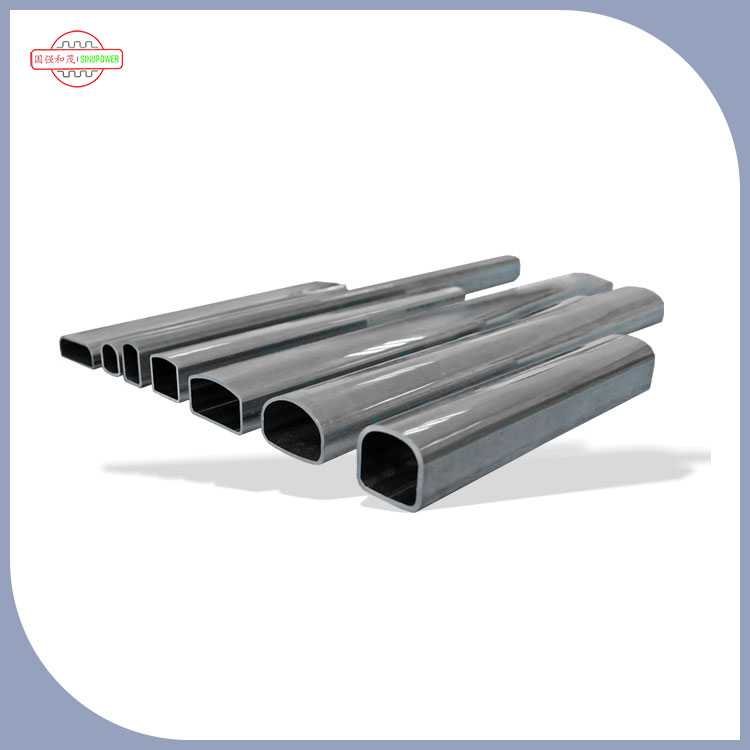
The defining feature of a D-type Round Condenser Tube lies in its partially flattened outer profile. This modified geometry increases effective contact surface while simultaneously influencing fluid flow behavior.
From my evaluation of installation projects, I have observed three core performance enhancements:
- Enhanced Surface Contact – The flattened section increases the heat exchange interface area without dramatically enlarging the overall footprint.
- Improved Turbulence – The geometric variation disrupts laminar flow patterns, which enhances convective heat transfer efficiency.
- Better Packing Density – Tubes can be arranged more compactly, optimizing heat exchanger volume utilization.
In high-capacity condensers, even a modest increase in heat transfer coefficient significantly reduces energy consumption. The D-type Round Condenser Tube contributes directly to this efficiency gain.
Why Does Structural Stability Matter in High-Pressure Condenser Applications?
Mechanical strength is often underestimated during tube selection. However, condensers in power plants and industrial refrigeration systems operate under continuous thermal cycling and pressure stress.
Based on performance comparisons, the D-type Round Condenser Tube demonstrates enhanced rigidity due to its modified cross-section. The flattened side adds structural reinforcement, reducing vibration and deformation risks.
| Performance Factor | Conventional Round Tube | D-type Round Condenser Tube |
|---|---|---|
| Surface Area Utilization | Standard | Increased effective exchange area |
| Flow Turbulence | Moderate | Enhanced due to geometry variation |
| Structural Rigidity | Uniform but flexible | Improved stability under pressure |
| Packing Efficiency | Limited by circular spacing | Optimized for compact layouts |
| Energy Efficiency Potential | Baseline | Higher system-level performance |
For engineers focused on long-term operational reliability, this structural advantage reduces maintenance frequency and extends equipment lifespan.
How Does the D-type Round Condenser Tube Reduce Fouling and Maintenance Costs?
Fouling remains one of the most persistent issues in condenser systems. Deposits decrease thermal conductivity and require costly shutdowns for cleaning.
In installations where the D-type Round Condenser Tube is used, the improved fluid dynamics minimize stagnation zones. Reduced sediment accumulation translates into:
- Longer operational cycles between cleaning
- Lower pressure drop variations
- More consistent thermal performance over time
When maintenance intervals extend, total lifecycle costs decline. For plant operators, that financial impact often justifies the initial specification upgrade.
Is the D-type Round Condenser Tube Suitable for Multiple Industries?
From my experience working with equipment manufacturers, versatility is critical. A tubing solution must adapt to different material grades and system requirements.
The D-type Round Condenser Tube can be produced in various materials including carbon steel, stainless steel, copper alloys, and other corrosion-resistant alloys. This flexibility allows integration across:
- Power plant surface condensers
- Industrial refrigeration systems
- HVAC chillers
- Petrochemical heat exchangers
- Marine condenser applications
Material compatibility combined with geometric optimization makes the D-type Round Condenser Tube an adaptable choice rather than a niche product.
What Makes Manufacturing Precision So Important in D-type Tube Production?
The performance of a D-type Round Condenser Tube depends heavily on dimensional accuracy and surface quality. Minor deviations can affect tube expansion, sealing integrity, and long-term reliability.
In advanced production facilities, strict quality control measures ensure:
- Consistent wall thickness distribution
- Precise flattening ratios
- Smooth internal and external surfaces
- Accurate tolerance control for heat exchanger assembly
When manufacturing precision aligns with engineering design, system-level efficiency becomes predictable and repeatable.
Why Are More Engineers Specifying D-type Round Condenser Tubes for New Projects?
From design consultations I have participated in, specification decisions are increasingly data-driven. Engineers evaluate performance per square meter, lifecycle cost, and energy efficiency benchmarks.
The D-type Round Condenser Tube consistently demonstrates advantages in:
- Thermal performance optimization
- Reduced footprint requirements
- Operational stability under fluctuating loads
- Lower maintenance downtime
- Improved long-term return on investment
Rather than focusing solely on initial material cost, project planners now prioritize system efficiency and durability. That shift in evaluation criteria strongly favors the D-type Round Condenser Tube.
Are You Ready to Upgrade Your Condenser Performance?
If you are currently evaluating condenser tube solutions or planning a system upgrade, I encourage you to consider how geometry influences efficiency beyond basic material selection. The D-type Round Condenser Tube is not simply a structural variation; it is an engineered response to real operational challenges.
Whether you need technical specifications, custom sizing, or engineering consultation, now is the time to take the next step. Contact us today to discuss your project requirements and discover how the D-type Round Condenser Tube can enhance your system performance. We welcome your inquiry and look forward to supporting your condenser optimization goals. Please contact us for detailed information, quotations, and tailored solutions.