

Why Is Silver Bonding Wire Transforming High-Reliability Microelectronic Packaging?
2025-11-28
Silver bonding wire has become a critical interconnect material in high-frequency, high-density, and high-reliability microelectronic assemblies. Known for its exceptional electrical conductivity, strong mechanical stability, and cost-effective performance, it is widely used in semiconductor packaging, LED devices, automotive electronics, power modules, RF components, and advanced sensor systems.
What Defines High-Performance Silver Bonding Wire?
Professionals often evaluate bonding wire quality through measurable parameters. Below is a consolidated technical specification table demonstrating the typical performance criteria associated with advanced silver bonding wires used in semiconductor applications:
| Parameter | Typical Specification |
|---|---|
| Material Purity | ≥ 99.99% Ag |
| Wire Diameter Range | 15 μm – 50 μm |
| Electrical Conductivity | ~ 63 MS/m (approx. +6% vs. Au wire) |
| Tensile Strength | 160 – 230 MPa depending on alloy type |
| Elongation | 1% – 8% for controlled loop stability |
| Bondability Temperature | Stable performance at low to moderate bonding temperatures |
| Oxidation Resistance | Enhanced through micro-alloying or proprietary surface treatments |
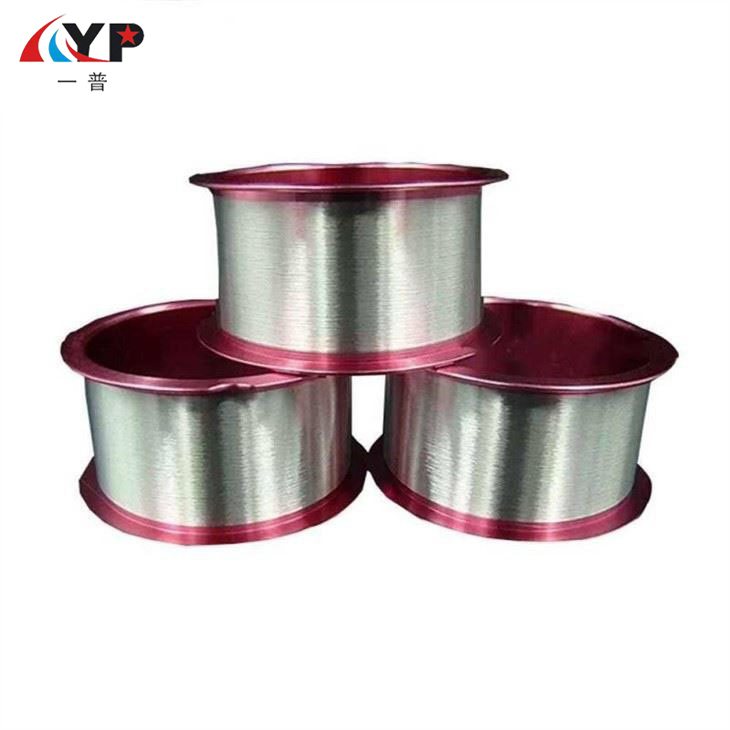
| Packaging Forms | Spools and precision reels for automatic wire bonding equipment |
| Common Applications | Semiconductor ICs, LEDs, MEMS, power devices, RF modules, sensors |
These parameters allow process engineers and procurement specialists to evaluate stability, cost-efficiency, compatibility with existing bonding systems, and long-term reliability in mission-critical assemblies.
Why Are Manufacturers Transitioning to Silver Bonding Wire?
Electrical Superiority
Silver possesses the highest electrical conductivity of all metals. In advanced semiconductor packaging where signal speed, reduced impedance, and minimized power loss are essential, this performance advantage translates into:
-
Improved high-frequency transmission
-
Reduced electrical resistance path
-
Enhanced power efficiency
-
Lower thermal generation under load
As digital devices operate at increasingly higher frequencies, choosing a highly conductive bonding material is a key advantage in circuit design.
Cost Advantage Over Gold
The electronics industry has been shifting away from gold due to its volatile pricing and high procurement cost. Silver bonding wire provides a strong cost-performance equilibrium by delivering:
-
Lower material expenses
-
Comparable or superior electrical capability
-
Suitable mechanical reliability with proper alloying
This makes it especially attractive for mass-production environments such as LEDs, consumer electronics, automotive modules, and IoT manufacturing.
Enhanced Bond Strength and Loop Stability
Through modern micro-alloying engineering, silver bonding wire demonstrates excellent mechanical resilience:
-
Stable ball bonding and stitch bonding performance
-
High tensile strength to resist mechanical vibrations
-
Reliable loop shape stability
-
Good resistance against dynamic stress
As devices become smaller and more powerful, maintaining loop integrity is crucial for preventing short circuits, fatigue failures, or wire sweep during molding processes.
Increasing Adoption in High-Reliability Sectors
Industries such as automotive electronics, aerospace, medical components, and 5G RF systems demand longer component lifespans and resistance to extreme operating environments. Silver bonding wire meets these requirements through:
-
Improved thermal dissipation capability
-
Strong conductivity in temperature-cycling conditions
-
Consistent bonding at high-frequency switching
-
Optimized lifespan under harsh conditions
With the global push toward electrification, autonomous systems, and high-density packaging, the use of silver bonding wire is projected to grow steadily.
How Is Silver Bonding Wire Used to Improve Device Performance?
In Semiconductor Integrated Circuits
Silver wires are used for:
-
High-frequency ICs
-
Logic chips
-
Controllers
-
Power management modules
The increased conductivity reduces resistance in micro interconnects and enhances chip thermal stability.
In LED Manufacturing
Silver wire is favored for LED packaging because it:
-
Enhances brightness consistency
-
Reduces Joule heating
-
Provides stronger optical reliability
LED manufacturers benefit from longer component lifespan and reduced failure rates.
In RF and Microwave Components
Due to its high conductivity, silver bonding wire is well suited for:
-
RF amplifiers
-
Radar systems
-
Communication modules
-
Microwave filters
The reduced signal attenuation improves overall system performance.
In High-Power Devices and Automotive Modules
Silver wire supports:
-
IGBT modules
-
MOSFETs
-
On-board chargers
-
Battery management systems
The improved thermal conductivity is critical for stable performance under continuous high load.
What Are the Most Common Questions About Silver Bonding Wire?
Q1: Why is silver bonding wire preferred in LED applications?
A: Silver bonding wire provides very high electrical conductivity, allowing LEDs to operate with lower heat generation and higher energy efficiency. Its reflective surface enhances optical output, while its mechanical strength maintains bond integrity under thermal cycling, which is common in LED operations. As a result, LED brightness remains stable, efficiency improves, and long-term reliability is significantly increased.
Q2: How does silver bonding wire compare to copper bonding wire?
A: Copper is commonly used for cost-saving purposes, but it requires strict process controls and higher bonding temperatures. Silver bonding wire offers easier processing, lower oxidation risk, and better conductivity. It is more suitable for high-frequency circuits and sensitive devices that cannot tolerate high heat during bonding. Additionally, silver provides better loop stability and is more compatible with devices requiring high reliability.
Future Trends: How Will Silver Bonding Wire Evolve in the Next Decade?
Growth Driven by High-Density Packaging
As the industry pushes toward miniaturization, advanced packaging architectures—such as SiP, Fan-Out, and 3D stacking—require bonding wires with consistent performance at extremely small diameters. Silver wire’s superior conductivity makes it a strong candidate for these emerging platforms.
Increased Use in Electric Vehicles and Power Systems
EV power modules demand materials capable of managing high currents, rapid thermal changes, and long-term vibration exposure. Silver bonding wire offers:
-
Better current-carrying capability
-
More efficient heat dissipation
-
Enhanced fatigue resistance
These advantages align with the projected growth of electrified mobility systems.
Micro-Alloy Innovations
Manufacturers are developing new silver-based alloys to further improve:
-
Oxidation resistance
-
Ball bonding quality
-
Stitch reliability
-
Stress-crack resistance
-
Environmental durability
Advancements in coating technologies and fine-grain metallurgy are expected to further expand silver bonding wire applicability.
Sustainability and Material Optimization
Silver is more cost-efficient than gold and can be produced with lower environmental impact for specific applications. Industry-wide initiatives toward greener manufacturing will support wider adoption of silver-based materials.
Why Silver Bonding Wire Remains a Leading Choice
Silver bonding wire stands out as a high-performance, cost-efficient, and reliable interconnect solution across multiple industries. Its excellent conductivity, mechanical strength, and compatibility with modern packaging technologies make it ideal for next-generation semiconductor, LED, automotive, RF, and power applications.
Manufacturers seeking stable quality and consistent bonding performance should consider professional suppliers with expertise in precision wire production and microelectronic material engineering. Among these, Yipu provides advanced silver bonding wire solutions built with strict quality control, optimized micro-alloy development, and application-driven engineering support.
For customized specifications, technical guidance, or project consultation, contact us to discuss how silver bonding wire solutions can enhance the reliability and efficiency of your next application.
