

Why Is Open Die Forging Still the Go-To Choice for Large and Critical Metal Components?
2026-02-06
When I first started working closely with heavy industry buyers, I noticed a recurring concern they all shared: how to balance mechanical strength, dimensional flexibility, and long-term reliability without driving costs out of control. It was through this process that Yidu Tongxin Precision Forging Co.,Ltd. gradually came into my field of vision, not as a brand that shouts its capabilities, but as one that proves them through results. In many of these discussions, Open Die Forging kept coming up as a solution that quietly solves problems others struggle with.
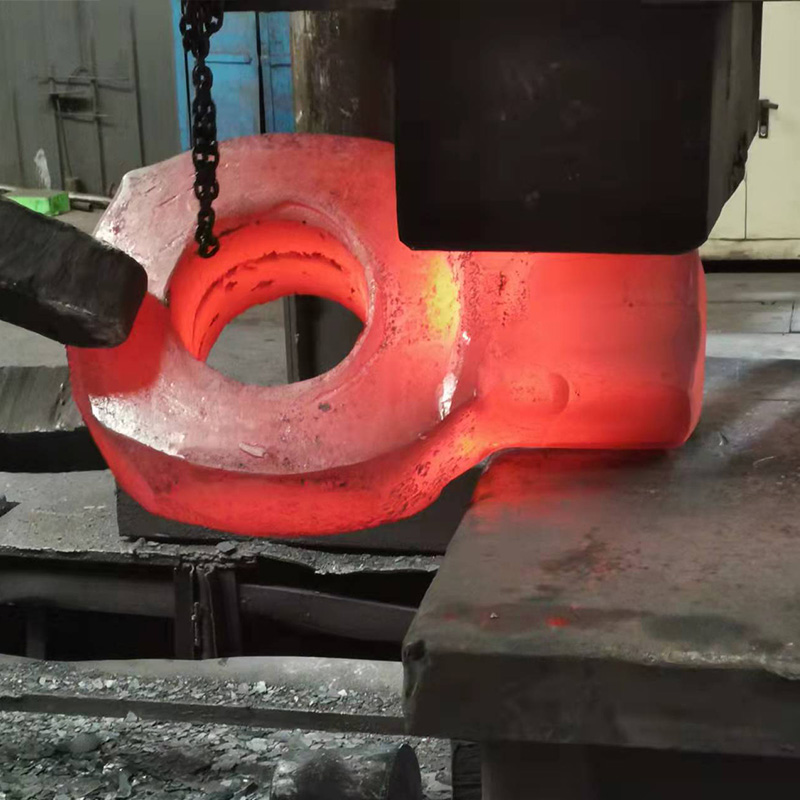
What Makes Open Die Forging Different from Other Forging Methods?
Many customers ask me why they should consider Open Die Forging instead of closed die forging or casting. The difference lies less in theory and more in how the material behaves under stress and over time.
- I see fewer internal defects because the metal structure is continuously worked and refined.
- I notice greater freedom in size and shape, especially for large or non-standard components.
- I experience better control over grain flow, which directly affects fatigue resistance.
From my experience, Open Die Forging is not about mass-producing identical parts. It is about creating components that are built to survive demanding environments.
How Does Open Die Forging Improve Mechanical Performance in Real Applications?
One pain point I hear frequently is premature failure in high-load applications. This is where Open Die Forging shows its real value. By allowing the metal to deform gradually under controlled force, the internal grain structure becomes more uniform and aligned with the direction of stress.
| Performance Aspect | Customer Concern | How Open Die Forging Helps |
|---|---|---|
| Grain Structure | Cracking under load | Continuous grain flow reduces weak points |
| Internal Integrity | Hidden voids or porosity | Repeated deformation closes internal gaps |
| Service Life | Frequent replacement | Improved fatigue resistance extends lifespan |
When performance matters more than appearance, Open Die Forging consistently proves its worth.
Why Do Engineers Prefer Open Die Forging for Large and Custom Parts?
I’ve worked with engineers who struggle to source oversized shafts, rings, or blocks without compromising material quality. What they appreciate about Open Die Forging is its adaptability.
- There is no strict limitation on component size.
- Design changes can be accommodated without expensive new tooling.
- Low-volume or one-off parts remain economically viable.
This flexibility is one of the reasons why Open Die Forging remains common in industries like energy, mining, heavy machinery, and marine equipment.
How Does Open Die Forging Help Control Costs Without Sacrificing Quality?
Cost control is rarely about choosing the cheapest option upfront. In my experience, it’s about avoiding downstream losses. With Open Die Forging, customers often save money in ways that are not immediately obvious.
| Cost Factor | Typical Risk | Open Die Forging Advantage |
|---|---|---|
| Tooling Investment | High initial mold costs | Minimal tooling requirements |
| Material Waste | Excess scrap | Better material utilization |
| Failure-Related Loss | Downtime and repairs | Higher reliability reduces long-term expenses |
From a long-term perspective, Open Die Forging often turns out to be the more economical decision.
What Should Buyers Look for When Choosing an Open Die Forging Partner?
Not all forging suppliers deliver the same results. When I evaluate a partner for Open Die Forging, I focus on practical capabilities rather than marketing claims.
- Process control that ensures consistent material properties
- Experience with diverse alloys and application requirements
- Clear communication from drawing review to final inspection
This is where companies with hands-on expertise, like Yidu Tongxin Precision Forging Co.,Ltd., tend to stand out through steady execution rather than promises.
Is Open Die Forging the Right Solution for Your Next Project?
If your project involves large dimensions, high loads, or demanding service conditions, Open Die Forging is worth serious consideration. I’ve seen it solve challenges that other processes simply couldn’t handle without compromise.
If you’re evaluating material options or need guidance on whether Open Die Forging fits your application, I encourage you to take the next step. Contact us today to discuss your requirements, request a quotation, or explore how the right forging approach can support your project goals. Your inquiry is the first step toward a more reliable and cost-effective solution.