

Why Is a Stainless Steel Industrial Welded Pipe Used in Petrochemicals?
2026-10-22
A piping material engineer sits in a selection review for a new aromatics complex. The line list specifies 316L stainless steel for the process lines. The procurement team proposes Stainless Steel Welded Pipe instead of seamless pipe for sizes above 8 inches. The engineering manager asks whether the welded pipe is acceptable for the corrosive service. The engineer reviews the medium, the temperature, the pressure, and the weld quality requirements. The engineer approves the welded pipe for the larger sizes but keeps seamless for the high-pressure small-bore lines. The decision is not based on a preference for one product over the other. It is based on the specific requirements of each line. This guide explains why welded stainless steel pipe is widely used in petrochemical applications.
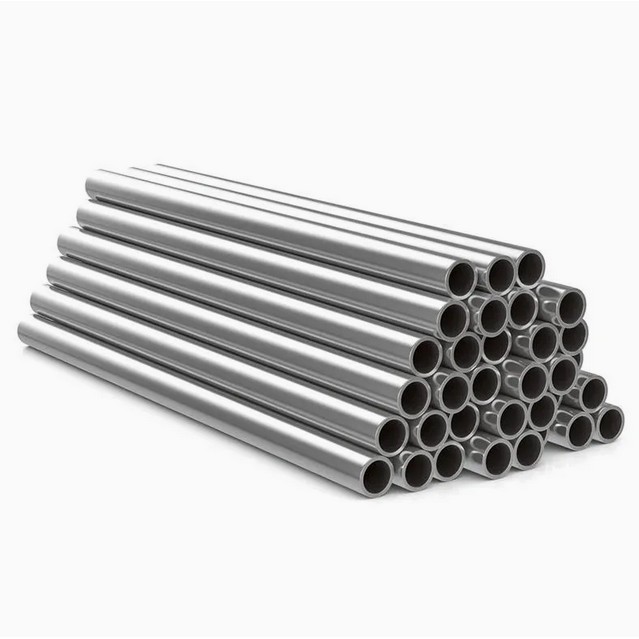
1. How Does Corrosion Resistance Compare Between Welded and Seamless Pipe?
The corrosion resistance of a Stainless Steel Welded Pipe depends on the alloy composition and the condition of the weld. The weld is the critical area. If the weld is properly made and the heat-affected zone is correctly treated, the corrosion resistance of the welded pipe is equivalent to the seamless pipe. The key is the welding process and the post-weld treatment. The table below shows the corrosion performance of welded pipe with different weld conditions.
| Weld condition | Corrosion resistance | Typical application | Limitation |
| As-welded (no treatment) | Reduced in HAZ | Non-critical water lines | Susceptible to intergranular corrosion |
| Solution annealed | Equivalent to base metal | Process lines with corrosive media | Requires heat treatment furnace |
| Pickled and passivated | Good (HAZ restored) | General petrochemical service | Not suitable for severe reducing acids |
| Cold-worked and annealed | Excellent | High-purity and pharmaceutical | Higher cost |
In our factory, we manufacture Stainless Steel Welded Pipe units with online solution annealing and pickling. The annealing process restores the corrosion resistance of the weld and the heat-affected zone. We also perform a corrosion test on each batch according to ASTM A262 Practice E. Zhejiang HengDi Stainless Steel Co., Ltd. has been manufacturing welded stainless steel pipe for over 12 years.
2. How Is Weld Integrity Verified for Petrochemical Service?
The weld integrity of a Stainless Steel Welded Pipe is verified through a combination of nondestructive testing and destructive testing. The nondestructive tests include eddy current testing, ultrasonic testing, and hydrostatic testing. The destructive tests include tensile testing, bend testing, and flattening testing. The table below shows the test methods and their acceptance criteria for petrochemical service.
| Test method | What it detects | Acceptance criteria | Standard |
| Eddy current test | Weld defects, cracks | No signal above threshold | ASTM E426 |
| Ultrasonic test | Internal weld defects | No defect larger than 1 mm | ASTM E213 |
| Hydrostatic test | Leak tightness, strength | No leakage at 1.5x design pressure | ASTM A1016 |
| Tensile test | Weld strength | ≥ 95% of base metal | ASTM A370 |
| Flattening test | Ductility of weld | No cracking after flattening | ASTM A370 |
Material engineer's note: The tensile test is the most important verification for welded pipe. The weld must achieve at least 95 percent of the base metal tensile strength. If the weld strength is lower, the pipe is not acceptable for pressure service. In our factory, we perform the tensile test on a sample from every production lot. We also perform the flattening test to verify that the weld can deform without cracking. The test results are included in the mill certificate for each batch.
3. What Are the Cost and Delivery Advantages of Welded Pipe?
The cost and delivery advantages of Stainless Steel Welded Pipe are significant for large projects. The welded pipe is produced from strip or coil, which is less expensive than the billet used for seamless pipe. The production process is faster, and the lead time is shorter. The table below compares the cost and delivery for welded and seamless pipe of the same size and alloy.
| Parameter | Welded pipe | Seamless pipe |
| Relative material cost (per ton) | 100 | 130 – 160 |
| Typical lead time | 4 – 6 weeks | 10 – 16 weeks |
| Available sizes | 1/2" to 48" | 1/2" to 24" |
| Wall thickness range | 0.5 – 25 mm | 1.5 – 30 mm |
| Length flexibility | 6 – 12 m (custom lengths available) | 6 – 12 m (standard) |
In our factory, we produce Stainless Steel Welded Pipe in sizes from 1/2 inch to 48 inches, with wall thickness from 0.5 mm to 25 mm. We can produce custom lengths and custom alloys on short notice. Zhejiang HengDi Stainless Steel Co., Ltd. supplies welded pipe to petrochemical projects in Asia, Europe, and the Middle East.
4. When Is Seamless Pipe Still Preferred?
Seamless pipe is still preferred in three situations. The first is high-pressure service above 100 bar, where the absence of a weld eliminates any risk of weld failure. The second is severe cyclic loading, where the weld may be susceptible to fatigue. The third is small-bore lines below 1 inch, where the cost of welding and testing the weld is not justified. The table below shows the recommended pipe type for different service conditions.
| Service condition | Recommended pipe type | Reason |
| Low pressure (< 20 bar), large size (> 8") | Welded | Cost and delivery advantage |
| Medium pressure (20 – 100 bar) | Welded (with full NDT) | Weld integrity verified by testing |
| High pressure (> 100 bar) | Seamless | No weld risk |
| Severe cyclic loading | Seamless | Fatigue resistance |
| Small bore (< 1") | Seamless | Welding and testing cost |
| Highly corrosive media | Welded (solution annealed) | Corrosion resistance restored |
In our factory, we supply both welded and seamless pipe. We work with the project's piping material engineer to select the right type for each line. HengDi provides material selection guidance and full test documentation for all of our products.
Frequently Asked Questions About Stainless Steel Welded Pipe in Petrochemicals
Summary for Piping Material Engineers
Stainless Steel Welded Pipe is widely used in petrochemicals because it offers corrosion resistance equivalent to seamless pipe when the weld is properly made and treated. The weld integrity is verified through NDT and destructive testing. The cost and delivery advantages are significant for large projects. Seamless pipe remains preferred for high-pressure, severe cyclic, and small-bore applications. The selection should be based on the service conditions and the project requirements. Zhejiang HengDi Stainless Steel Co., Ltd. has been manufacturing welded stainless steel pipe for over 12 years and provides full material and test documentation for petrochemical projects.
Zhejiang HengDi Stainless Steel Co., Ltd. manufactures Stainless Steel Welded Pipe in 304, 316L, 321, and duplex alloys, in sizes from 1/2 inch to 48 inches. We provide solution annealing, pickling, NDT, and full mill certificates for all of our products.