
Why Is a Modern Simple Design Aluminum Carved Screen Divider Ideal for Contemporary Spaces?
2026-11-20
Modern architecture increasingly emphasizes clean lines, open layouts, natural lighting, and functional decorative elements. A modern simple design aluminum carved screen divider offers an effective way to separate interior or exterior spaces while maintaining a sense of openness. Combining the structural advantages of aluminum with decorative carved patterns, this architectural feature can provide privacy, visual interest, and a distinctive design identity.
However, selecting the right aluminum screen divider involves more than choosing an attractive pattern. Material quality, panel thickness, surface finishing, opening design, installation methods, environmental conditions, and customization requirements all influence the final result. This guide explores the main advantages, design possibilities, applications, manufacturing considerations, and purchasing factors that architects, contractors, and property developers should understand before choosing an aluminum carved screen divider.
1. What Is a Modern Simple Design Aluminum Carved Screen Divider?
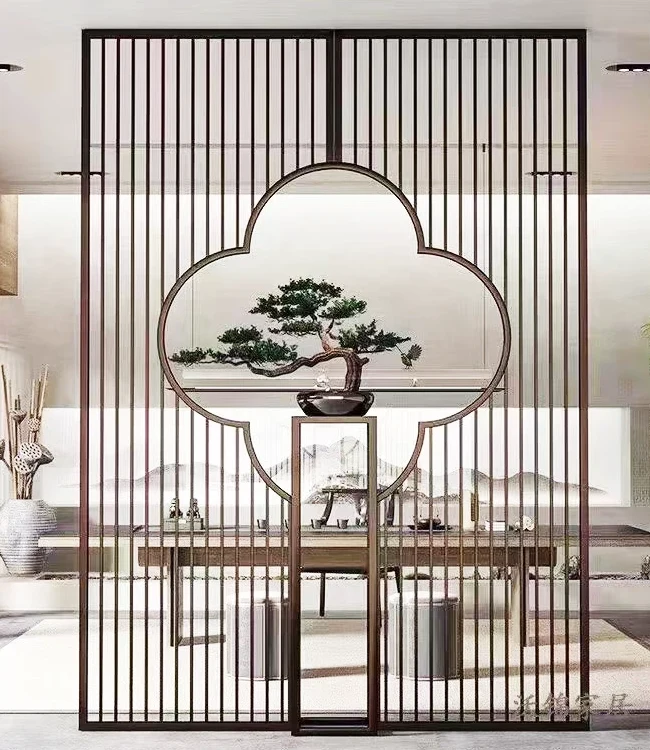
A modern simple design aluminum carved screen divider is a decorative architectural panel made from aluminum sheet or plate, featuring precisely cut patterns that divide spaces without completely closing them off. It can function as an interior partition, privacy screen, decorative wall feature, exterior facade element, or landscape divider.
Unlike traditional solid walls, carved aluminum screens contain openings that allow light and air to pass through. These openings create visual depth and help maintain a connection between different areas while establishing a clear spatial boundary.
The modern simple design concept focuses on balanced proportions, clean geometric patterns, understated decorative details, and practical functionality. Rather than relying on complicated ornamentation, the screen uses the natural appearance of its material and the relationship between solid and open areas to create visual interest.
How Does an Aluminum Carved Screen Work as a Divider?
The panel is installed vertically or horizontally according to the architectural design. It may be supported by a metal frame, fixed to a wall, suspended from a ceiling structure, or installed between floor and ceiling supports.
Its carved openings help control visibility between spaces. The degree of privacy depends on the pattern density, panel orientation, viewing angle, lighting conditions, and installation distance.
2. Why Is Aluminum Suitable for Decorative Screen Dividers?
Material selection is one of the most important decisions in architectural screen design. Aluminum is widely used in decorative metal applications because it offers a practical combination of relatively low weight, corrosion resistance, fabrication flexibility, and surface finishing options.
Lightweight Construction
Compared with many traditional metal materials, aluminum has a relatively low density. This helps reduce the weight of decorative panels and can simplify transportation, handling, and installation.
For projects involving large decorative partitions, reducing panel weight can also help designers plan supporting structures more efficiently. However, the required panel thickness, reinforcement, and fixing method must still be determined according to the panel dimensions and loading conditions.
Corrosion Resistance
Aluminum naturally forms a thin oxide layer on its surface, which helps protect the underlying material from corrosion. Appropriate finishing processes, such as anodizing or powder coating, can provide additional surface protection.
This makes aluminum suitable for many indoor and outdoor architectural applications. In coastal or highly polluted environments, however, alloy selection, coating quality, fastener materials, and maintenance requirements should receive additional attention.
Flexible Design and Fabrication
Aluminum sheets can be processed into a wide variety of decorative patterns using CNC cutting, laser cutting, and other suitable fabrication techniques.
Designers can specify geometric shapes, abstract lines, floral motifs, custom logos, or architectural patterns according to project requirements.
Multiple Surface Finishing Options
Aluminum carved screens can be finished in different colors and textures to complement surrounding architectural materials. Popular choices include matte black, white, champagne, bronze, silver, and wood-grain effects.
Helps simplify handling and installation compared with heavier metal alternatives.
Provides good resistance to atmospheric corrosion when properly specified and finished.
Supports customized patterns, dimensions, and decorative configurations.
Offers multiple colors, textures, and finishes for different architectural styles.
Generally requires straightforward cleaning when suitable materials and finishes are used.
Can be integrated into residential, commercial, hospitality, and public-space projects.
3. Key Design Features of Modern Aluminum Carved Screens
A successful decorative screen should combine appearance, functionality, and structural suitability. Several design elements determine how effectively an aluminum carved divider performs within a space.
3.1 Minimalist Geometric Patterns
Geometric patterns are a popular choice for contemporary interiors and building facades. Straight lines, rectangles, circles, repeating grids, and symmetrical arrangements create an organized visual appearance.
These patterns work particularly well in modern offices, residential interiors, hotel lobbies, and commercial buildings where a clean architectural style is preferred.
3.2 Controlled Visual Privacy
The size and distribution of carved openings influence how much visibility passes through the screen. Smaller openings and denser patterns generally provide greater visual screening, while larger openings create a more open appearance.
Designers should evaluate privacy requirements from the actual viewing angles rather than judging the pattern only from a front-facing drawing.
3.3 Light and Shadow Effects
Carved aluminum panels can produce interesting shadow patterns when exposed to natural or artificial lighting. The effect changes throughout the day as the direction and intensity of light change.
This makes decorative screens useful as architectural features in entrance areas, corridors, outdoor seating spaces, and feature walls.
3.4 Custom Panel Dimensions
Different projects require different panel heights, widths, thicknesses, and mounting arrangements. Custom dimensions allow the screen to fit the building layout and coordinate with adjacent walls, ceilings, doors, and windows.
3.5 Integration with Other Materials
Aluminum carved screens can be combined with glass, wood, stone, concrete, and stainless steel. These combinations create different visual effects while allowing architects to coordinate the divider with the broader interior or exterior design.
4. Popular Carved Patterns and Customization Options
One of the biggest advantages of aluminum carved screens is their ability to accommodate different decorative concepts. The pattern should reflect the project's architectural language while meeting functional requirements.
Geometric Patterns
Geometric designs use repeated lines, angles, grids, and shapes to create a clean and structured appearance. They are suitable for offices, contemporary residences, retail interiors, and modern building facades.
Abstract Patterns
Abstract carved designs use irregular lines and flowing shapes to create a more artistic visual effect. They can serve as statement features in hotel reception areas, restaurants, and public buildings.
Nature-Inspired Patterns
Floral, leaf, and organic motifs bring natural visual elements into architectural spaces. These patterns are often selected for garden screens, residential partitions, hospitality environments, and landscape projects.
Customized Branding Patterns
Businesses can incorporate logos, brand symbols, or unique graphic elements into aluminum screen designs. This creates opportunities to integrate decorative architecture with corporate identity.
| Pattern Type | Visual Characteristics | Typical Applications |
|---|---|---|
| Geometric | Clean lines, symmetry, and repeating shapes | Offices, residences, commercial interiors |
| Abstract | Creative lines and irregular compositions | Hotels, restaurants, feature walls |
| Floral | Decorative botanical motifs | Residential spaces, gardens, hospitality |
| Linear | Simple horizontal or vertical arrangements | Corridors, balconies, office partitions |
| Custom Logo | Brand-specific graphics and symbols | Showrooms, retail stores, commercial entrances |
Customization Factors to Discuss with the Manufacturer
- Panel height, width, and thickness.
- Aluminum alloy and material specifications.
- Carved pattern design and opening dimensions.
- Surface color, gloss level, and texture.
- Indoor or outdoor installation requirements.
- Frame design and fixing method.
- Single-panel or multi-panel arrangement.
- Special shapes, curves, or branding elements.
5. Where Can Aluminum Carved Screen Dividers Be Used?
Aluminum carved screens are suitable for a wide range of architectural environments. Their combination of decorative appearance and spatial separation makes them useful in both private and public spaces.
5.1 Residential Interiors
In modern homes, an aluminum carved screen can separate the living room from the dining area, create an entrance partition, or define a home office without making the interior feel enclosed.
It can also serve as a decorative feature behind furniture or near staircases, adding visual interest without requiring a solid wall.
5.2 Hotel and Hospitality Projects
Hotels and resorts frequently use decorative partitions to organize reception areas, dining spaces, lounges, and guest facilities. Aluminum carved panels can introduce a distinctive architectural detail while maintaining a consistent interior theme.
5.3 Office Buildings
Open-plan offices need to balance collaboration with visual organization. Decorative screens can help define meeting areas, reception spaces, waiting zones, and work areas while preserving a sense of openness.
5.4 Shopping Malls and Retail Stores
Retail environments use decorative dividers to distinguish product display zones, guide customer movement, and create attractive background features.
Customized carved patterns can also reinforce a store's visual identity and support coordinated interior design.
5.5 Building Facades and Outdoor Spaces
Exterior aluminum screens may be used as decorative facade elements, balcony dividers, garden partitions, or entrance features. Depending on the design, they can help provide partial visual screening while maintaining some airflow and daylight.
Outdoor applications require careful consideration of wind pressure, fixing systems, corrosion exposure, drainage, and applicable building regulations.
5.6 Restaurants and Public Spaces
Restaurants, exhibition halls, and public buildings can use carved screens to divide functional areas while maintaining a visual connection between different zones.
6. How Aluminum Screen Dividers Improve Space Functionality
A decorative screen should provide more than an attractive appearance. Its design can improve the usability of a space in several practical ways.
Creating Defined Functional Zones
Open spaces often need visual organization. A screen divider can establish boundaries between a reception area and a waiting zone, or between a living area and a dining space, without constructing permanent walls.
Maintaining Natural Light
Unlike solid partitions, carved panels contain openings that allow light to pass through. This can help preserve a brighter atmosphere in interior spaces, although the actual lighting effect depends on the pattern density and panel location.
Supporting Airflow
The openings in the panel can allow air movement between adjacent areas. This may be useful in spaces where complete enclosure is unnecessary or undesirable.
However, carved screens should not automatically be treated as ventilation systems. Airflow performance depends on the open-area ratio, pressure conditions, and surrounding layout.
Improving Privacy Without Full Enclosure
Aluminum screens can reduce direct visibility while preserving a degree of openness. This is useful in hotel lobbies, office reception areas, and residential entrances where partial privacy is preferred.
Adding Architectural Character
A carefully selected pattern and surface finish can turn a functional divider into a visual focal point. This allows designers to coordinate decorative panels with lighting, flooring, furniture, and surrounding architectural elements.
7. Manufacturing Processes and Surface Finishing
Manufacturing quality plays an important role in the final appearance, dimensional accuracy, and durability of an aluminum carved screen divider. The production process should be selected according to material thickness, pattern complexity, required tolerances, and project quantity.
7.1 Material Preparation
Production begins with selecting suitable aluminum sheet or plate according to the intended application. Material grade, thickness, flatness, and surface condition should be confirmed before processing.
7.2 CNC and Laser Cutting
CNC machining and laser cutting are commonly used to create decorative openings and customized patterns. Digital design files allow manufacturers to reproduce complex graphics and maintain consistency across multiple panels.
The cutting method should be matched to the material thickness, edge quality requirements, pattern details, and production volume.
7.3 Edge Treatment and Finishing Preparation
After cutting, the panel edges may require deburring, grinding, or other finishing operations. These steps help remove sharp edges and improve the appearance of the finished product.
7.4 Surface Treatment
Surface finishing influences both appearance and environmental performance. Common options include:
- Powder Coating: Provides a decorative coating with a wide range of color and texture options.
- Anodizing: Creates a controlled oxide layer that can improve surface protection and provide a metallic appearance.
- PVDF Coating: Can be considered for selected architectural applications requiring enhanced weathering performance, subject to the coating system and project specification.
- Wood-Grain Finish: Provides a wood-like decorative appearance while retaining an aluminum base material.
7.5 Inspection and Packaging
Finished panels should be inspected for dimensions, pattern accuracy, flatness, edge quality, color consistency, and surface defects. Suitable protective packaging helps reduce scratches and deformation during transportation.
8. How to Choose the Right Aluminum Screen Divider
Selecting the right screen divider requires a combination of architectural planning and technical evaluation. Buyers should consider the intended function, installation environment, material requirements, and maintenance expectations.
8.1 Define the Main Purpose
Start by identifying why the screen is needed. Is it intended to create privacy, divide a room, decorate a wall, screen a balcony, or enhance a building facade?
The primary function determines the required pattern density, panel dimensions, material thickness, and fixing structure.
8.2 Select Suitable Aluminum Material
Different aluminum alloys offer different mechanical and fabrication characteristics. The appropriate grade should be selected according to panel dimensions, structural requirements, fabrication method, and environmental exposure.
8.3 Evaluate Panel Thickness
Panel thickness influences rigidity, weight, fabrication requirements, and resistance to deformation. Larger panels or exterior installations may require additional structural support or reinforcement.
8.4 Consider the Open-Area Ratio
The open-area ratio describes the proportion of the panel occupied by openings. A higher open-area ratio generally creates a more transparent and visually open effect, while a lower ratio provides greater visual screening.
Designers should balance privacy, airflow, light transmission, structural strength, and pattern appearance when selecting the opening arrangement.
8.5 Choose an Appropriate Surface Finish
Surface color and texture should complement the surrounding materials and the building's design language. For outdoor applications, coating performance and environmental compatibility should be confirmed before production.
8.6 Confirm Installation Requirements
Installation conditions influence panel dimensions, mounting brackets, support frames, fixing positions, and tolerances. Confirming these details before fabrication helps reduce installation adjustments and project delays.
| Selection Factor | What to Evaluate | Why It Matters |
|---|---|---|
| Application | Indoor, outdoor, residential, or commercial | Determines design and environmental requirements. |
| Material | Aluminum grade and material condition | Influences fabrication and mechanical performance. |
| Thickness | Panel dimensions and structural loading | Helps control rigidity and deformation. |
| Pattern | Opening size and open-area ratio | Determines privacy, light, and visual appearance. |
| Surface Finish | Color, texture, and coating system | Influences appearance and environmental durability. |
| Installation | Frames, brackets, and fixing details | Ensures compatibility with the building structure. |
| Maintenance | Cleaning and inspection requirements | Supports long-term appearance and performance. |
9. Installation and Maintenance Considerations
Correct installation is essential for maintaining the appearance, stability, and safety of aluminum carved screen dividers. Installation methods should be selected according to the panel dimensions, weight, support structure, and intended application.
Before Installation
- Confirm the approved shop drawings and panel dimensions.
- Check the installation location and supporting structure.
- Verify the fixing brackets, fasteners, and mounting accessories.
- Inspect panels for surface damage and dimensional inconsistencies.
- Confirm the correct panel sequence and orientation.
- Ensure the installation area is ready and accessible.
During Installation
Installers should follow the approved mounting drawings and use suitable fasteners and support components. Panels should be handled carefully to avoid scratches, bending, or deformation.
For large exterior screens, the fixing structure must be designed to withstand applicable wind loads and other project-specific forces. Structural calculations and local building requirements should be reviewed by qualified professionals.
After Installation
Inspect the panel alignment, fixing points, surface finish, and overall appearance. Confirm that all connections are secure and that panels do not interfere with doors, windows, circulation routes, or nearby equipment.
Routine Cleaning and Maintenance
Aluminum carved screens generally require straightforward maintenance when suitable finishes are used. Regular cleaning helps prevent accumulated dust, dirt, and environmental deposits from affecting their appearance.
- Remove loose dust using a soft brush or clean cloth.
- Wash the surface with clean water and a mild, compatible detergent.
- Avoid abrasive pads and harsh chemicals that may damage the coating.
- Rinse away detergent residue and dry the surface when appropriate.
- Periodically inspect fixing points, joints, and surface coatings.
- Repair coating damage using an approved maintenance procedure.
10. Aluminum Screen Dividers vs. Traditional Partition Materials
Architects and project buyers may consider several materials when planning decorative partitions. Aluminum is one option among wood, glass, steel, and other panel systems. Each material offers different advantages and limitations.
| Comparison | Aluminum Carved Screen | Wood Partition | Glass Partition |
|---|---|---|---|
| Visual Style | Modern, geometric, and customizable | Warm and natural | Clean and transparent |
| Weight | Relatively lightweight | Varies by wood type and construction | Can be heavy depending on glass thickness |
| Design Flexibility | Supports complex carved patterns | Supports carving and panel shaping | Supports transparency and printed designs |
| Light Transmission | Depends on opening pattern | Generally limited | High for transparent glass |
| Moisture Resistance | Good with suitable material and finish | Depends on wood treatment and conditions | Generally good for the glass itself |
| Maintenance | Usually straightforward | May require periodic surface treatment | Requires regular glass cleaning |
| Privacy | Adjustable through pattern density | Can provide strong visual screening | Depends on transparency and treatment |
Aluminum carved screens are particularly useful when a project requires a decorative metal appearance, customized openings, and partial visual separation. However, wood may be preferred for warmer interiors, while glass may be more suitable when transparency is the primary objective.
The best material depends on the architectural concept, budget, maintenance strategy, environmental conditions, and functional requirements.
11. Common Buying Mistakes and How to Avoid Them
Purchasing a decorative screen based only on appearance can create problems during fabrication and installation. A more complete evaluation helps buyers avoid unexpected costs and project delays.
Mistake 1: Focusing Only on the Pattern
A visually attractive design may not provide the required privacy, airflow, or structural strength.
Solution: Evaluate the open-area ratio, panel dimensions, viewing angles, and intended function before approving the pattern.
Mistake 2: Ignoring Environmental Conditions
A coating suitable for an indoor application may not provide the expected durability in a coastal or highly polluted outdoor environment.
Solution: Inform the manufacturer about the installation location and environmental exposure so that suitable materials and finishes can be recommended.
Mistake 3: Choosing an Inappropriate Panel Thickness
Panels that are too thin may deform under certain conditions, while unnecessarily thick panels can increase weight and material costs.
Solution: Select panel thickness based on dimensions, pattern geometry, support spacing, and structural requirements.
Mistake 4: Overlooking Installation Details
Incorrect fixing dimensions or missing support components can create difficulties during on-site installation.
Solution: Confirm shop drawings, bracket positions, fastener specifications, and installation tolerances before production.
Mistake 5: Not Checking the Manufacturer's Production Capability
Complex patterns, large panels, and customized finishes require appropriate equipment and quality control.
Solution: Review relevant production samples, fabrication capabilities, finishing options, inspection procedures, and project experience.
Why Work with Foshan Nante Metal Manufacture Co., Ltd.?
Foshan Nante Metal Manufacture Co., Ltd. is a metal manufacturing company serving customers with architectural metal product requirements.
For projects involving modern aluminum carved screen dividers, buyers should evaluate the available aluminum specifications, cutting capabilities, surface finishing options, dimensional requirements, and installation details to develop a solution suited to the intended application.
Whether the project involves a residential decorative partition, commercial interior feature, hotel design, or architectural exterior screen, clear communication of drawings and technical requirements helps establish an accurate production plan.
Information to Prepare Before Requesting a Quotation
- Project location and intended application.
- Required panel height, width, and quantity.
- Aluminum alloy and thickness requirements.
- Carved pattern drawings or design references.
- Preferred color and surface finishing method.
- Indoor or outdoor installation conditions.
- Mounting structure and fixing requirements.
- Packaging and delivery requirements.
- Expected project schedule and order quantity.
Providing these details helps the manufacturer assess production feasibility, recommend suitable materials, and prepare a more accurate quotation.
12. Frequently Asked Questions
Q1. What is a modern simple design aluminum carved screen divider?
It is a decorative partition panel made from aluminum with customized cut-out patterns. It separates spaces while allowing selected levels of light, airflow, and visibility to pass through.
Q2. Why are aluminum screen dividers popular in modern architecture?
They combine relatively lightweight construction, corrosion resistance, fabrication flexibility, and multiple surface finishing options. Their carved patterns also help create modern decorative effects.
Q3. Can aluminum carved screens be customized?
Yes. Customization may include panel dimensions, thickness, pattern design, opening size, color, surface finish, and mounting arrangements, depending on the manufacturer's production capabilities.
Q4. Are aluminum carved screen dividers suitable for outdoor use?
Yes, when the aluminum grade, surface treatment, fasteners, and support structure are selected for the actual outdoor environment. Wind loading and local building requirements must also be considered.
Q5. Do aluminum carved screens provide privacy?
They can provide partial visual privacy. The degree of privacy depends on the opening size, pattern density, viewing angle, lighting conditions, and installation position.
Q6. What surface finishes are available for aluminum screen dividers?
Common options include powder coating, anodizing, PVDF coating, and wood-grain finishes. The suitable option depends on the required appearance, environmental conditions, and project specifications.
Q7. Can aluminum carved screens be used as building facade decorations?
Yes. They can be used as decorative facade elements, balcony screens, entrance features, and other architectural applications. The supporting structure must be designed for applicable wind loads and environmental conditions.
Q8. How should aluminum screen dividers be cleaned?
Most finished aluminum panels can be cleaned using clean water, a soft cloth, and a mild compatible detergent. Abrasive materials and aggressive chemicals should be avoided unless specifically approved for the coating.
Q9. What determines the thickness of an aluminum carved screen?
Panel dimensions, aluminum alloy, pattern geometry, installation method, support spacing, and expected loading conditions all influence the required thickness. Large or exterior panels may require additional reinforcement.
Q10. Are aluminum carved screens suitable for residential interior decoration?
Yes. They can be used to divide living and dining areas, create entrance partitions, decorate feature walls, and organize open-plan interiors without constructing solid walls.
Q11. How long does it take to manufacture customized aluminum screen dividers?
Production lead time depends on design complexity, material availability, panel dimensions, finishing requirements, order quantity, and production scheduling. Buyers should confirm the delivery schedule with the manufacturer after drawings and specifications are approved.
Q12. What should buyers provide when requesting a quotation?
Buyers should provide panel dimensions, material thickness, pattern drawings, surface finish requirements, installation conditions, order quantity, and delivery location. Reference images or architectural drawings can also help clarify the project requirements.
Conclusion: A Practical Decorative Solution for Modern Architectural Spaces
A modern simple design aluminum carved screen divider offers an effective combination of spatial separation and decorative appeal. Its lightweight construction, customizable patterns, versatile surface finishes, and suitability for different architectural environments make it a valuable option for contemporary residential and commercial projects.
However, a successful result requires more than an attractive design. Material selection, panel thickness, opening ratio, surface treatment, structural support, and installation details all contribute to the finished product's appearance and long-term performance.
For architects, interior designers, contractors, and building material distributors, working with a capable metal manufacturer can help transform design concepts into practical architectural products.
Looking for a Customized Aluminum Carved Screen Divider?
Foshan Nante Metal Manufacture Co., Ltd. is ready to discuss your architectural metal product requirements and help you evaluate suitable aluminum screen divider solutions.
Whether you are planning a modern residential partition, a hotel decorative screen, a commercial interior feature, or an exterior architectural project, providing the right design and technical specifications is the first step toward a successful result.
Have drawings, reference images, or a new project in mind? Contact us today to discuss your customization requirements, request product information, and explore the right solution for your next project.
Contact Us Today