

Why Is a Corrugated Metal Expansion Joint Critical for High-Temperature Pipeline Systems
2026-09-14
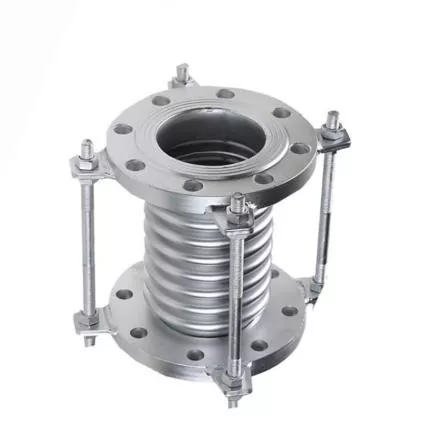
High-temperature pipeline systems expand, contract, and vibrate under extreme operating conditions. Without proper compensation, this movement transfers destructive loads to anchors, nozzles, and connected equipment. A Corrugated Metal Expansion Joint from JIDONGDA absorbs thermal growth, reduces stress, and protects the entire piping network from premature failure.
The Science Behind Thermal Movement
When metal pipe temperature rises, its length increases according to the material's coefficient of thermal expansion. A 30-meter carbon steel line operating at 350°C can grow by more than 100 mm. Rigid systems cannot safely contain this displacement. A Corrugated Metal Expansion Joint provides the flexibility needed to accommodate axial, lateral, and angular movement without sacrificing pressure integrity.
Key Functions of a Corrugated Metal Expansion Joint
| Function | Benefit |
|---|---|
| Axial compression and extension | Absorbs straight-line thermal growth |
| Lateral deflection | Handles offset movement in complex layouts |
| Angular rotation | Protects nozzles and rotating equipment |
| Vibration isolation | Reduces noise and fatigue damage |
| Pressure thrust containment | Works with anchors and guides to control forces |
Why High-Temperature Service Demands Specialized Design
Not every expansion joint performs well above 300°C. JIDONGDA engineers each Corrugated Metal Expansion Joint with heat-resistant alloys, optimized bellows geometry, and validated weld procedures.
-
Material selection: Stainless steel 304, 316L, Inconel 625, and Incoloy 800H resist creep and oxidation.
-
Multi-ply bellows: Reduce sensitivity to thermal gradients and pressure fluctuations.
-
Insulation and purging: Prevent condensate and cold spots in steam lines.
-
Finite element analysis: Confirms fatigue life under cyclic thermal loads.
-
Standards compliance: Designed to EJMA, ASME B31.3, and EN 14917.
Consequences of Ignoring Expansion Control
| Risk | Result |
|---|---|
| Overloaded anchors | Structural cracking and concrete failure |
| Nozzle overload | Equipment damage and costly downtime |
| Fatigue cracking | Leaks, steam release, and safety incidents |
| Misalignment | Premature bellows failure |
| Vibration transfer | Noise, wear, and reduced service life |
Installation Best Practices
Correct installation determines whether a Corrugated Metal Expansion Joint reaches its design life. JIDONGDA recommends the following:
-
Verify flow direction and orientation before welding.
-
Never use the bellows to correct pipe misalignment.
-
Install anchors, guides, and supports per the system design.
-
Protect bellows during handling and hydrotesting.
-
Inspect after startup and during scheduled maintenance.
Frequently Asked Questions
What temperature range can a Corrugated Metal Expansion Joint handle?
A Corrugated Metal Expansion Joint can operate from cryogenic temperatures near -200°C up to approximately 1000°C depending on alloy selection, insulation, and internal liner design, with JIDONGDA offering custom configurations for extreme high-temperature service.
How do I know if my Corrugated Metal Expansion Joint needs replacement?
Inspect for cracks, corrosion, deformation, leakage, or unexpected movement, and replace the Corrugated Metal Expansion Joint immediately if any of these signs appear because continued operation risks sudden failure and safety hazards.
Can a Corrugated Metal Expansion Joint reduce noise and vibration in high-temperature lines?
Yes, the flexible bellows element isolates mechanical vibration and absorbs acoustic energy, allowing a Corrugated Metal Expansion Joint to lower noise levels and protect adjacent equipment in high-temperature pipeline systems.
Contact Us
Protect your high-temperature pipeline with engineered expansion solutions from JIDONGDA. Contact our technical team today for a customized Corrugated Metal Expansion Joint design, material recommendation, and project quotation.