

Why Is 316 Stainless Steel Industrial Welded Pipe Better for Marine Use?
2026-11-25
Why Does 316 Stainless Steel Offer Better Resistance to Marine Corrosion?
316 Stainless Steel Industrial Welded Pipe is considered for marine piping because its molybdenum-bearing composition provides better resistance to chloride-induced pitting than standard 304 stainless steel. This difference matters around coastal facilities, shipboard utility systems, offshore support equipment and seawater-adjacent industrial installations, where salt deposits and airborne chlorides can attack less resistant materials. The improvement is meaningful, but it should not be mistaken for immunity to seawater corrosion.
Type 316 stainless steel typically contains chromium, nickel and approximately 2% molybdenum. Chromium supports the formation of a thin passive oxide film, while molybdenum improves resistance to localised corrosion, particularly pitting and crevice attack. When chloride ions damage or destabilise the passive film, molybdenum helps the alloy resist the development and propagation of localised corrosion more effectively than 304 in comparable conditions.
For marine engineers, the practical distinction is between atmospheric exposure and direct seawater service. Salt-laden air, coastal humidity and occasional salt spray are different from continuous immersion in warm, stagnant seawater. Type 316 and 316L are commonly considered for coastal equipment, external pipework and selected marine services. Direct seawater immersion, however, can be too aggressive for these grades, especially where deposits, gasket gaps or low flow create crevices.
316L is the low-carbon version of 316. Its lower carbon content reduces the risk of sensitisation during welding, helping welded assemblies retain better resistance to intergranular corrosion in the heat-affected zone when fabrication and post-weld treatment are properly controlled. For welded pipework, this is an important material-selection consideration because the finished system must perform as a whole, not just as an unwelded piece of base metal.
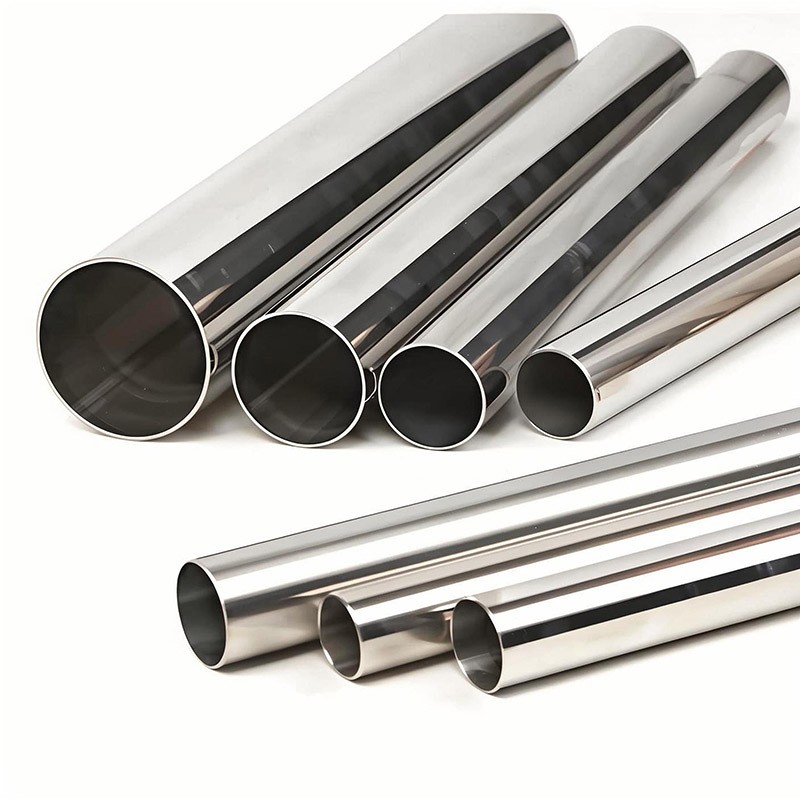
At Zhejiang HengDi Stainless Steel Co., Ltd., TP316L is among the main material options for stainless steel pipe products. Grade selection should still be matched to the actual service medium, chloride concentration, temperature, flow conditions and fabrication details. A material designation alone cannot establish whether a pipe is suitable for every marine duty.
Which Marine Operating Conditions Should Buyers Check Before Selecting the Pipe?
Marine corrosion is influenced by several conditions acting together. A pipe installed above deck and exposed to salt spray faces a different corrosion profile from a line carrying seawater continuously. Before specifying a grade, buyers should identify the actual exposure category and operating conditions rather than relying on the general description of a project as marine or offshore.
Chloride concentration is one of the first factors to review. Seawater contains a substantial chloride load, and evaporation can concentrate salts on surfaces in splash zones or beneath insulation. Deposits can also retain moisture and create shielded areas where corrosion develops locally. Regular washdown may reduce salt accumulation on accessible external surfaces, but it is not a substitute for selecting a suitable alloy for the process medium.
Temperature and flow rate also affect service performance. Higher temperatures generally increase the risk of pitting and crevice corrosion in chloride-bearing environments. Low-flow sections, dead legs and stagnant horizontal runs can encourage deposits and biofouling. Where seawater is carried through a pipe, the system layout should support drainage, inspection and cleaning. The design should avoid unnecessary pockets where seawater can remain trapped after shutdown.
Mechanical details deserve the same attention as the material grade. Gasket interfaces, threaded connections, lap joints, poorly finished weld roots and attachments can form narrow gaps. These locations restrict fluid exchange and may become sites for crevice corrosion. A well-selected alloy can still fail prematurely if the piping layout repeatedly creates stagnant, shielded areas.
| Marine service factor | What the buyer should confirm | Why it matters |
| Exposure type | Salt spray, coastal atmosphere, splash zone or continuous immersion | Different exposure conditions place different demands on the alloy |
| Chloride level | Process-water analysis and expected concentration changes | Chlorides increase the risk of pitting and crevice corrosion |
| Operating temperature | Normal, maximum and upset temperatures | Higher temperatures can accelerate localised corrosion |
| Flow conditions | Velocity, intermittent operation, dead legs and drainage | Stagnation and deposits can create aggressive local conditions |
| Joint design | Gaskets, weld profiles, supports and attachments | Crevices can become corrosion initiation points |
| Maintenance access | Inspection, flushing and cleaning arrangements | Early detection and deposit removal support longer service life |
For purchasing teams, the key is to provide these operating details with the enquiry. Our technical review can then focus on whether the proposed grade and pipe configuration match the intended service, rather than treating every marine installation as the same application.
How Do Pipe Dimensions, Welding and Surface Finish Affect Marine Performance?
Material grade is only one part of a pipe specification. Outside diameter, wall thickness, length, dimensional tolerance, weld quality and surface condition all influence fabrication, installation and service reliability. A pipe that meets the nominal grade requirement may still be unsuitable if its dimensions do not match the design pressure, connection method or mechanical loads of the system.
The available product information for our industrial welded pipe range includes a broad selection of sizes and finishes. The following figures are published product ranges, not a statement that every diameter and wall thickness combination is available in TP316 or TP316L. The final combination should be confirmed against the selected product, applicable standard and project drawing.
| Parameter | Published product information | Specification notes |
| Material grades | TP316L, TP304, TP321 and 2205 are among the listed material options | Confirm the exact grade and material certificate for each order |
| Outside diameter | 6 mm to 630 mm across the industrial welded pipe range; certain product pages list 19 mm to 325 mm | Available range depends on product type and manufacturing route |
| Wall thickness | 0.5 mm to 20 mm across the published industrial range; certain product pages list 1.5 mm to 12 mm | Confirm the required schedule or specified wall thickness |
| Standard length | 6 m; 12 m or customised lengths may be discussed | Confirm cutting tolerance and end preparation |
| Surface finish | Pickled, bright annealed, polished and other specified finishes | Specify internal and external finish separately where necessary |
| Inspection equipment | Eddy current and ultrasonic flaw detection, optical inspection and physical or chemical analysis facilities | Agree inspection scope and acceptance criteria before production |
| Quality system | Production organised in accordance with an ISO 9001 quality management system | Request applicable quality documents for the order |
Weld integrity is particularly important in marine piping. Incomplete penetration, undercut, excessive weld reinforcement or an irregular internal bead can affect both flow and corrosion performance. A rough weld root may retain deposits, while an incomplete joint can create a crevice that is difficult to inspect after installation. Welding procedures, qualified operators, suitable filler selection and appropriate inspection should therefore be addressed in the project specification.
Surface finish also has a practical role. Smooth, clean surfaces are generally easier to flush and less likely to retain deposits than rough or contaminated surfaces. Pickling and passivation may be specified where appropriate to remove heat tint and restore a clean passive surface after fabrication. The required treatment depends on the grade, welding process, service conditions and project requirements. A polished appearance by itself does not prove corrosion resistance or weld quality.
Our factory can discuss pipe dimensions, wall thickness, length and surface finish according to the order requirements. Buyers should provide the relevant drawing, dimensional tolerances, end preparation, applicable product standard and inspection requirements. This helps ensure that the delivered pipe can be incorporated into the intended piping system without relying on assumptions about a generic size range.
Where Can 316 Stainless Steel Welded Pipe Be Used in Marine-Related Projects?
316 and 316L stainless steel welded pipe can be considered for a range of marine-adjacent applications where chloride exposure is present but the service conditions remain within the material's practical limits. Examples include coastal process facilities, external utility pipework, selected shipboard auxiliary services, equipment frames and pipe runs exposed to humid, salt-laden air. Suitability must be checked against the actual duty rather than inferred from the location alone.
In coastal industrial plants, pipework may carry treated water, utility fluids or process media while also being exposed externally to sea air. In these cases, the internal fluid and external atmosphere should be assessed separately. A pipe may have acceptable resistance on its external surface but face a more aggressive internal medium, or the reverse. Material selection should account for both sides of the pipe wall.
On vessels and offshore support facilities, space constraints can lead to compact layouts with multiple branches, supports and mechanical connections. Such arrangements make good detailing important. Designers should consider access for inspection, the possibility of trapped liquid, dissimilar-metal contact and the effect of vibration or movement on supports and joints. Drainability and maintainability are not secondary issues; they are part of corrosion control.
For continuous seawater intake, seawater cooling or other systems involving direct seawater contact, standard 316 should not be selected automatically. The British Stainless Steel Association notes that 316 grades can suffer pitting and crevice corrosion in seawater, particularly where water is stagnant or crevices are present. Depending on the design conditions, duplex stainless steel, super duplex grades, higher-alloy austenitic stainless steel, copper alloys or non-metallic materials may warrant evaluation.
For that reason, HengDi recommends that buyers define the medium, temperature, chloride exposure, operating pattern and installation environment before confirming a grade. Where the service is particularly aggressive, a corrosion engineer or materials specialist should review the selection and any required corrosion-control measures.
How Can Buyers Verify Quality Before Ordering Marine Pipework?
A reliable procurement process begins with a complete technical enquiry. The buyer should identify the material grade, product standard, outside diameter, wall thickness, length, surface finish, dimensional tolerances and required inspection documents. If the pipe will be welded into a larger assembly, the enquiry should also state the fabrication method and any requirements for weld examination, heat treatment, pickling or passivation.
Material traceability is essential for critical piping. The material test certificate should identify the grade and heat or batch information and provide the chemical and mechanical test results required by the applicable specification. Where the project requires positive material identification, third-party inspection or additional testing, these requirements should be agreed before the purchase order is released. The inspection plan should define the test method, sampling frequency and acceptance criteria.
Buyers should also check that the cited standard is appropriate for the product form and service. ASTM A312 is commonly specified for seamless, welded and heavily cold-worked austenitic stainless steel pipes intended for general corrosive and high-temperature service, while other standards may apply depending on the product category and market. The correct standard, edition and supplementary requirements should be confirmed by the project engineer rather than selected solely because it appears on a supplier's general product page.
At Zhejiang HengDi Stainless Steel Co., Ltd., quality control resources include optical inspection, eddy current and ultrasonic flaw detection equipment, together with physical and chemical analysis facilities. The specific inspection scope available for an order should be confirmed in advance. Buyers should request the documents relevant to the actual product and avoid assuming that every test is automatically included in every supply contract.
A clear purchase specification reduces disputes after delivery. It should state how dimensions are measured, how surface condition is accepted, what constitutes an acceptable weld, which documents must accompany the shipment and whether independent inspection is required. For marine installations, it is also useful to record the service conditions used to approve the material selection. These details make later maintenance and replacement decisions more straightforward.
What Should Marine Buyers Remember When Choosing 316 Stainless Steel Pipe?
316 stainless steel offers a useful improvement over 304 in many chloride-exposed environments because molybdenum enhances resistance to pitting and crevice corrosion. Its low-carbon variant, 316L, is often preferred for welded construction where reduced sensitisation risk is important. These properties make the grade worth considering for coastal equipment and selected marine-related piping duties, provided that the operating conditions are suitable.
It is not, however, a universal seawater solution. Continuous immersion, warm or stagnant seawater, deposits, tight crevices and poorly finished welds can lead to localised corrosion. The correct decision depends on the full service environment, the pipe dimensions, fabrication quality, inspection requirements and maintenance plan. Where seawater exposure is severe, a higher-alloy material may be the more appropriate engineering choice.
If you are sourcing 316L industrial welded pipe for a coastal plant, marine support facility or chloride-exposed process line, contact our team with your grade, size, wall thickness, operating medium and inspection requirements. We can review the available product configuration and discuss a specification that aligns with your project drawings and service conditions.
Frequently Asked Questions
Is 316 stainless steel suitable for continuous seawater service?
Not in every case. Although molybdenum improves its resistance to chloride-related pitting compared with 304, 316 stainless steel remains susceptible to pitting and crevice corrosion in seawater, particularly under stagnant conditions, at elevated temperatures or where deposits and gasket gaps are present. Continuous seawater systems should undergo a project-specific materials assessment, and higher-alloy stainless steels or alternative materials may be more suitable.
What is the difference between 316 and 316L welded pipe for marine applications?
Both grades contain molybdenum and offer improved chloride-corrosion resistance compared with 304. The main distinction is carbon content: 316L has a lower maximum carbon level, which reduces the risk of chromium-carbide precipitation and sensitisation during welding. This can help welded assemblies resist intergranular corrosion in the heat-affected zone. The choice should still follow the applicable product standard, welding procedure and service requirements.
What information should be included when requesting a quotation for marine welded pipe?
A useful enquiry should state the required grade, product standard, outside diameter, wall thickness, length, surface finish, end preparation, operating medium, chloride concentration, temperature and flow conditions. It should also identify the required material test certificate, non-destructive examination, dimensional inspection and any third-party witness points. Providing these details allows the supplier to assess the requested configuration and confirm which specifications and inspection documents can be supplied.