

Why Does the Right Container Fastener Matter More Than Most Buyers Expect?
2026-04-08
When I look at the real reasons cargo incidents happen during transport, I often find that the problem is not the container itself, but the small securing components that people tend to underestimate. That is exactly why I want to talk about Container Fastener solutions in a more practical way. In my experience, companies that care about loading safety, vessel efficiency, and long-term maintenance usually pay close attention to fastening systems long before problems appear. This is also where LIG MARINE GROUP LTD naturally comes into the discussion, because reliable marine securing equipment is not simply about hardware supply, but about helping operators reduce risk, improve consistency, and protect cargo value across demanding working conditions.
For buyers, the challenge is rarely just finding a product with the correct name. The real challenge is choosing a fastening solution that performs under pressure, fits actual operating habits, and continues to deliver dependable results after repeated use in harsh marine and port environments. A well-made Container Fastener can make daily operations smoother, improve cargo stability, and reduce unnecessary replacement costs. That is why I believe this topic deserves a closer, more buyer-focused discussion.
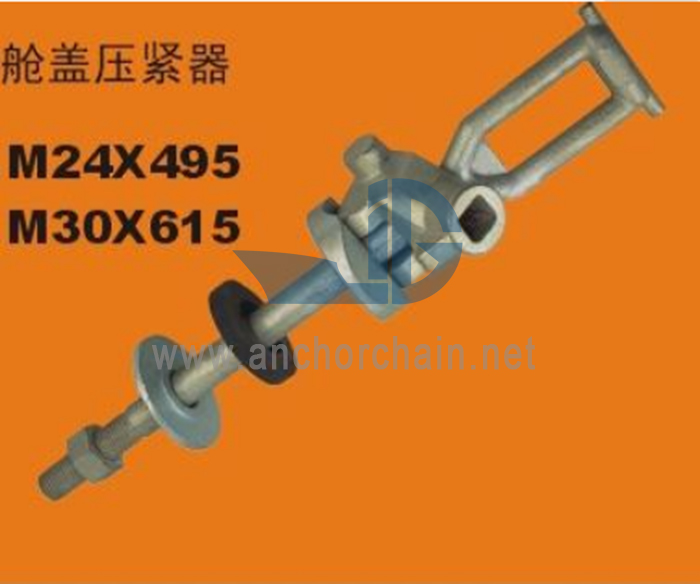
What Makes A Container Fastener A Critical Part Of Cargo Securing?
I have noticed that many buyers first focus on containers, cranes, or lashing systems as a whole, while fastening parts are treated as supporting details. In reality, fastening components directly affect how securely containers are fixed in place during storage, loading, unloading, and sea transport. If the fastening system is unstable, difficult to operate, or poorly matched to the working environment, the entire securing process becomes less reliable.
A dependable Container Fastener is expected to do several jobs at once. It must provide strong holding performance, maintain dimensional stability, resist corrosion, and allow workers to use it efficiently without creating unnecessary operational delays. From a purchasing perspective, it is not just a metal part. It is part of a safety system, part of an efficiency system, and part of a cost-control system.
- It helps reduce movement and instability during transportation
- It supports safer cargo handling in busy terminals and marine operations
- It lowers the risk of damage to containers and surrounding equipment
- It contributes to smoother workflows for crews and operators
- It can reduce maintenance and replacement frequency when built well
That combination is why experienced buyers usually stop comparing products only by appearance or base price. They start asking how the part performs over time and how it behaves in real working conditions.
Why Do Buyers Often Struggle To Choose The Right Product?
I think the biggest difficulty is that many fastening products look similar on a screen, but their real-world performance can differ a lot. Product photos may seem acceptable, and basic specifications may appear close enough, yet small differences in material control, production accuracy, surface treatment, and load-bearing reliability can create major gaps in service life.
Buyers also face a second problem: they are often purchasing under pressure. Some need fast delivery. Some must meet project schedules. Others need to balance safety expectations with cost limits. Under those conditions, it is easy to choose a product that seems suitable but later creates problems in installation, operation, or replacement cycles.
Here are the most common pain points I see:
- Unclear product quality from unfamiliar suppliers
- Inconsistent dimensions that affect fit and usability
- Poor corrosion resistance in marine environments
- Insufficient load performance for demanding applications
- Limited technical support before and after purchase
- Unstable supply capacity for repeat or bulk orders
That is why choosing a Container Fastener should never be based on a simple catalog glance alone. The more demanding the application, the more important it becomes to evaluate the supplier’s manufacturing discipline and practical understanding of marine use.
How Can I Tell Whether A Container Fastener Is Built For Real Marine Conditions?
When I evaluate a fastening solution, I do not begin with marketing language. I begin with the operating environment. Marine and container securing conditions are not gentle. Salt exposure, humidity, impact, repeated loading cycles, and outdoor storage all place pressure on metal components. If the product is not designed with those conditions in mind, its working life can shrink quickly.
I usually recommend looking at the following factors first:
| Evaluation Factor | Why It Matters | What Buyers Should Check |
|---|---|---|
| Material Quality | Determines strength, durability, and resistance to deformation | Ask about raw material grade, strength performance, and consistency |
| Surface Treatment | Helps protect against corrosion and environmental wear | Review coating process, finish quality, and marine suitability |
| Dimensional Accuracy | Affects fit, installation efficiency, and safe operation | Confirm tolerance control and manufacturing precision |
| Load Reliability | Supports safe securing under transport stress | Check working load expectations and test-related information |
| Production Stability | Ensures batch consistency for repeat orders | Evaluate factory capability and quality control standards |
| Supplier Support | Improves communication and purchasing confidence | See whether the supplier can answer application questions clearly |
These points may seem basic, but they often decide whether a product performs smoothly for years or starts causing trouble after a short service period. A trustworthy Container Fastener should not only meet a drawing. It should work reliably in the field where mistakes are expensive.
What Product Advantages Do Serious Buyers Usually Care About Most?
From what I have seen, buyers become much more selective once they move beyond first-time purchasing. They want more than a usable product. They want a fastening solution that contributes to stable operations, predictable maintenance planning, and fewer service interruptions.
The most valued product advantages usually include the following:
- Strong structural performance that supports secure container locking and holding
- Reliable corrosion resistance for outdoor and marine applications
- Consistent machining and finish quality for dependable installation and operation
- Longer service life to reduce replacement frequency
- Operational convenience that helps crews work faster and more confidently
- Stable bulk supply for ongoing project and fleet requirements
When these advantages come together, the value of a good Container Fastener becomes much easier to understand. The product is no longer just a purchase item. It becomes part of the buyer’s broader strategy for safety, efficiency, and cost control.
Why Does Manufacturing Consistency Affect Long-Term Purchasing Results?
I think this is one of the most overlooked issues in industrial purchasing. A sample may look perfect, but if the supplier cannot maintain the same quality across every batch, the buyer still faces risk. In fastening products, inconsistencies can lead to fit problems, installation delays, unexpected wear, and uneven performance across different shipments.
That is why manufacturing consistency matters so much. It affects not only product quality, but also operational predictability. Buyers who place repeat orders need to know that the next delivery will behave like the last one.
I usually suggest comparing suppliers through this lens:
| Supplier Capability | Low-Confidence Scenario | High-Confidence Scenario |
|---|---|---|
| Batch Consistency | Product dimensions and finish vary from order to order | Stable specifications and reliable repeatability |
| Quality Inspection | Only basic checks or unclear control process | Structured inspection steps and better traceability |
| Delivery Reliability | Frequent delays or limited production support | Better planning for project deadlines and bulk supply |
| Technical Communication | Slow or vague responses to application questions | Clear answers that help buyers avoid mismatched purchases |
For me, this is where a professional manufacturer stands out. A supplier that understands marine hardware requirements can help reduce uncertainty before it turns into operational cost.
How Does The Right Supplier Help Buyers Solve More Than A Product Problem?
I always say that industrial buyers are rarely buying metal parts alone. They are buying reliability, response speed, and decision support. A good supplier makes the selection process easier, clarifies application details, and helps the buyer avoid preventable mistakes.
That is one reason why companies such as LIG MARINE GROUP LTD gain attention in this field. Buyers are not only looking for fastening hardware. They are looking for a partner that understands container securing demands, respects practical working conditions, and can support real purchasing decisions with relevant product knowledge.
In my experience, the right supplier usually brings value in these ways:
- Helping match the product to actual application requirements
- Providing clearer information for technical comparison
- Supporting consistent quality expectations over repeated orders
- Reducing the risk of unsuitable or short-life components
- Offering stronger confidence for project-based procurement
When that support is present, buying a Container Fastener becomes a much more controlled process. The buyer has fewer unknowns, better planning confidence, and a stronger chance of achieving long-term value instead of short-term convenience.
What Should I Compare Before Making A Final Purchasing Decision?
If I were comparing suppliers today, I would not stop at price. I would compare total practical value. A lower initial quote can still become the more expensive option if the product wears too quickly, performs inconsistently, or causes handling inefficiency.
Here is the checklist I would personally use before placing an order:
- Is the product suitable for the specific marine or container application?
- Does the supplier show clear understanding of fastening performance requirements?
- Is the material and finish appropriate for corrosion-prone environments?
- Can the supplier maintain quality consistency for future repeat orders?
- Is communication efficient enough to support smooth purchasing?
- Does the supplier appear capable of handling volume and schedule needs?
- Will this Container Fastener reduce headaches instead of creating them?
I like this kind of checklist because it turns the discussion away from vague promises and toward practical decision-making. That is where the best purchasing results usually come from.
Why Is Long-Term Value More Important Than A Cheap First Order?
It is tempting to focus on the lowest offer, especially when budgets are tight. I understand that. But in cargo securing, poor purchasing decisions can lead to repeated replacement, downtime, extra labor, and even cargo-related losses. Those costs do not always appear in the quotation sheet, but they show up later in the operation.
A better Container Fastener often creates value in ways that are not obvious at first glance:
- Fewer replacements over time
- Better resistance to harsh weather and marine exposure
- Improved working confidence for operators
- Reduced risk of fit or performance issues
- More stable procurement planning for future orders
That is why I believe smart buyers increasingly look beyond the first invoice. They evaluate service life, reliability, and operating impact. In many cases, that approach leads to better cost efficiency over the full product cycle.
Who Can Buyers Turn To When They Need A More Reliable Solution?
When buyers are trying to improve container securing performance, reduce maintenance pressure, and source with more confidence, they usually need more than a product listing. They need a supplier that understands how fastening components work in real shipping and marine environments. That is where experience, manufacturing discipline, and product focus start to matter.
If you are reviewing sourcing options for Container Fastener products and want a solution that aligns with practical application needs, it makes sense to look closely at suppliers with a strong marine hardware background. A capable partner can help you move from uncertain purchasing toward a more stable and efficient supply decision.
If you are ready to improve your cargo securing setup, reduce sourcing risk, and choose a fastening solution with stronger long-term value, now is the right time to act. Contact us to discuss your requirements, request product details, or send your inquiry to LIG MARINE GROUP LTD. I believe a better Container Fastener choice starts with the right conversation, and your next inquiry could be the step that makes your operations safer and more dependable.