

Why Does Rivet Position Stability Depend on the Depth and Width of Circlip Grooves
2026-05-20
In precision mechanical engineering, Rivets Positioned by Circlip Grooves represent a critical advancement in fastening technology. At Gaxis, we have observed that the reliability of such assemblies hinges on two seemingly simple parameters: groove depth and groove width. Understanding this dependency is essential for engineers designing high-vibration or load-bearing structures.
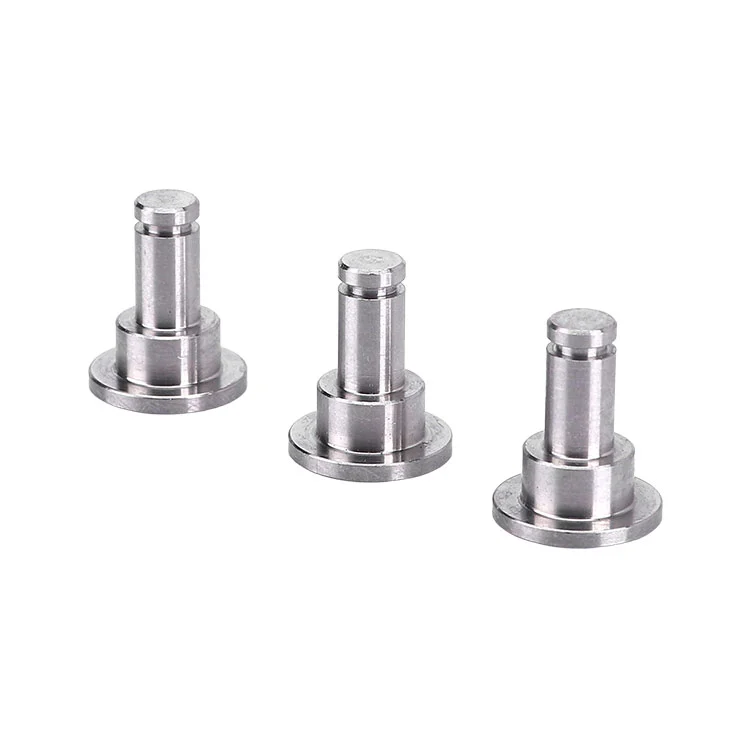
The Mechanical Role of Circlip Grooves
A circlip groove functions as a axial locking mechanism. When a rivet is inserted and a circlip engages the groove, the groove’s geometry directly resists lateral movement. If the depth is insufficient, the circlip cannot seat fully, leading to radial play. If the width is excessive, axial backlash occurs. Both scenarios compromise rivet position stability.
How Depth and Width Affect Stability
| Parameter | Effect of Undersizing | Effect of Oversizing | Optimal Outcome |
|---|---|---|---|
| Groove Depth | Circlip protrudes, causing assembly interference | Reduced retaining force, risk of circlip ejection | Flush seating with preset clamping force |
| Groove Width | Circlip cannot enter groove; assembly impossible | Axial free play up to 0.5 mm or more | Tight fit allowing thermal expansion without slop |
Practical Design Considerations
Gaxis engineers follow three key rules when designing Rivets Positioned by Circlip Grooves:
-
Depth tolerance: ISO 4759-1 class A (≤ ±0.03 mm for diameters under 10 mm)
-
Width-to-diameter ratio: Typically 0.15 to 0.25 for dynamic loads
-
Edge break: 0.1–0.2 mm to prevent circlip stress concentration
Without precise control over groove dimensions, even high-quality rivets will drift axially under cyclic loading, accelerating fatigue failure.
Frequently Asked Questions
Question 1: What happens if the circlip groove is too shallow for a rivet assembly?
Answer: If the circlip groove is too shallow, the circlip will not fully recess into the groove. This forces the circlip to protrude above the shaft surface, interfering with mating components. Additionally, the incomplete engagement reduces the axial retaining force by 40–60%, allowing the rivet to shift under moderate vibration. In dynamic applications such as conveyor systems or engine mounts, this leads to rapid wear of both the groove edges and the circlip itself, often within 200 operating hours. Gaxis recommends a minimum depth of 0.8× the circlip wire diameter for steel rivets.
Question 2: Can an excessively wide circlip groove still provide stable rivet positioning?
Answer: No, an excessively wide groove fails to provide stable rivet positioning because the circlip can slide axially between the groove walls. Even a 0.2 mm excess width translates to measurable backlash under load reversal. This backlash allows the rivet to hammer against the groove shoulders, cold-forming the material and progressively widening the groove further—a self-worsening failure mode. In precision assemblies like robotic joints or aerospace brackets, this backlash exceeds typical positional tolerances. Gaxis testing shows that groove width exceeding the circlip thickness by more than 0.15 mm reduces position retention life by over 70%.
Question 3: How do I calculate the correct depth and width for Rivets Positioned by Circlip Grooves in high-load applications?
Answer: For high-load applications (cyclic loads >50% of rivet yield strength), Gaxis uses the following empirical formulas: Groove depth = 0.85 × circlip radial wall thickness ±0.02 mm; Groove width = circlip axial thickness +0.05 mm / -0.00 mm. Additionally, the groove bottom radius must be ≤0.1 mm to prevent stress risers. For example, a 6 mm diameter rivet with a 1.2 mm thick circlip requires a groove depth of 1.02 mm and width of 1.25 mm. Always verify using a feeler gauge: acceptable clearance is <0.05 mm axial movement under 50 N push force.
Conclusion
The stability of Rivets Positioned by Circlip Grooves is not a matter of chance but of precise groove geometry. Depth controls radial retention; width governs axial constraint. Gaxis delivers engineered circlip groove solutions that meet ISO tolerance standards, ensuring your riveted joints remain secure under extreme conditions.
Contact us today at Gaxis to review your rivet assembly drawings or request custom circlip groove specifications for your next project.