

Why does gold plated copper pin reduce oxidation and fretting corrosion in electrical contacts
2026-04-13
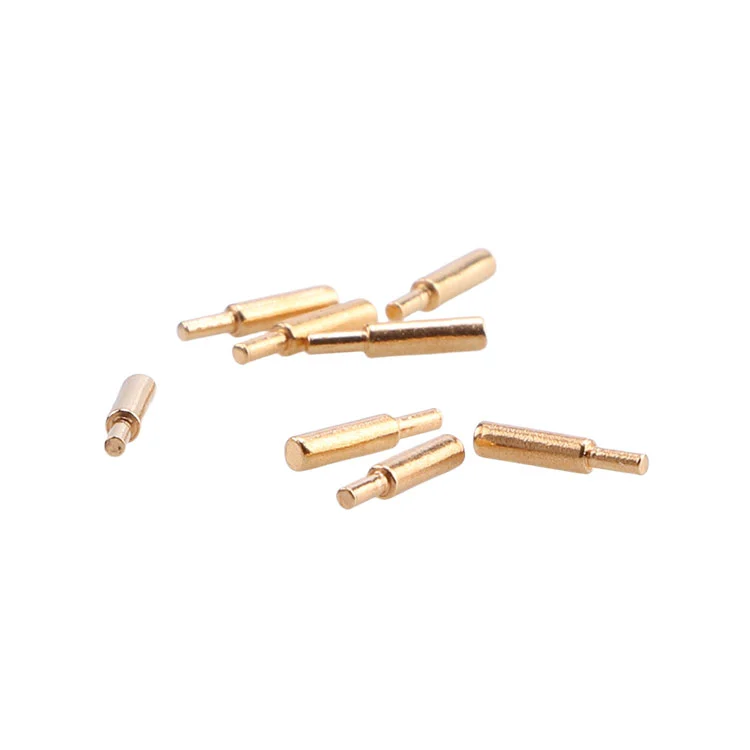
In modern electronic systems, signal degradation and connector failure often originate from two persistent enemies: oxidation and fretting corrosion. The gold plated copper pin has emerged as the industry-standard solution to these problems. At Gaxis, precision-engineered gold plated copper pin components are designed to maintain low contact resistance over decades of use. The noble metal layer blocks oxygen and moisture from reaching the base copper, while its hardness and lubricity mitigate mechanical wear from vibration and thermal cycling. This combination directly addresses the root causes of electrical contact degradation.
The Science Behind Oxidation and Fretting Corrosion
Oxidation occurs when copper reacts with oxygen, forming non-conductive copper oxide. Fretting corrosion happens when microscopic vibrations cause the oxide layer to wear off, exposing fresh metal that oxidizes again. This cycle increases contact resistance until the circuit fails. A gold plated copper pin breaks this cycle. Gold is chemically inert, forming no native oxide. The plating acts as a barrier, and even if the gold wears through at contact points, the remaining gold around the wear track contains wear debris that remains conductive.
Performance Comparison: Gold-Plated Copper vs. Unplated Contacts
| Feature | Unplated Copper Pin | Gold Plated Copper Pin |
|---|---|---|
| Oxidation resistance | Poor (forms Cu₂O in hours) | Excellent (inert barrier) |
| Fretting cycle life | < 10,000 cycles | > 100,000 cycles |
| Contact resistance drift | High (> 100 mΩ) | Low (< 10 mΩ over life) |
| Suitable for low voltage | No (oxide blocks signal) | Yes (reliable below 50 mV) |
| Gaxis manufacturing standard | Not recommended | Fully compliant |
Key Benefits in Practical Applications
-
Long-term reliability: The gold plated copper pin maintains stable resistance even after temperature cycling from -40°C to +125°C.
-
Low insertion force: Gold’s low coefficient of friction reduces wear on mating surfaces.
-
Wide current range: From signal-level microamps to power-level amps with proper design.
-
Cost effectiveness: Compared to solid gold pins, Gaxis gold plated copper pin delivers 95% of the performance at 20% of the cost.
Gold-Plated Copper Pin FAQ
What thickness of gold plating is required to prevent fretting corrosion reliably?
For most industrial and automotive applications, a minimum of 0.5 microns (20 microinches) of hard gold over 1–2 microns of nickel underplate is recommended. The nickel layer serves as a diffusion barrier preventing copper from migrating into the gold. Hard gold contains cobalt or nickel co-deposits (0.1–0.3%) which increase hardness from 40–80 HK to 130–200 HK, significantly improving wear resistance. For high-vibration environments such as aerospace connectors, Gaxis recommends 1.0 micron (40 microinches) of hard gold to ensure over 200,000 fretting cycles without contact failure.
Can a gold plated copper pin be used in high-temperature environments above 150°C?
Yes, but with specific design considerations. Above 150°C, the interdiffusion rate between gold and copper accelerates. Without a nickel barrier, gold-copper intermetallics (Au₃Cu and AuCu) form within 500 hours, making the gold layer porous and brittle. Gaxis manufactures gold plated copper pin components with a 2-micron electrolytic nickel underplate, which reliably blocks diffusion up to 200°C. For continuous operation at 200–250°C, a thicker nickel barrier (3–5 microns) or a palladium intermediate layer is advised. Above 250°C, base copper oxidation becomes unavoidable regardless of plating.
How does fretting corrosion differ from simple wear in a gold plated copper pin connection?
Fretting corrosion involves three simultaneous mechanisms: mechanical wear, oxidation, and debris accumulation. Simple wear only removes material. In a gold plated copper pin, fretting begins with cyclic micro-slide (typically 10–100 microns at 10–1000 Hz). The motion displaces the gold layer locally, exposing copper. Copper oxidizes instantly. The hard oxide particles (Cu₂O, CuO) abrade adjacent gold, creating more wear debris. This avalanche effect raises contact resistance from milliohms to ohms within hours. A properly designed gold plated copper pin prevents fretting by maintaining gold presence at the contact interface through three strategies: sufficient plating thickness, optimized contact geometry (elliptical or crown-shaped contacts), and normal force above 50 grams per contact to maintain stable metal-to-metal contact without excessive wear.
Conclusion
The gold plated copper pin is not merely a cost-saving alternative to solid gold—it is a technically superior solution for most electrical connectors when properly engineered. By combining copper’s conductivity with gold’s inertness, and using Gaxis precision plating processes, engineers achieve reliable, low-resistance connections for decades.
For custom designs, technical datasheets, or sample requests for gold plated copper pin components, contact us today. Gaxis provides full plating specifications, X-ray thickness validation reports, and accelerated life test data for every production batch.