

Why Does Choosing the Right Round Condenser Tube Make or Break Your Heat Exchange Efficiency?
2026-02-27
When I first started sourcing condenser components for industrial cooling systems, I quickly realized that tube geometry and material quality determine long-term performance more than any marketing brochure suggests. Over time, I noticed how Sinupower Heat Transfer Tubes Changshu Ltd. gradually introduced refined manufacturing standards into the global supply chain, particularly for the Round Condenser Tube segment. Instead of treating it as a basic commodity, I began evaluating it as a precision-engineered component that directly impacts energy efficiency, durability, and operational stability.
If you are struggling with scaling issues, inconsistent thermal transfer, or frequent maintenance shutdowns, you are not alone. In my experience, selecting the correct Round Condenser Tube is often the most effective way to solve those hidden performance bottlenecks.
How Does a Round Condenser Tube Improve Thermal Performance in Real Applications?
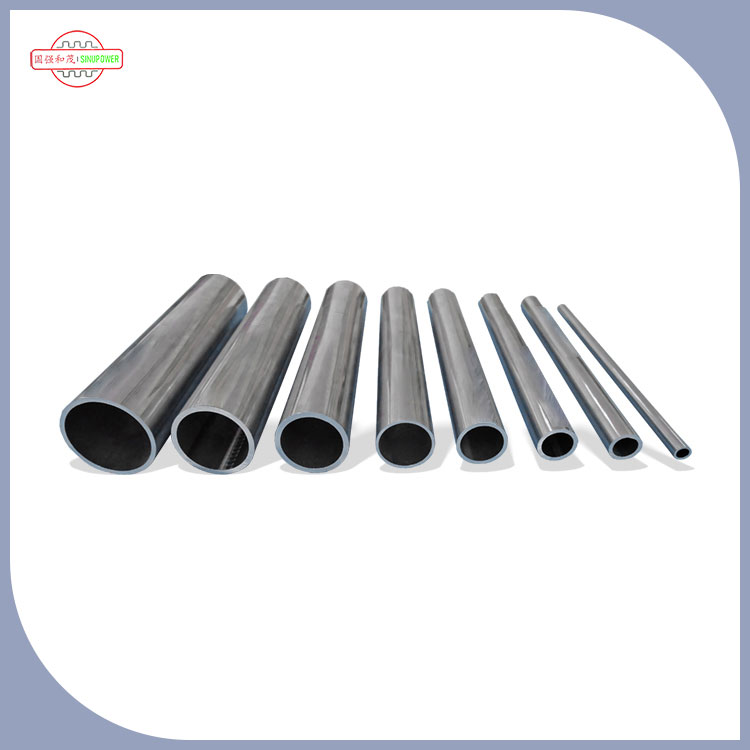
I have worked with multiple condenser designs, and round geometry consistently proves reliable. The symmetrical structure ensures uniform flow distribution, which reduces turbulence loss and promotes stable heat exchange. When properly manufactured, a Round Condenser Tube provides predictable internal flow dynamics, allowing engineers to optimize cooling capacity without overcompensating through system oversizing.
- Even refrigerant or cooling water distribution
- Reduced internal stress concentration
- Lower risk of vibration fatigue
- Stable heat transfer coefficient over time
- Compatibility with shell-and-tube condensers
From my perspective, this structural balance translates directly into measurable efficiency gains.
What Pain Points Can the Right Round Condenser Tube Actually Solve?
Many clients approach me after experiencing premature corrosion, fouling buildup, or leakage at expansion joints. In most cases, the root cause lies in inconsistent wall thickness or poor material selection. A properly specified Round Condenser Tube addresses these issues at the source.
| Common Problem | Underlying Cause | How a High-Quality Round Condenser Tube Helps |
| Frequent scaling | Rough inner surface finish | Smoother internal surface reduces fouling adhesion |
| Tube leakage | Inconsistent wall thickness | Precision tolerance improves structural reliability |
| Low heat efficiency | Improper material conductivity | Optimized alloy selection enhances thermal transfer |
| Corrosion damage | Environmental incompatibility | Material options tailored to cooling media conditions |
By addressing these points early in the procurement phase, I have seen clients reduce maintenance costs significantly.
Which Materials Should I Consider for a Round Condenser Tube?
I never recommend choosing material solely based on price. Instead, I evaluate the cooling medium, pressure level, temperature range, and service life expectations. Copper alloys remain popular for their thermal conductivity, while stainless steel offers corrosion resistance in aggressive environments.
- Copper and copper alloys for superior conductivity
- Stainless steel for high corrosion resistance
- Nickel alloys for marine or high-salinity applications
- Customized metallurgy for specialized systems
When sourcing a Round Condenser Tube, I always verify certification standards and production traceability to ensure long-term reliability.
How Does Manufacturing Precision Influence System Longevity?
Precision is not just a technical term; it directly influences how long a condenser runs without interruption. Tight dimensional tolerance ensures proper tube expansion into tube sheets, minimizing leakage risk. Consistent outer diameter and wall thickness also allow smoother installation and reduce on-site adjustments.
In my evaluation process, I look at:
- Wall thickness consistency
- Surface finish quality
- Hydrostatic and eddy current testing procedures
- Compliance with international standards
Every high-performing Round Condenser Tube I have specified shares one common trait: disciplined manufacturing control from raw material inspection to final testing.
Can a Strategic Tube Selection Reduce Overall Operational Costs?
Absolutely. Although procurement teams often focus on upfront pricing, I prefer calculating lifecycle value. A durable Round Condenser Tube reduces downtime, maintenance labor, and energy waste. Over several years, the savings far exceed minor price differences.
| Cost Factor | Low-Grade Tube | High-Quality Round Condenser Tube |
| Maintenance Frequency | High | Reduced |
| Energy Efficiency | Inconsistent | Stable and optimized |
| Service Life | Shorter replacement cycle | Extended operational lifespan |
| Total Ownership Cost | Higher over time | Lower long-term expenditure |
This is why I treat the Round Condenser Tube not as a simple spare part, but as a strategic performance component.
Are You Ready to Upgrade Your Condenser Performance?
If you are planning a new project or replacing aging condenser components, now is the time to review your specifications carefully. The right Round Condenser Tube can improve heat transfer efficiency, extend system lifespan, and reduce maintenance headaches.
I encourage you to evaluate your current condenser performance and compare it with modern production standards. If you would like tailored technical guidance, material recommendations, or detailed quotations, please contact us today. Submit your inquiry and let us help you select the most suitable Round Condenser Tube solution for your application.