

Why Does Choosing the Right Marine Outfitting Equipment Matter More Than Most Buyers Expect?
2026-04-02
When I evaluate vessel supply solutions, I do not only look at price tags or catalog photos. I look at how each component will actually perform once it is installed, exposed to salt spray, vibration, heavy use, and strict project timelines. That is why I pay close attention to suppliers like LIG MARINE GROUP LTD, whose product scope naturally connects with ship deck hardware, marine accessories, and practical vessel support systems. In my experience, the right Marine Outfitting Equipment is not a decorative extra. It directly affects safety, maintenance cost, onboard efficiency, and even how smoothly a shipyard or marine project can move from procurement to installation.
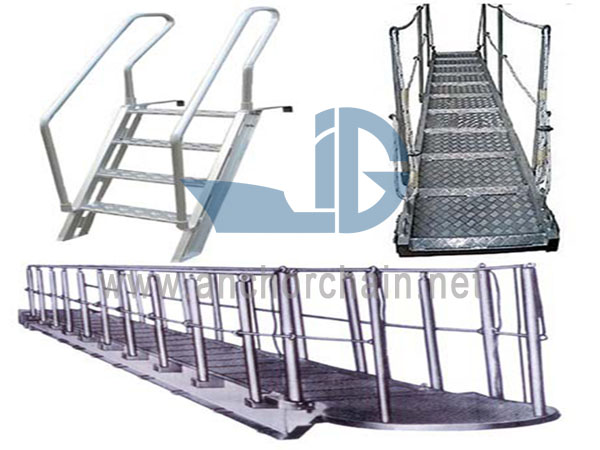
What Makes Marine Outfitting Equipment So Important in Daily Vessel Operations?
I often find that buyers focus heavily on engines, propulsion systems, or headline deck machinery, while smaller supporting components receive less attention than they deserve. That approach usually creates avoidable problems later. Good Marine Outfitting Equipment supports the working environment of the vessel and helps crews operate more safely and more efficiently.
From my point of view, outfitting products matter because they help solve several real-world issues at once:
- They improve operational safety in demanding marine environments
- They reduce premature wear caused by corrosion, moisture, and repeated load cycles
- They help shipbuilders keep installation work organized and predictable
- They lower the risk of costly replacement or retrofit after delivery
- They support better onboard usability for crew members and maintenance teams
When I compare projects that run smoothly with projects that suffer delays, one recurring difference is whether the buyer treated outfitting as a strategic purchasing category rather than an afterthought.
How Do Buyers Usually Run Into Trouble When Sourcing Marine Outfitting Equipment?
I have seen many sourcing teams face the same frustrations, especially when they are under pressure to control cost and delivery time at the same time. The problem is rarely just “finding a product.” The real challenge is finding products that match the vessel, the application, and the quality expectations without creating hidden problems later.
The most common buyer pain points I notice include:
- Unclear product specifications that make comparison difficult
- Inconsistent quality between samples and production batches
- Materials that are not well suited to corrosive marine conditions
- Late delivery that affects shipyard schedules
- Poor communication during customization or order confirmation
- Products that look acceptable on paper but are inconvenient during actual installation
This is exactly why I believe supplier selection should go beyond a simple quote comparison. With Marine Outfitting Equipment, the cheapest option can become the most expensive one if it causes fitting issues, maintenance problems, or replacement risk after deployment.
What Should I Look For Before I Choose a Supplier?
Whenever I assess a marine supplier, I try to think like an end user, a purchaser, and a project coordinator at the same time. A good supplier should not only offer products. The supplier should also reduce uncertainty across the buying process.
| What I Check | Why It Matters | What It Can Prevent |
|---|---|---|
| Material suitability | Marine environments demand resistance to corrosion and long-term wear | Early rusting, structural weakness, frequent replacement |
| Manufacturing consistency | Stable quality helps avoid fitment and performance variation | Installation delays, rework, batch disputes |
| Product range | A broader range helps simplify procurement and coordination | Fragmented purchasing from too many vendors |
| Technical communication | Clear responses reduce misunderstanding during order confirmation | Specification errors, wrong shipments |
| Delivery reliability | Marine projects are highly schedule-sensitive | Shipyard downtime, delayed completion |
| Practical application knowledge | Suppliers who understand vessel use cases often recommend better solutions | Buying products that are technically available but operationally unsuitable |
If I cannot verify these points, I do not feel confident placing an order, no matter how attractive the initial pricing may appear.
Why Can Material Quality Change the Full Lifecycle Cost?
I think this is one of the most underestimated factors in marine procurement. Many buyers naturally focus on upfront unit price, but a marine component should be evaluated over its service life, not just at the moment of purchase.
In harsh offshore or coastal conditions, low-grade materials can lead to faster degradation. That means more frequent replacement, more maintenance labor, more downtime, and greater risk for onboard operations. In contrast, well-made Marine Outfitting Equipment can hold up better against moisture, salt exposure, mechanical stress, and repetitive use.
When I calculate real value, I ask questions like these:
- Will this component maintain performance after long exposure to salt air?
- Will the surface treatment still be dependable after repeated cleaning and use?
- Will the part remain easy to inspect, service, or replace if needed?
- Will I save money over time by avoiding repeated purchasing cycles?
That is why lifecycle thinking matters. High-quality Marine Outfitting Equipment often brings a better overall return, even when the initial quote is not the lowest on the table.
How Can the Right Product Range Make Purchasing Easier?
One thing I appreciate when reviewing marine suppliers is a product offering that fits together logically. A supplier that works across related marine categories can simplify sourcing and reduce communication friction. Instead of juggling multiple factories for closely linked items, I can manage procurement more efficiently through a supplier that understands how those components work together in real vessel applications.
This matters because a fragmented purchasing process usually creates:
- Longer communication chains
- Greater risk of mismatch between related parts
- More time spent confirming dimensions, finishes, and compatibility
- Harder shipment coordination
- Less accountability when problems occur
When I source from a company with marine-focused product depth, I can spend less time troubleshooting and more time moving the project forward.
What Does a Practical Buyer Expect From Marine Outfitting Equipment Today?
In today’s market, I think buyers are much more practical than they were a few years ago. They still care about price, of course, but they are also asking sharper questions about reliability, communication, and long-term support. In my experience, the strongest buying decisions are based on performance in actual use, not just catalog presentation.
Here is how I would summarize what many serious buyers now expect:
| Buyer Expectation | What It Means in Practice |
|---|---|
| Reliable construction | Products should perform consistently in demanding marine conditions |
| Clear specifications | Drawings, dimensions, and product details should be easy to confirm |
| Application relevance | The product should suit real vessel use rather than generic industrial use alone |
| Responsive communication | Questions should be answered clearly before and during the order process |
| Dependable supply support | Orders should align with project schedules and purchasing plans |
| Balanced cost efficiency | Value should include durability and usability, not just the lowest price |
If a supplier can meet these expectations, the procurement process becomes far less stressful for shipyards, marine contractors, distributors, and vessel owners alike.
How Do I Judge Whether a Product Is Really Built for Marine Use?
I usually start by looking beyond marketing language. What I want to know is whether the product seems designed with actual marine conditions in mind. Real marine environments are unforgiving. Saltwater, heavy weather, constant motion, and routine load stress expose weaknesses quickly.
That is why I pay attention to details such as:
- Whether the structure appears practical for onboard installation and use
- Whether the finish and material choice suggest corrosion resistance
- Whether the design seems intended for repetitive marine service
- Whether the supplier appears familiar with vessel hardware requirements
- Whether the product range reflects real maritime application experience
When these elements come together, I feel more confident that the Marine Outfitting Equipment is not merely manufactured to exist in a catalog, but to function reliably where it actually matters.
Why Does Good Communication Matter Almost As Much As Good Manufacturing?
I would never separate product quality from supplier communication. Even excellent manufacturing can be undermined by poor order coordination. In marine procurement, details matter. Small misunderstandings around dimensions, coatings, quantities, mounting styles, or delivery timing can become expensive once production starts.
That is why I value suppliers who can:
- Respond clearly to technical questions
- Confirm specifications without ambiguity
- Support custom or project-based requirements when needed
- Keep the order process transparent
- Understand that marine buyers often work under strict project deadlines
From my perspective, the best sourcing experience happens when manufacturing capability and communication discipline support each other. That combination reduces risk far more effectively than low pricing alone ever could.
Can Better Marine Outfitting Equipment Help Reduce Hidden Costs?
Yes, and I think this is where many buyers finally see the real value. Hidden costs in marine projects often come from avoidable friction rather than from the purchase price itself. I am talking about the cost of delayed installation, the labor cost of rework, the inconvenience of replacement, and the operational consequences of unreliable components.
When I choose better Marine Outfitting Equipment, I am often also choosing:
- Less time spent resolving post-delivery issues
- Fewer quality disputes across batches
- More predictable installation planning
- Lower maintenance pressure over time
- Greater confidence in long-term vessel operation
For procurement teams that are measured by both cost control and project execution, these advantages are not secondary. They are part of the real commercial value of the purchase.
What Kind of Purchasing Mindset Leads to Better Results?
If I had to give one piece of advice, I would say this: do not buy marine outfitting products as isolated items. Buy them as part of a working system. The smartest buyers I know think about vessel conditions, crew interaction, service life, compatibility, installation flow, and supplier dependability all at once.
That mindset usually leads to better results because it focuses on questions such as:
- Will this solution still make sense after months or years of use?
- Will it help the project team work more efficiently?
- Will it reduce operational inconvenience later?
- Will the supplier still feel dependable after the quotation stage?
When I source this way, I make fewer reactive decisions and more durable ones.
Where Can I Find a More Reliable Partner for My Next Project?
If you are planning a new build, vessel upgrade, distributor sourcing program, or marine supply purchase, it makes sense to work with a supplier that understands both product reliability and procurement practicality. A dependable source of Marine Outfitting Equipment should help you balance safety, durability, lead time, and cost efficiency without making the buying process harder than it needs to be.
If you are looking for a marine-focused supplier with relevant product coverage and a practical approach to marine hardware needs, now is the right time to take the next step. Contact us to discuss your project, request product details, or send your inquiry today. A clear conversation at the beginning can save you significant time and cost later, and the right Marine Outfitting Equipment choice can make a lasting difference for your vessel or marine business.