

Why Do Web Thickness and Flange Thickness Matter in T-Shaped Steel Design?
2026-10-20
A structural designer is optimizing the roof purlins for a warehouse project. The original design uses a T-Shaped Steel section with an 8 mm web and a 12 mm flange. The total steel weight is 42 tons. The designer runs a parametric study. Reducing the web to 6 mm and increasing the flange to 14 mm reduces the weight to 38.6 tons. The deflection under the design load decreases from 18 mm to 16 mm. The client approves the change. The saving is 3.4 tons of steel, which is $2,700 at current prices. This is not a marginal adjustment. It is the result of understanding how the web and the flange perform different structural functions. This guide explains why web thickness and flange thickness matter in T-shaped steel design.
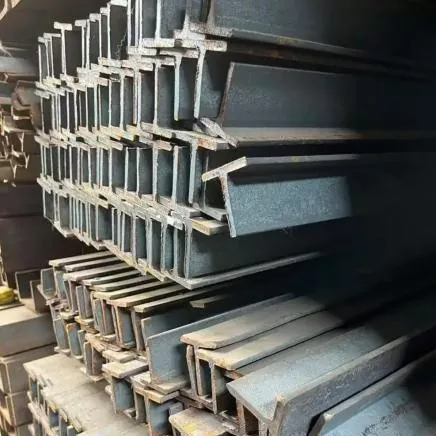
1. What Is the Structural Role of the Web and the Flange?
A T-Shaped Steel section is composed of a vertical web and a horizontal flange. The two elements perform different structural functions. The web resists shear force and provides the depth that gives the section its bending stiffness. The flange resists bending moment by carrying the tensile and compressive stresses that are generated by the moment. The table below shows the stress distribution and the function of each element.
| Element | Primary function | Stress type | Design consideration |
| Web | Resists shear force | Shear stress (τ) | Avoid shear yielding and local buckling |
| Flange | Resists bending moment | Tensile / compressive stress (σ) | Avoid yielding and local buckling |
| Web-flange junction | Transfers shear between elements | Combined stress | Avoid weld failure and stress concentration |
In our factory, we manufacture T-Shaped Steel sections in a range of web and flange thickness combinations. The most common combinations are 6x12, 8x14, and 10x16 mm. The selection depends on the span, the load, and the deflection limit. Tianjin Shunchen Hongye Enterprise Management Co., Ltd. has been manufacturing T-shaped steel for over 18 years.
2. How Does Web Thickness Affect Shear Capacity and Local Buckling?
The web thickness determines the shear capacity of the T-Shaped Steel section. The shear stress in the web is calculated as the shear force divided by the web area. A thinner web has a higher shear stress and is more susceptible to shear yielding. The web thickness also determines the local buckling resistance. A slender web can buckle under the compressive stress that develops near the supports. The table below shows the shear capacity and the local buckling limit for different web thicknesses.
| Web thickness (mm) | Web depth (mm) | Shear capacity (kN) | Local buckling limit (h/t) | Recommended span (m) |
| 6 | 100 | 85 | 50 | 4 – 6 |
| 8 | 100 | 115 | 50 | 6 – 8 |
| 8 | 150 | 172 | 50 | 8 – 10 |
| 10 | 150 | 215 | 50 | 10 – 12 |
| 12 | 200 | 345 | 50 | 12 – 15 |
The local buckling limit is expressed as the ratio of the web depth to the web thickness (h/t). For a steel with a yield strength of 355 MPa, the limit is approximately 50. If the h/t ratio exceeds this limit, the web may buckle before the section reaches its full shear capacity. In our factory, we recommend that the h/t ratio be kept below 45 to provide a safety margin. Shunchen provides section property tables for each T-shaped steel size.
3. How Does Flange Thickness Affect Bending Resistance and Deflection?
The flange thickness determines the bending resistance of the T-Shaped Steel section. The bending moment is resisted by the flange, which carries the tensile and compressive stresses. A thicker flange increases the moment of inertia and the section modulus, which reduces the stress and the deflection. The table below shows the effect of flange thickness on the moment of inertia and the deflection for a T-section with a 150 mm web and an 8 mm web thickness.
| Flange thickness (mm) | Flange width (mm) | Moment of inertia (×10⁶ mm⁴) | Section modulus (×10³ mm³) | Deflection under 10 kN/m load (mm) |
| 10 | 100 | 12.5 | 125 | 22 |
| 12 | 100 | 14.8 | 148 | 18.6 |
| 14 | 100 | 17.1 | 171 | 16.1 |
| 16 | 100 | 19.4 | 194 | 14.2 |
| 18 | 100 | 21.7 | 217 | 12.7 |
Designer's note: The flange thickness has a greater effect on deflection than the web thickness for the same weight of steel. This is because the flange is located farther from the neutral axis, so its contribution to the moment of inertia is proportional to the square of its distance from the neutral axis. When optimizing a T-section, the designer should first increase the flange thickness to reduce deflection, and then check the web thickness for shear and local buckling. In our factory, we provide a free section optimization service for customers who are designing with T-shaped steel.
4. How Do Web and Flange Thickness Affect Connections and Fire Protection?
The web and flange thickness affect the design of the connections and the fire protection. For bolted connections, the flange thickness determines the bolt embedment length and the bearing capacity. A thinner flange may require a larger number of smaller bolts or a reinforced connection. For welded connections, the web thickness determines the weld size and the heat input. A thinner web requires a smaller weld and less heat input, which reduces distortion. For fire protection, the flange thickness determines the fire resistance rating. A thicker flange absorbs more heat before it reaches the critical temperature. The table below shows the effect of flange thickness on connection and fire protection requirements.
| Flange thickness (mm) | Bolt diameter (mm) | Weld size (mm) | Fire protection thickness (mm) |
| 10 | M16 | 5 | 25 |
| 12 | M16 | 6 | 22 |
| 14 | M20 | 6 | 20 |
| 16 | M20 | 8 | 18 |
| 18 | M24 | 8 | 16 |
In our factory, we provide a connection design guide and a fire protection calculation for each T-Shaped Steel size. The guide includes the recommended bolt size, the weld size, and the fire protection thickness for different fire resistance ratings. Shunchen also offers a pre-fabricated connection detail service for customers who want to minimize site welding.
Frequently Asked Questions About Web and Flange Thickness in T-Shaped Steel Design
Summary for Structural Designers and Steel Fabricators
Web thickness and flange thickness perform different structural functions in T-Shaped Steel design. The web resists shear and provides the depth for bending stiffness. The flange resists bending moment and controls deflection. The optimal section is achieved by balancing the two thicknesses against the span, the load, and the deflection limit. A parametric study can identify the most efficient combination. The web thickness must satisfy the shear capacity and the local buckling limit. The flange thickness must satisfy the bending resistance and the connection and fire protection requirements. Tianjin Shunchen Hongye Enterprise Management Co., Ltd. has been manufacturing T-shaped steel for over 18 years and provides full section optimization and connection design support for our customers.
Tianjin Shunchen Hongye Enterprise Management Co., Ltd. manufactures T-Shaped Steel sections with web thicknesses from 6 to 12 mm and flange thicknesses from 10 to 18 mm. We provide section property tables, connection design guides, and fire protection calculations for all of our products.