

Why do Stamping Parts decide my project’s cost and reliability?
2025-12-11
I learned the hard way that the small metal pieces can make or break a launch. When I started sourcing Stamping Parts, I kept seeing hidden trade-offs—geometry vs. tolerance, tooling vs. cycle time, coating vs. corrosion budget. Working with Haozhifeng taught me to treat the supply chain like a design variable, not an afterthought. In this guide I’m sharing the checklists, tables, and tests I actually use so your next batch of Stamping Parts ships clean, fits first time, and holds margin under real production pressure.
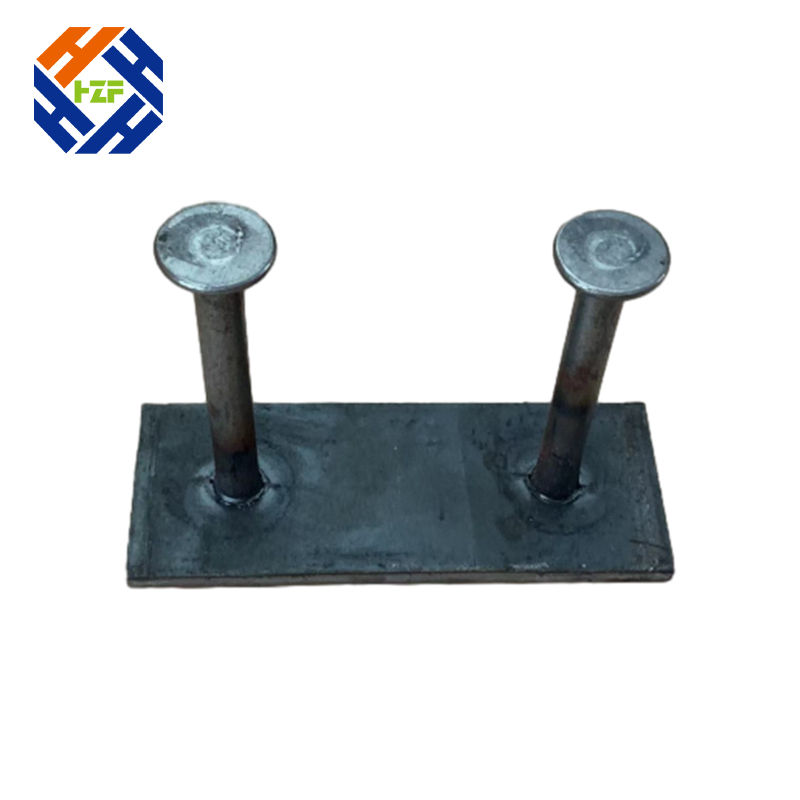
What makes precision in Stamping Parts pay off?
When I review drawings for Stamping Parts, I start with function and stack-ups, not vanity tolerances. The goal is to buy capability you will use, not capability you’ll admire on paper.
- Pin the function: which edges actually locate, seal, or carry load?
- Use datum schemes that match tooling reality to reduce rework.
- Shift “nice to have” ±0.02 mm callouts to process-capable figures.
- Specify burr direction away from mating surfaces to protect assembly.
How do materials and coatings change outcomes?
Material drives springback, tool wear, and noise in Stamping Parts. I map the finish and life requirements first, then choose the cheapest material that survives the environment.
- Common steels: SPCC/DC01 for formability; HSLA for strength with sane springback.
- Stainless: 304 for corrosion breadth; 430 for magnetic needs and lower cost.
- Aluminum: 5052 for bendability; 6061-T6 for stiffness where forming is mild.
- Coatings: Zn, Zn-Ni, e-coat, powder; pick by salt-spray hours and contact resistance.
Which tolerances in Stamping Parts really move the needle?
I anchor critical features on Stamping Parts with GD&T that tooling can actually hold.
- True position for holes tied to a realistic datum A-B-C scheme.
- Flatness or profile on functional faces instead of blanket tight dimensions.
- Clear bend-relief and minimum flange lengths to control cracking and twist.
- Radiuses called out by intent (functional edge vs. cosmetic edge).
Where do tooling choices cut lead time for Stamping Parts?
Tooling strategy shapes both launch speed and part cost for Stamping Parts.
- Laser + soft tool for prototypes and bridge runs—cheap, flexible, slower.
- Single-hit dies for simple blanks and low volumes.
- Progressive dies for medium-high volumes—best piece-to-piece repeatability.
- Transfer dies when parts need deep draws or complex forms step by step.
Can DFM trim scrap on Stamping Parts without risking function?
A few DFM tweaks often shave 5–15% cost on Stamping Parts while improving yield.
- Nudge hole-to-edge distances to minimums that still avoid bulging.
- Standardize hole sizes to common punches; avoid orphan diameters.
- Align bends with grain when possible; call out safe inside radiuses (≥ material thickness).
- Consolidate similar parts to reuse stations across a family tool.
What quality controls keep Stamping Parts consistent?
I don’t rely on final inspection alone. For Stamping Parts, in-process controls stop drift before it hits your dock.
- First-article with full ballooned report tied to CAD and GD&T.
- SPC on hole locations and bend angles—sample every set number of strokes.
- Tool maintenance logs with hit counts and punch replacement intervals.
- Surface checks (Ra, coating thickness) with calibrated gauges and coupons.
How should I compare Stamping Parts quotes fairly?
Apples-to-apples matters. I score suppliers of Stamping Parts on capability match, not just unit price.
| Factor | What I request | Why it matters |
|---|---|---|
| Process route | Laser+soft tool / single-hit / progressive / transfer | Explains lead time, repeatability, and tooling life |
| Material & temper | Grade, thickness, grain direction | Controls forming, springback, and strength |
| Tolerances & GD&T | Critical features, datum scheme, gauge plan | Aligns inspection with function, prevents disputes |
| Tooling detail | Stations, steel type, expected maintenance | Predicts uptime and cost per hit |
| Coating | Type, thickness, salt-spray hours | Corrosion budget and conductivity |
| QC plan | FAI, SPC points, sample frequency | Reduces variability and scrap |
When do secondary operations upgrade Stamping Parts performance?
I plan value-add only when tests prove a gain on Stamping Parts.
- Coining to stabilize thickness where sensors need flat seating.
- Deburring and edge-rounding to protect seals and harnesses.
- Tapping or PEM inserts to replace separate fasteners.
- Spot welding or staking to simplify downstream assembly.
What does a low-risk ramp for Stamping Parts look like?
Every launch I run follows a simple cadence so the first big order doesn’t feel like a gamble on Stamping Parts.
- DFM review with red-line drawing and agreed CTQs.
- Prototype route to validate form, function, and stack-ups.
- Pilot build with near-final tooling and SPC checkpoints.
- PPAP or equivalent submission before volume release.
Why does partnering early with Haozhifeng help Stamping Parts succeed?
Early supplier input pays off. By looping Haozhifeng into sketches and test fixtures, I’ve trimmed tool changes and stabilized production across multiple programs of Stamping Parts. The team’s quick DFM notes and realistic tolerance advice cut weeks off my calendar and saved budget I could put back into performance testing.
Ready to solve your Stamping Parts challenge now?
If you’re wrestling with drawings, coatings, or tooling trade-offs on Stamping Parts, send me the print and a short note about function and volume. I’ll respond with a practical DFM checklist and a clean, comparable quote path. Let’s make this easy—contact us to review your application, align on tolerances that matter, and lock in a reliable launch window.