

Why Do So Many Engineers Struggle to Find the Right Sheet Metal Chassis for Modern Electronics?
2026-03-12
When I first started working with electronics manufacturers, I noticed that many engineers shared the same frustration. Finding a reliable structural housing that balances durability, manufacturability, and cost efficiency is never as simple as it sounds. Over time, while collaborating with Shenzhen Zhongyilong Hardware Products Co., Ltd., I saw how thoughtful engineering and precision fabrication can completely change how companies approach the design of a Sheet Metal Chassis. Instead of treating it as just a metal enclosure, we began looking at it as the structural backbone of modern devices.
A well-designed Sheet Metal Chassis does far more than hold components in place. It protects sensitive electronics, improves thermal performance, simplifies assembly, and ultimately supports the long-term reliability of the entire product. In this article, I will share what engineers should really look for when selecting a chassis solution and why material selection, manufacturing accuracy, and structural design play such critical roles.
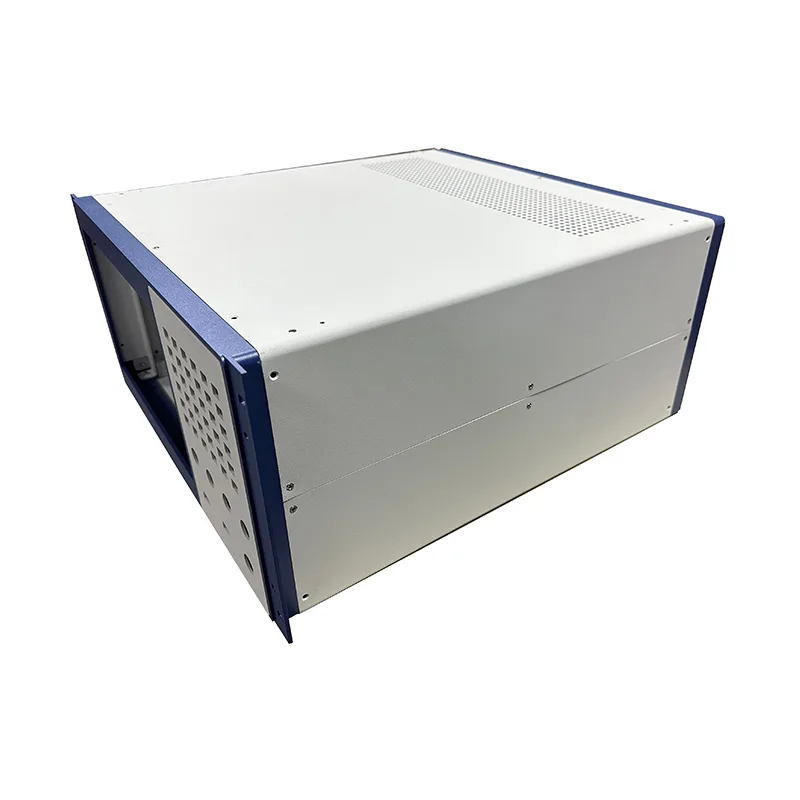
Why Does the Structure of a Sheet Metal Chassis Matter More Than Many Designers Expect?
In many early product prototypes, engineers often focus on circuit performance first and enclosure structure later. However, once production begins, structural limitations quickly appear. From my experience working with hardware designers, the chassis becomes the key mechanical foundation that determines whether a product can scale smoothly.
- Structural rigidity that protects internal electronic components
- Efficient mounting points for PCBs, connectors, and power modules
- Airflow channels for heat dissipation
- Electromagnetic shielding for stable operation
- Ease of assembly for production lines
When these structural factors are overlooked, companies often face redesign costs or production delays. A carefully engineered Sheet Metal Chassis eliminates these risks early in the development cycle.
What Materials Should Engineers Consider When Designing a Reliable Chassis?
Material choice directly affects performance, cost, and durability. In our projects, we evaluate the mechanical and environmental requirements before recommending the appropriate metal sheet.
| Material | Main Advantage | Typical Application |
|---|---|---|
| Cold Rolled Steel | Excellent strength and structural stability | Industrial equipment housings |
| Aluminum Alloy | Lightweight with strong corrosion resistance | Communication equipment and electronics |
| Galvanized Steel | Improved corrosion protection | Outdoor or semi-exposed systems |
| Stainless Steel | High durability and long service life | Medical and harsh environments |
Selecting the correct material ensures that the Sheet Metal Chassis performs reliably under mechanical stress, temperature variation, and long operational cycles.
How Does Precision Fabrication Improve the Performance of a Chassis?
One thing I learned while working with fabrication teams is that small manufacturing inaccuracies can lead to major assembly issues. Precision processes ensure that every structural part aligns perfectly with electronic modules and mounting hardware.
- Laser cutting for accurate sheet profiles
- CNC bending for consistent structural angles
- Precision punching for connector interfaces
- Surface finishing for durability and appearance
- Strict tolerance control for component compatibility
When these manufacturing techniques are properly implemented, the resulting Sheet Metal Chassis becomes easier to assemble, more stable during operation, and more suitable for large-scale production.
Why Do Custom Chassis Solutions Often Outperform Standard Enclosures?
Standard enclosures can work for basic applications, but most modern electronics require specialized structural layouts. During many of our projects, customers initially tried off-the-shelf enclosures, only to discover limitations in airflow, cable routing, or component mounting.
Custom design allows engineers to optimize the internal structure for specific equipment. This includes adjusting panel thickness, reinforcing load-bearing areas, or integrating ventilation patterns directly into the design of the Sheet Metal Chassis.
- Optimized thermal management layouts
- Flexible interface design for connectors and ports
- Better internal space utilization
- Improved mechanical strength
- Smoother assembly process for production lines
By tailoring the chassis to the product architecture, manufacturers reduce engineering compromises and improve the reliability of the final device.
How Can a Well Designed Chassis Improve Long Term Product Reliability?
Reliability is often the biggest concern for hardware companies launching new devices. The mechanical structure must remain stable throughout transportation, installation, and years of operation.
A properly engineered Sheet Metal Chassis contributes to reliability in several important ways:
- Shock resistance during shipping
- Structural protection for sensitive circuits
- Consistent grounding and shielding
- Stable support for heavy components
- Reduced vibration in industrial environments
These factors significantly reduce maintenance costs and increase the overall lifespan of electronic equipment.
How Do Manufacturers Choose the Right Fabrication Partner for Metal Chassis Projects?
Choosing the right supplier often determines whether a project succeeds or faces repeated revisions. In my experience, engineers benefit most from manufacturers that combine design consultation with advanced production capabilities.
A reliable fabrication partner should offer:
- Engineering support during product development
- Flexible prototyping capabilities
- Strict quality inspection processes
- Scalable production capacity
- Consistent delivery timelines
These capabilities allow manufacturers to transform complex structural concepts into dependable Sheet Metal Chassis solutions ready for real-world applications.
Could the Right Chassis Design Become a Competitive Advantage for Hardware Brands?
Many companies treat the chassis as a simple metal shell, but forward-thinking manufacturers understand that mechanical design directly impacts product performance and brand reputation. A carefully engineered Sheet Metal Chassis enhances durability, simplifies assembly, and creates a professional appearance that reflects the quality of the equipment inside.
If you are currently developing electronic systems or industrial equipment and want to improve structural reliability, working with an experienced manufacturer can make a significant difference. The engineering team at Shenzhen Zhongyilong Hardware Products Co., Ltd. has extensive experience producing high-precision chassis solutions for a wide range of industries.
If you would like to explore custom fabrication options or discuss your project requirements, feel free to contact us and send your drawings or specifications. Our team will be glad to help you develop a high-quality Sheet Metal Chassis tailored to your application.