

Why Do Reaming Tools Matter So Much in Precision Machining?
2026-04-07
When I evaluate what really determines hole accuracy in modern machining, I always come back to one key detail: finishing quality. That is why companies such as Ningbo Wangdefu Precision Machinery Co.Ltd. continue to attract attention from manufacturers that care about tolerance control, consistency, and tool reliability. In many real production scenarios, drilling alone is not enough to deliver the final dimensional accuracy or surface finish a customer expects. This is exactly where Reaming Tools become indispensable, especially when buyers need stable performance, cleaner holes, and better repeatability across batch production.
For procurement managers, workshop owners, and machining engineers, the challenge is rarely just buying a cutting tool. The real question is how to reduce scrap, stabilize hole quality, improve cycle efficiency, and avoid hidden costs caused by premature wear or poor finishes. In my view, the right Reaming Tools are not just accessories in the process. They are problem-solvers that directly influence productivity, downstream assembly quality, and long-term manufacturing confidence.
What Problems Do Buyers Usually Face When Choosing Hole Finishing Tools?
When I speak from a buyer-focused perspective, I see several common pain points again and again. Many users are not simply looking for a low price. They want dependable results in actual machining conditions.
- Hole diameter is inconsistent from part to part
- Surface finish is too rough for final assembly requirements
- Tool wear happens faster than expected
- Chatter affects dimensional stability
- Production speed improves, but quality drops
- Different workpiece materials require different tool behavior
- Standard tools cannot fully match special application needs
These issues create a chain reaction. Once a hole is out of tolerance, the problem does not stay at the machining station. It can affect fitting, sealing, alignment, bearing performance, and final product reliability. That is why many professional manufacturers do not treat Reaming Tools as a routine purchase. They treat them as a precision investment.
How Can Reaming Tools Improve Accuracy and Surface Quality?
I always explain reaming as the step that turns a nearly finished hole into a truly functional one. Drilling creates the initial hole, but reaming refines it. With the right tool geometry, sharp cutting edges, and stable machining parameters, reaming can improve diameter consistency and produce a smoother wall finish that is more suitable for demanding industrial applications.
This matters in sectors where fitting precision is non-negotiable. Automotive parts, precision machinery components, aerospace assemblies, hydraulic systems, and custom CNC parts often require tight tolerances that ordinary drilling cannot reliably deliver on its own. In those cases, well-designed Reaming Tools help manufacturers move from acceptable to dependable.
I also find that a good reaming solution creates value in ways some buyers overlook at first:
- It reduces rework caused by dimensional deviation
- It improves part consistency across volume production
- It supports smoother mating between components
- It helps maintain product reputation through better finished quality
- It lowers the hidden cost of scrap and manual correction
Which Features Should I Look for Before Buying Reaming Tools?
Not all tools deliver the same result, even if they appear similar in a catalog. When I evaluate a supplier or product line, I focus on practical performance factors rather than empty claims.
| Feature | Why It Matters | Buyer Benefit |
|---|---|---|
| Precision cutting geometry | Supports stable cutting action and controlled finishing | More accurate hole size and better repeatability |
| Material quality | Affects wear resistance, strength, and service life | Lower replacement frequency and better cost efficiency |
| Flute design | Influences chip evacuation and cutting stability | Reduced chatter and cleaner finished holes |
| Dimensional consistency | Ensures reliable performance across multiple tools | More stable production results |
| Customization capability | Helps match unique materials, diameters, or applications | Better suitability for specialized projects |
| Manufacturing experience | Often reflects process control and practical know-how | Greater confidence in long-term cooperation |
When a supplier can combine these factors with responsive technical support, the purchasing decision becomes much easier. Buyers do not just want a tool in a box. They want a solution that performs predictably on the machine.
Why Does Tool Geometry Make Such a Big Difference?
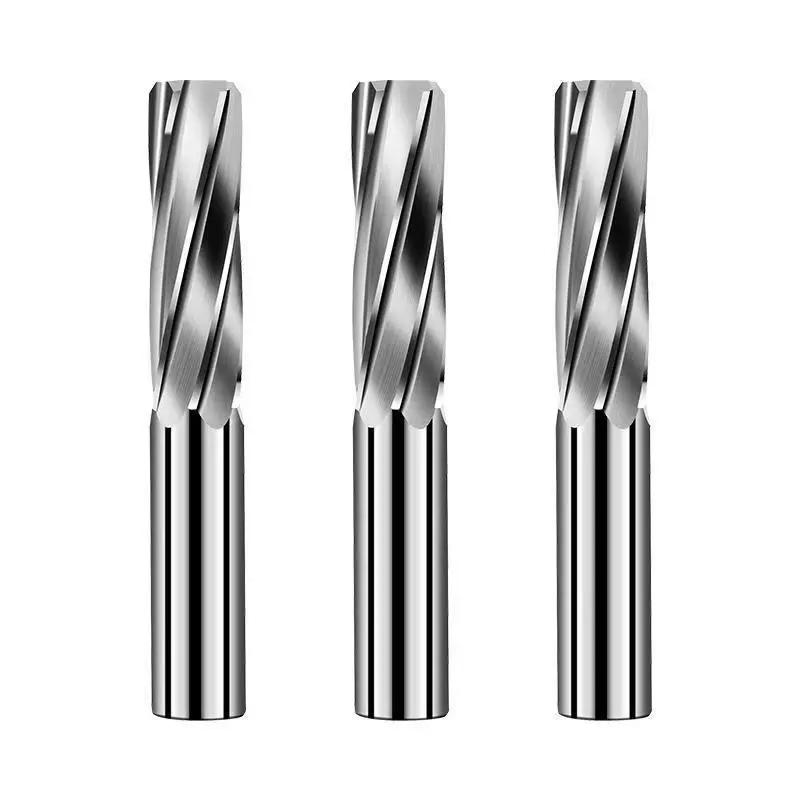
I have seen many machining results improve simply because the tool geometry matched the application more closely. Straight flute and spiral flute designs, for example, are not interchangeable in every case. Each structure influences chip flow, cutting smoothness, and behavior in different materials.
Choosing the wrong geometry can lead to problems that buyers often mistake for machine instability or operator error. In reality, the tool may simply not suit the material, hole condition, or production target. A better reaming strategy starts by matching the geometry to the job.
- Straight flute designs are often preferred for certain general-purpose finishing tasks
- Spiral flute designs can help improve chip evacuation in more demanding situations
- Application-specific design reduces resistance and improves surface consistency
- Proper edge preparation helps control wear and cutting smoothness
That is one reason experienced manufacturers stand out. They do not just list products. They understand why one design works better than another in real machining conditions.
How Do Reliable Suppliers Help Reduce Long-Term Production Costs?
Some buyers still compare tools only by unit price, but that approach can become expensive very quickly. I prefer to calculate value based on performance over time. A cheaper tool that wears early, causes more rejects, or requires more frequent changes can cost far more than a precision product with better consistency.
Reliable Reaming Tools help reduce long-term operating costs in several ways:
| Cost Factor | Low-Performance Tool Risk | Value of a Better Tool |
|---|---|---|
| Scrap rate | More out-of-tolerance parts | Improved dimensional consistency |
| Tool replacement | Frequent downtime and inventory pressure | Longer service life |
| Machine utilization | Interrupted workflow and unstable output | Smoother production rhythm |
| Manual rework | Extra labor and delayed delivery | Cleaner finished holes from the start |
| Customer complaints | Assembly issues and inconsistent quality | More dependable finished parts |
From that perspective, buying precision tools is not about paying more. It is about avoiding repeated losses that eat away at profit margins.
What Makes a Manufacturing Partner More Trustworthy?
When I assess a machining tool supplier, I pay attention to more than product descriptions. A strong partner usually shows depth in manufacturing, not just sales language. Buyers are safer when they work with companies that understand production realities and can support both standard and custom requirements.
Here is what I consider a positive sign:
- Clear specialization in precision machining or cutting tools
- Ability to offer both standard and non-standard solutions
- Experience serving industries with demanding tolerance requirements
- Stable quality control from production to final delivery
- Willingness to discuss application details instead of giving generic answers
- Practical support for material selection and processing needs
This is why suppliers with a clear focus on precision tool manufacturing tend to earn more repeat business. Buyers need confidence that the product will perform not only in a sample test, but across repeated orders and real production cycles.
How Can Reaming Tools Support Different Industrial Applications?
I do not think smart buyers choose tools in isolation. They choose them according to the application environment. Different industries expect different results, and the best suppliers understand those differences.
| Industry | Typical Demand | How Reaming Tools Help |
|---|---|---|
| Automotive | Dimensional stability in high-volume parts | Supports repeatable hole accuracy and smoother assembly |
| Aerospace | Strict tolerance and finish requirements | Improves finishing precision in critical components |
| Precision machinery | Reliable fit and motion performance | Creates cleaner, more accurate finished holes |
| Custom CNC manufacturing | Flexible response to varied projects | Supports specialized finishing needs |
| Industrial equipment | Durability and stable part quality | Helps reduce inconsistency and downstream issues |
The more demanding the application, the more important tool finishing performance becomes. That is why professional buyers pay close attention to reaming rather than assuming drilling alone is enough.
Why Is Customization So Important for Serious Buyers?
Standard products are useful, but they do not solve every challenge. In my experience, many production lines eventually reach a point where standard tool sizes or structures no longer fully match the workpiece, machine setup, or required result. That is where customization becomes a real advantage.
A supplier that can support custom solutions gives buyers more control over:
- Special diameters or tolerances
- Specific workpiece materials
- Machine compatibility
- Surface finish targets
- Tool life expectations
- Unique production workflows
This flexibility matters because industrial buyers are rarely looking for a one-size-fits-all answer. They are looking for the right answer for their own process. When a supplier can adapt to that reality, the relationship becomes much more valuable.
What Should I Ask Before Sending an Inquiry?
If I were preparing to source new Reaming Tools, I would not stop at product photos or a short item description. I would ask targeted questions that reveal whether the supplier truly understands precision finishing.
- Which workpiece materials are these tools best suited for?
- What hole tolerance range can the tool support under stable conditions?
- Is there a recommendation for flute style based on my application?
- Can you support custom dimensions or non-standard designs?
- How do you control consistency across batch production?
- What industries do you regularly serve?
- How do you help customers improve tool life and machining efficiency?
Strong suppliers are usually comfortable answering these questions in a practical, direct way. Weak suppliers tend to respond with vague language that does not help real purchasing decisions.
How Can the Right Choice Strengthen My Competitive Advantage?
Precision machining is increasingly competitive, and many buyers are under pressure to deliver tighter tolerances, faster lead times, and more reliable part quality at the same time. I believe one of the smartest ways to strengthen a manufacturing operation is to improve the stability of the finishing process. That is exactly where dependable Reaming Tools create measurable value.
When hole finishing becomes more predictable, the whole production chain benefits. Operators gain confidence, inspection results become more stable, assembly problems decrease, and customers receive parts with stronger consistency. That is not a small improvement. It is a meaningful business advantage.
Why Should I Take the Next Step Now?
If your team is struggling with hole tolerance issues, rough internal finishes, unstable tool life, or inconsistent batch performance, it may be time to rethink your finishing strategy. Choosing high-quality Reaming Tools from a capable manufacturer can help you reduce waste, improve product quality, and build a more efficient machining process from the ground up.
Ningbo Wangdefu Precision Machinery Co.Ltd. represents the kind of manufacturing partner buyers often look for when they need precision, consistency, and practical support rather than generic promises. If you are sourcing dependable finishing solutions for CNC and precision machining applications, now is the right moment to move forward. Please contact us with your drawings, specifications, or project requirements, and let the right Reaming Tools help you achieve cleaner holes, better tolerance control, and stronger production results.