

Why Choose Welded Steel Pipe for Modern Construction Projects?
2026-05-12
Summary: Welded steel pipes are essential in construction, infrastructure, and industrial applications. This article explores their benefits, production methods, applications, and how Shunchen provides high-quality welded steel pipes to meet industry demands. Learn everything you need to make an informed decision for your next project.
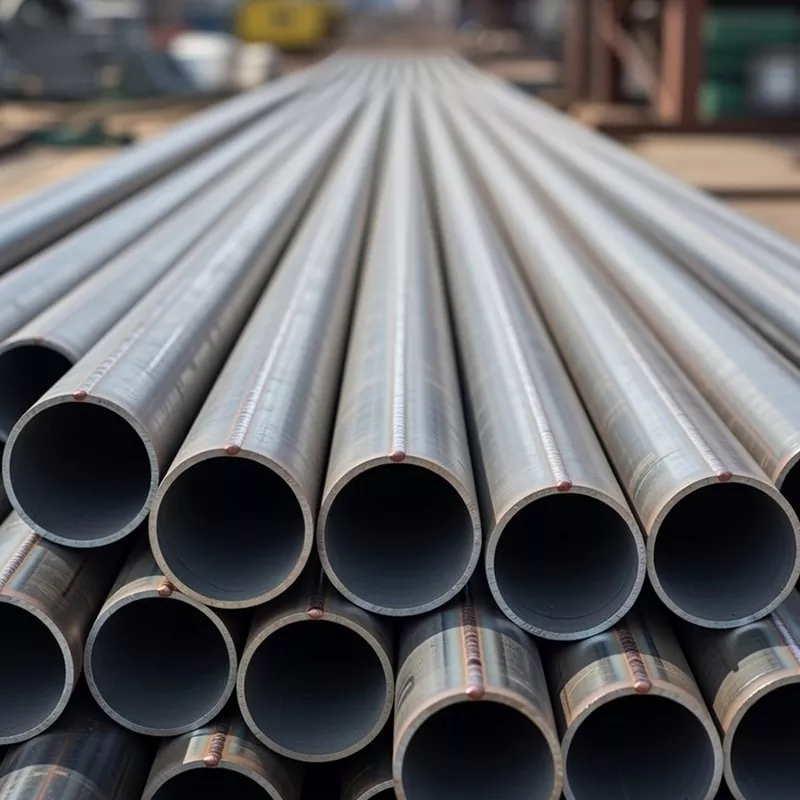
Table of Contents
- What Are Welded Steel Pipes?
- How Are Welded Steel Pipes Made?
- Why They Are Important
- Types of Welded Steel Pipes
- Applications
- Advantages of Welded Steel Pipes
- FAQ
- Conclusion
What Are Welded Steel Pipes?
Welded steel pipes are tubular steel products created by rolling steel sheets or strips and joining the edges using welding techniques. Unlike seamless pipes, which are made from a single solid billet, welded pipes are more cost-effective and versatile. They are widely used in construction, oil and gas transport, water pipelines, and structural applications.
- Constructed by welding rolled steel sheets
- Available in various diameters and thicknesses
- Cost-efficient and easy to customize
- Available in carbon steel, stainless steel, and alloy steel
How Are Welded Steel Pipes Made?
The manufacturing of welded steel pipes involves several steps to ensure strength, uniformity, and reliability. Shunchen follows industry standards to produce durable and precise welded pipes.
- Steel Preparation: High-quality steel sheets or coils are inspected for consistency and defects.
- Forming: Steel is rolled into the desired cylindrical shape.
- Welding: Edges are welded using electric resistance welding (ERW) or submerged arc welding (SAW).
- Sizing and Straightening: Pipes are resized and straightened to exact dimensions.
- Inspection: Non-destructive testing ensures no cracks or defects.
- Finishing: Pipes are cut to length, coated, and packaged for shipment.
| Step | Description | Benefit |
|---|---|---|
| Steel Preparation | Check for material consistency and quality | Ensures strong and defect-free pipes |
| Forming | Roll steel into cylindrical shape | Customizable diameter and thickness |
| Welding | Join edges with ERW or SAW | Creates durable, leak-proof joints |
| Inspection | Non-destructive testing for defects | Ensures product reliability |
Why They Are Important
Welded steel pipes are crucial in modern infrastructure because they combine strength, efficiency, and affordability. Using high-quality welded pipes from Shunchen ensures longevity and safety in construction, energy, and water systems.
- Reduce construction costs compared to seamless pipes
- Support high-pressure applications in oil and gas
- Provide structural strength in building frameworks
- Resistant to corrosion when properly coated
Types of Welded Steel Pipes
Welded steel pipes can be classified based on the manufacturing process or material type. Shunchen offers a variety of options to suit different needs:
- Electric Resistance Welded (ERW): Used for low to medium pressure applications.
- Submerged Arc Welded (SAW): Suitable for large-diameter, high-pressure pipelines.
- Carbon Steel Pipes: Common in construction and water systems.
- Stainless Steel Pipes: Corrosion-resistant for chemical and food processing industries.
- Alloy Steel Pipes: High strength for specialized industrial applications.
Applications
Welded steel pipes are versatile and widely applied across industries:
- Construction: Structural support, scaffolding, and framing.
- Oil and Gas: Transport pipelines and refinery systems.
- Water and Sewage: Municipal water supply, drainage systems.
- Industrial: Mechanical and chemical process piping.
- Energy: Power plants and renewable energy structures.
Advantages of Welded Steel Pipes
Choosing welded steel pipes from Shunchen offers multiple benefits:
- Cost-Effective: Less expensive than seamless pipes with similar strength.
- Customizable: Various diameters, lengths, and wall thicknesses.
- Durable: With proper coating, welded pipes resist corrosion and pressure.
- Wide Availability: Easily sourced for large-scale projects.
- Ease of Installation: Lightweight and simple to transport.
FAQ
- Q1: Are welded steel pipes as strong as seamless pipes?
- A1: Yes, when manufactured according to standards, welded pipes can match seamless pipes in strength for most applications.
- Q2: What materials are welded steel pipes made from?
- A2: They are typically made from carbon steel, stainless steel, or alloy steel depending on the application.
- Q3: How does Shunchen ensure quality?
- A3: Shunchen follows strict quality control procedures including material inspection, welding standards, and non-destructive testing.
- Q4: Can welded steel pipes be used for high-pressure pipelines?
- A4: Yes, especially SAW welded pipes are suitable for high-pressure applications in oil, gas, and water transport.
- Q5: What coatings are available?
- A5: Shunchen offers galvanization, anti-corrosion coatings, and epoxy coatings to enhance pipe longevity.
Conclusion
Welded steel pipes are an essential choice for modern construction, industrial, and infrastructure projects. Their versatility, cost-effectiveness, and strength make them a reliable option for any application. Shunchen provides high-quality welded steel pipes that meet rigorous standards, ensuring durability and performance for your projects.
Ready to upgrade your infrastructure with premium welded steel pipes? Contact us today and discover how Shunchen can provide the ideal solution for your needs.