

Why Are Stainless Steel Industrial Welded Pipes Used in Heat Exchangers?
2026-09-23
When a heat exchanger is being specified, the tube material is usually the first decision. The second decision is whether to use seamless or welded construction. For decades, seamless tubes were the default for critical heat exchanger service. But in the last 20 years, Stainless Steel Welded Pipe has become the preferred choice for a growing range of applications—not because it is cheaper, but because the manufacturing technology has improved to the point where the weld is no longer the weak point. This guide explains the metallurgical and practical reasons behind that shift, and the conditions under which welded tubes are acceptable or not acceptable.
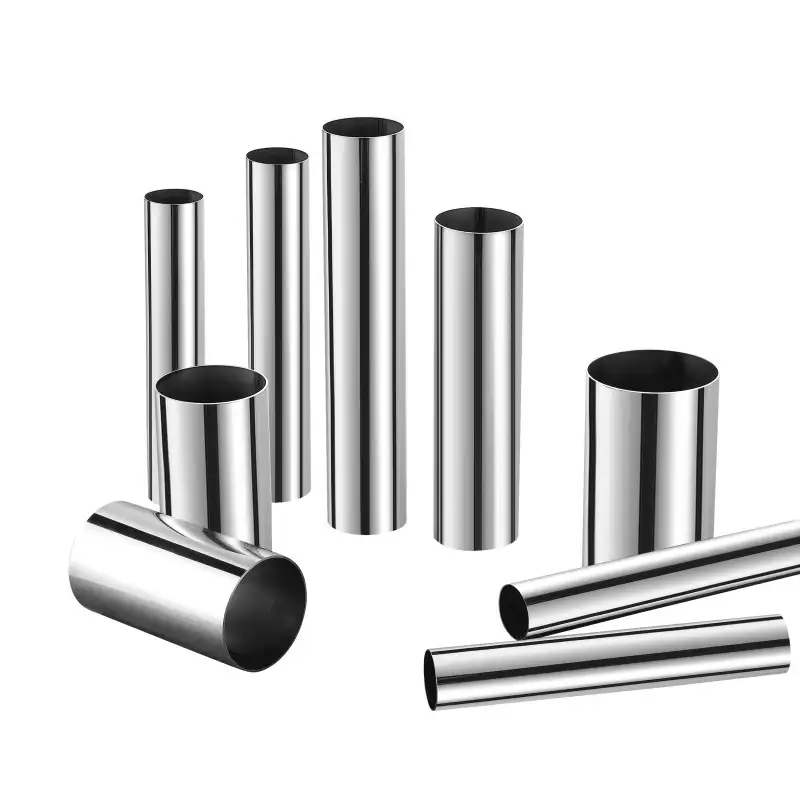
1. What Does a Heat Exchanger Require From Its Tube Material?
A heat exchanger tube must perform four functions simultaneously. It must transfer heat efficiently, resist corrosion from both the tube-side and shell-side fluids, withstand the operating pressure and temperature, and maintain its integrity over thousands of thermal cycles. The tube material must also be formable enough to be rolled into the tubesheet and bent into U-shapes if required. Stainless steel is chosen for many heat exchanger applications because it combines high thermal conductivity with excellent corrosion resistance. The table below shows the typical requirements for different heat exchanger services.
| Service condition | Typical tube material | Key requirement | Welded or seamless |
| Cooling water (clean) | 304 / 316L stainless | Corrosion resistance, heat transfer | Welded acceptable |
| Cooling water (brackish) | 316L / duplex | Chloride resistance | Welded acceptable with proper weld |
| Process fluid (hydrocarbon) | 304 / 316L | Pressure, temperature | Seamless preferred |
| Steam condenser | 304 / 316L | Thermal cycling, corrosion | Welded acceptable |
| High pressure gas | 316L / alloy | Pressure containment | Seamless required |
Zhejiang HengDi Stainless Steel Co., Ltd. manufactures Stainless Steel Welded Pipe for heat exchanger applications. Our factory produces tubes in 304, 316L, and duplex grades, with diameters from 6 mm to 50 mm and wall thicknesses from 0.5 mm to 3 mm. We provide eddy current tested and hydrostatically tested tubes for critical service.
2. How Has Welded Tube Technology Improved to Match Seamless Performance?
The historical concern with welded tubes was the weld seam. In early welded tubes, the weld was often the initiation point for corrosion and cracking. But modern welded tube manufacturing has addressed this in three ways. First, the welding process itself has improved. Laser welding and high-frequency welding produce a narrow, clean weld with minimal heat-affected zone. Second, the weld is often cold-worked or annealed after welding to restore the metallurgical structure. Third, the weld is inspected 100 percent by eddy current testing, which detects any defect that could become a leak path. The table below compares the properties of modern welded tubes with seamless tubes.
| Property | Welded tube (modern) | Seamless tube |
| Wall thickness tolerance | ±5% | ±10% |
| Surface finish (internal) | Ra 0.4 – 0.8 µm | Ra 0.8 – 1.6 µm |
| Weld seam integrity | Eddy current tested 100% | N/A |
| Corrosion resistance at weld | Equal to parent metal (after annealing) | Uniform |
| Cost per meter | 20 – 30% lower | Baseline |
In our factory, we produce Stainless Steel Welded Pipe with a weld seam that is annealed in-line after welding. This heat treatment relieves the residual stresses and restores the corrosion resistance of the weld zone. We also perform a flattening test and a reverse bend test on every batch to verify the ductility of the weld.
3. In What Heat Exchanger Applications Are Welded Pipes Acceptable?
Welded tubes are acceptable in four heat exchanger applications. The first is shell-and-tube heat exchangers with moderate pressure and temperature. The second is air-cooled heat exchangers where the tube is supported along its length. The third is condensers and evaporators in refrigeration systems. The fourth is any application where the tube is not subjected to high cyclic stress or severe corrosion. The table below shows the recommended limits for welded tube use.
| Parameter | Welded tube limit | Seamless tube required above |
| Maximum operating pressure | 100 bar (depending on wall) | 100 bar |
| Maximum operating temperature | 400°C | 400°C |
| Thermal cycling | Moderate (10,000 cycles) | Severe (>100,000 cycles) |
| Corrosive media | Mild to moderate | Severe (chlorides, acids) |
| Tube-side fouling | Low to moderate | High (requires cleaning) |
Selection rule of thumb: Use welded tubes for clean service, moderate pressure, and moderate temperature. Use seamless tubes for high pressure, high temperature, severe corrosion, or high-cycle fatigue. When in doubt, review the specific operating conditions with the tube manufacturer.
4. How Does the Weld Seam Affect Heat Transfer and Pressure Drop?
The weld seam has a negligible effect on heat transfer and pressure drop. The internal weld bead is typically ground flush with the tube wall, so the internal diameter is uniform. The heat transfer coefficient is determined by the tube material, the wall thickness, and the fluid properties—not by the presence of a weld. In our factory, we measure the internal weld bead height and ensure that it does not exceed 0.1 mm. This is well below the boundary layer thickness, so it does not affect the flow. The pressure drop is also unaffected because the internal diameter is constant. The table below shows the heat transfer performance of welded and seamless tubes in a typical water-to-water heat exchanger.
| Parameter | Welded tube | Seamless tube |
| Overall heat transfer coefficient (W/m²K) | 1,850 | 1,850 |
| Pressure drop (kPa per meter) | 1.25 | 1.25 |
| Internal diameter tolerance | ±0.05 mm | ±0.10 mm |
| Fouling tendency | Same as seamless | Baseline |
The tighter internal diameter tolerance of welded tubes is actually an advantage. It allows the heat exchanger designer to predict the pressure drop and heat transfer more accurately, which can reduce the required surface area and the cost of the exchanger.
Frequently Asked Questions About Stainless Steel Welded Pipes in Heat Exchangers
Summary for Heat Exchanger Manufacturers and Designers
Stainless Steel Welded Pipe is used in heat exchangers because modern welding and annealing technology has eliminated the historical weakness of the weld seam. Welded tubes now offer corrosion resistance, pressure containment, and heat transfer performance that are equivalent to seamless tubes in most applications, at a lower cost and with a shorter lead time. The key is to verify the weld quality through eddy current testing and to ensure that the tube grade is appropriate for the service conditions. Zhejiang HengDi Stainless Steel Co., Ltd. has been manufacturing welded tubes for over 18 years and supplies to heat exchanger manufacturers worldwide.
Zhejiang HengDi Stainless Steel Co., Ltd. manufactures Stainless Steel Welded Pipe in 304, 316L, and duplex grades for heat exchanger applications. We provide eddy current test reports, hydrostatic test certificates, and material certificates for all of our products.