

Why Are Q235B Steel Pipes Still My Practical Choice for Reliable Structural and Industrial Projects?
2026-04-03
When I evaluate steel pipe options for construction, fabrication, fluid transport, and general manufacturing work, I do not start with flashy claims. I start with consistency, weldability, availability, and cost control. That is exactly why I keep coming back to Q235B Steel Pipes. In my experience, when I work with suppliers such as Tianjin Juming Steel Pipe Co., Ltd., what matters most is not a dramatic promise but a product that fits real project conditions, shipment schedules, and budget expectations. A dependable steel pipe has to make my sourcing easier, my processing smoother, and my finished application more stable from start to finish.
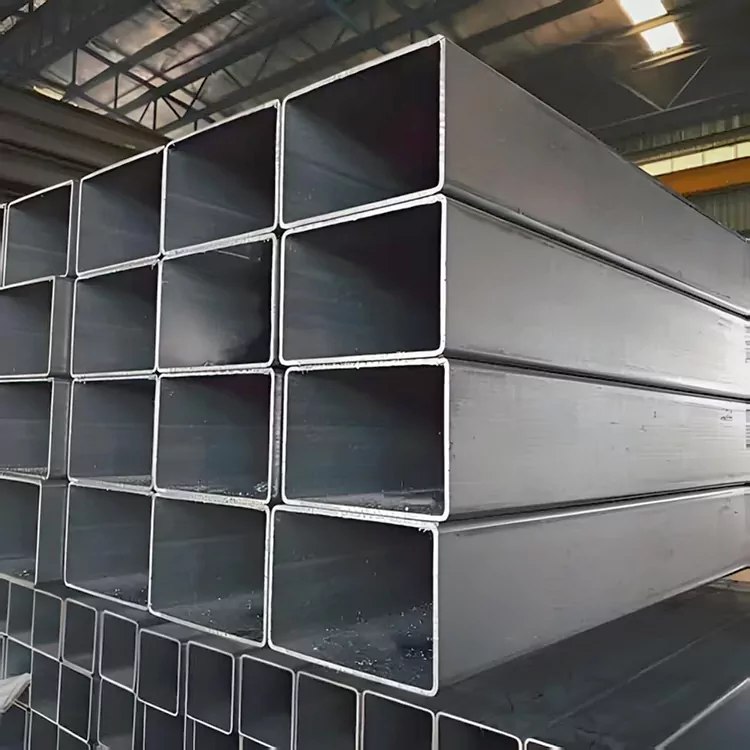
What Makes Q235B Steel Pipes So Widely Used Across Different Industries?
I often see buyers hesitate because many steel grades appear similar on paper. But once I compare them from a practical purchasing angle, the appeal becomes clearer. Q235B Steel Pipes are commonly selected because they offer a balanced combination of mechanical performance, forming ability, and economic value. For many everyday industrial and structural uses, I do not need an unnecessarily expensive material. I need a pipe that is strong enough, easy to fabricate, and steady in supply.
That balance is what makes this material so useful in applications such as:
- Building structures and support frames
- Mechanical fabrication and equipment bases
- Scaffolding and general engineering projects
- Low-pressure fluid and water transportation systems
- Fencing, railings, and protective structures
- Agricultural, municipal, and infrastructure installations
From my point of view, the real advantage is flexibility. I can source the same general product family for multiple project needs instead of overcomplicating procurement with too many specialized grades.
How Do I Judge Whether a Steel Pipe Is Truly Buyer Friendly?
When I buy steel pipe, I do not judge it by one specification alone. I look at the full buying experience. That includes dimensional consistency, surface quality, processing convenience, packaging reliability, and shipment coordination. A product becomes buyer friendly when it reduces hidden costs after purchase, not just the price on the quotation sheet.
I usually review the following factors before making a decision:
| Buying Factor | Why I Care About It | How It Affects My Project |
|---|---|---|
| Material stability | I want predictable performance during cutting, welding, and forming | Reduces processing errors and rework |
| Dimensional accuracy | I need the outer diameter, wall thickness, and length to match requirements | Improves assembly efficiency |
| Surface condition | I prefer clean, uniform surfaces for coating or direct use | Supports better finishing results |
| Supply capacity | I need stable production for repeated or bulk orders | Protects project timelines |
| Customization support | I often need different sizes or finishing options | Makes sourcing more efficient |
| Packing and shipping | I want to minimize damage and delivery confusion | Helps me receive usable goods faster |
If a supplier can meet these needs consistently, the purchase becomes much more valuable than a low initial unit price alone.
Why Do I Prefer Steel Pipes That Are Easy to Process?
I have learned that a pipe can look cost effective at first and still become expensive during fabrication. That usually happens when cutting is inefficient, welding becomes unstable, or shaping introduces avoidable waste. This is one reason I appreciate Q235B Steel Pipes. They are commonly chosen for projects that require regular workshop processing because they are generally practical to cut, weld, bend, and assemble.
That matters a lot for buyers like me because processing convenience translates into real savings:
- I can reduce labor time during fabrication
- I can improve fit-up efficiency in structural work
- I can keep welding operations more straightforward
- I can lower the chance of avoidable material loss
- I can simplify downstream finishing or galvanizing preparation
If I am handling a project with repeated fabrication steps, this kind of material practicality often matters more than chasing a grade that sounds more advanced but adds unnecessary cost.
Which Project Pain Points Can the Right Pipe Supplier Help Me Solve?
Most buyers do not struggle only with the product itself. We struggle with the uncertainty around the product. I have seen projects delayed because of inconsistent sizes, unclear communication, shipment mistakes, or vague production schedules. So when I assess a supplier, I also ask whether they can help solve the usual sourcing pain points.
Here are the problems I try to avoid and the kind of supplier support that helps:
| Common Buyer Problem | What I Need From a Supplier | Why It Matters |
|---|---|---|
| Unclear specifications | Fast confirmation of size, thickness, length, and standard details | Prevents wrong orders |
| Inconsistent product batches | Stable manufacturing and quality checks | Protects installation quality |
| Long lead times | Reasonable production planning and stock support | Keeps project deadlines intact |
| Poor export coordination | Clear packing, loading, and shipping communication | Reduces delivery risk |
| Limited order flexibility | Support for varied dimensions and order quantities | Fits different project scales |
In my experience, suppliers that understand export business and industrial purchasing behavior make the process smoother from inquiry to delivery. That is often what separates a usable quote from a truly workable supply relationship.
How Can I Compare Q235B Steel Pipes With Other Sourcing Options Without Overcomplicating the Decision?
I do not like making procurement decisions harder than they need to be. When I compare material options, I focus on whether the chosen product matches the actual working conditions. If the application does not demand a premium-grade solution, I would rather use a dependable, economical, and easy-to-process pipe than overspend for features I do not really need.
This is how I typically think about the comparison:
| Comparison Point | Q235B Steel Pipes | Higher-Cost Alternatives |
|---|---|---|
| Cost control | Usually more budget friendly for common applications | Often higher than necessary for routine use |
| Fabrication convenience | Practical for general cutting and welding work | May not deliver enough added value for simple projects |
| Application range | Suitable for a wide variety of structural and industrial uses | Better reserved for more demanding conditions |
| Procurement efficiency | Commonly available and easier to source in volume | May involve higher procurement pressure |
That is why I see this product as a sensible purchasing option. It is not about buying the cheapest item. It is about buying the most appropriate one for the job in front of me.
What Should I Ask Before Placing an Order?
Before I send a purchase order, I like to confirm the details that matter most in actual use. A smooth transaction usually starts with a detailed inquiry, and I have found that better questions lead to better offers.
I usually confirm these points:
- What outer diameter, wall thickness, and length are available?
- Can the supplier provide black steel pipe, coated options, or other finishing choices if needed?
- What are the packing methods for container loading and export shipment?
- Can the supplier support bulk orders and repeated supply?
- How are product dimensions and quality checked before shipment?
- Can custom requirements be discussed for project-based orders?
These questions help me avoid vague quotations and make it easier to compare suppliers fairly. They also show whether the supplier understands the way real industrial buyers think.
Why Does Supplier Communication Matter Almost as Much as the Product Itself?
I have worked on enough sourcing projects to know that communication quality often decides whether the order feels easy or exhausting. Even if the material is suitable, poor response speed or unclear technical answers can create uncertainty. For that reason, I value suppliers that can explain product details clearly, respond to specification requests directly, and coordinate the order with a practical mindset.
When I deal with a supplier that understands export packing, industrial usage, and specification matching, I spend less time correcting mistakes and more time moving the project forward. That is especially important when the buyer is handling multiple products, several delivery stages, or tight construction schedules.
For me, good communication means:
- Clear and direct replies to technical questions
- Reasonable support for size and order confirmation
- Transparent discussion of delivery expectations
- Professional handling of export details
- A practical attitude toward long-term cooperation
How Do I Know When Q235B Steel Pipes Are the Right Fit for My Next Order?
I usually know they are the right fit when the project calls for dependable performance without unnecessary cost escalation. If I need steel pipes for structural fabrication, support systems, general engineering, or low-pressure transport use, this grade often makes sense. It gives me a realistic balance of usability, availability, and overall value.
I also see strong value in working with suppliers that can align product options with actual buying needs instead of pushing generic sales language. A company such as Tianjin Juming Steel Pipe Co., Ltd. can be relevant to buyers who want product choices that support industrial use, project planning, and export-oriented purchasing in a more practical way.
At the end of the day, my decision is simple. I choose materials that help me stay on schedule, stay within budget, and finish the job with confidence. That is why Q235B Steel Pipes remain a smart option for many common industrial and construction applications, and why I continue to view them as a reliable answer to real-world sourcing challenges.
Where Can I Find a Trustworthy Supply Partner and Take the Next Step?
If you are also comparing suppliers and want a steel pipe solution that is practical, cost-conscious, and suitable for a wide range of uses, now is a good time to move from research to action. If you want detailed product information, size support, or a quotation tailored to your project, contact us and send your inquiry. I believe the best sourcing results start with a clear conversation, and the right supplier can help turn your requirements into a more efficient and dependable purchase.