

Why Are Plastic Coated Composite Pipes Becoming the Preferred Choice for Water Supply Systems
2026-02-27
In the evolving landscape of modern infrastructure, the question of why Plastic Coated Composite Pipes are becoming the preferred choice for water supply systems is increasingly relevant. Engineers and project managers are shifting away from traditional materials due to issues like corrosion and high maintenance costs. At Juming, we specialize in manufacturing high-quality Plastic Coated Composite Steel Pipes that offer a superior alternative for potable water, industrial water transmission, and municipal piping networks. This article explores the technical and economic advantages driving this global trend.
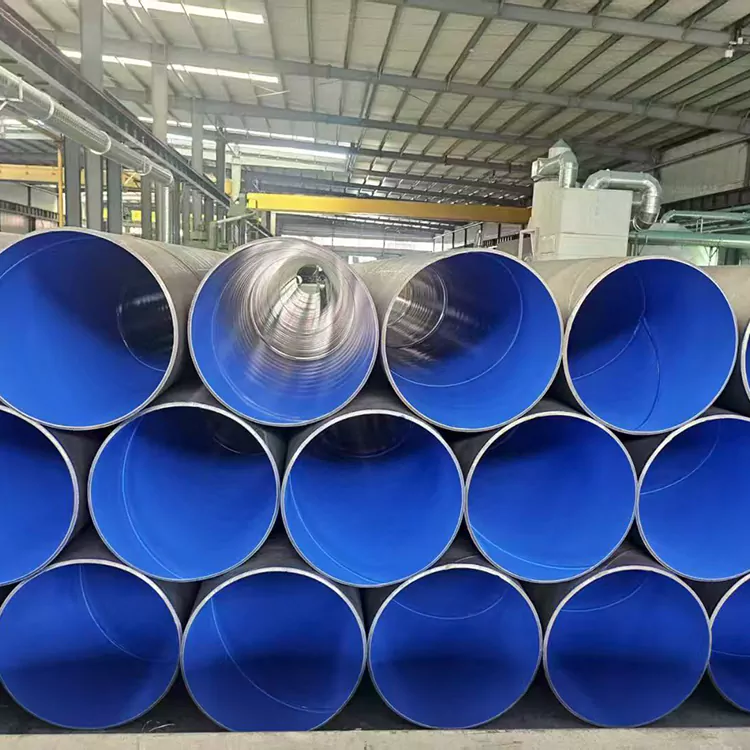
Key Advantages Over Traditional Piping Materials
The decision to select Plastic Coated Composite Steel Pipes for water supply hinges on several critical performance factors. Below is a comparison highlighting why these pipes outperform conventional options.
| Feature | Plastic Coated Composite Steel Pipes | Galvanized Steel Pipes | Pure Plastic Pipes (PVC/HDPE) |
|---|---|---|---|
| Corrosion Resistance | Excellent (internal & external coating) | Poor (prone to rust over time) | Excellent |
| Structural Strength | High (steel core provides rigidity) | High | Low (flexible, requires more support) |
| Flow Efficiency | Superior (smooth coating reduces friction) | Decreases over time due to scaling | Superior |
| Installation Cost | Moderate (lightweight than pure steel) | High (heavy, requires heavy machinery) | Low |
| Lifespan | 50+ years | 20-40 years | 25-50 years |
Why Engineers Specify Juming Composite Pipes
When evaluating water supply infrastructure, the total cost of ownership is paramount. Plastic Coated Composite Steel Pipes from Juming provide a unique combination of strength and longevity. The steel core withstands heavy soil loads and traffic vibrations, a significant weakness in pure plastic systems. Meanwhile, the plastic coating eliminates the risk of corrosion that plagues metal pipes, ensuring water quality remains high without metallic contamination.
Furthermore, the smooth interior surface of a Juming composite pipe significantly reduces energy costs. Pumps require less energy to push water through because the friction factor is drastically lower than in aged steel or rough concrete pipes. This energy efficiency, combined with minimal maintenance requirements, makes them the most economically sound choice for long-term projects.
Common Applications in Modern Infrastructure
The versatility of Plastic Coated Composite Steel Pipes allows them to be deployed across a wide spectrum of water supply scenarios:
-
Municipal Potable Water Networks: Ensuring clean drinking water reaches homes without contamination.
-
Industrial Water intake and Cooling: Resisting chemical additives and temperature variations in factory settings.
-
Agricultural Irrigation Systems: Withstanding external corrosion from soil and fertilizers.
-
Desalination Plants: Handling the highly corrosive nature of treated and untreated seawater.
Frequently Asked Questions About Plastic Coated Composite Steel Pipes
What makes the plastic coating adhere to the steel pipe without peeling over time?
At Juming, we utilize a advanced multi-layer bonding technology. The steel pipe undergoes rigorous surface preparation, including shot blasting to create a perfect anchor pattern. We then apply a special adhesive layer between the steel and the outer plastic coating. This thermoplastic or epoxy-based adhesive is chemically activated to fuse with both materials, creating a molecular bond that is virtually inseparable and prevents any peeling or delamination, even under ground movement or temperature changes.
Can Plastic Coated Composite Steel Pipes be used for both underground and above-ground installations?
Yes, absolutely. For underground installations, the external coating provides robust protection against soil corrosion, rock impingement, and bacterial attacks. For above-ground applications, the coating is stabilized with UV inhibitors to prevent degradation from sunlight exposure. The steel core provides the necessary mechanical strength to be supported on racks or sleepers without sagging, which is a common issue with non-reinforced plastic pipes. Juming can customize the coating thickness based on whether the primary environmental threat is underground abrasion or UV radiation.
How does the jointing system work for these composite pipes to ensure a leak-proof water supply system?
Plastic Coated Composite Steel Pipes typically utilize mechanical jointing systems rather than solvent welding or butt-fusion used for pure plastics. The most common method is the use of victaulic or grooved couplings. The ends of the steel pipe are cold-rolled to create a groove without damaging the coating. A two-piece coupling housing with a synthetic rubber gasket is then bolted around the grooved ends. This creates a flexible, leak-tight joint that allows for slight angular deflection and thermal expansion, which is crucial for maintaining integrity in long-distance water supply lines. For specific project requirements, Juming also offers flanged ends or plain ends suitable for welding with subsequent coating repair.
Conclusion and Call to Action
The shift toward Plastic Coated Composite Pipes in water supply systems is driven by an undeniable need for durability, efficiency, and water safety. By combining the structural integrity of steel with the corrosion resistance of modern polymers, these pipes represent the future of water transmission.
If you are planning a new water supply project or looking to upgrade an existing failing system, you need a partner with proven expertise. Contact Juming today to discuss your specific requirements. Let our engineering team help you select the right Plastic Coated Composite Steel Pipes to ensure your infrastructure stands the test of time.