

Why Are Forging Hooks Shaping the Future of Heavy-Duty Lifting?
2025-12-01
A forging hook is a high-strength lifting component produced through closed-die or open-die forging, engineered to handle extreme loads with superior structural integrity. It is widely used in material-handling systems, cranes, hoists, rigging sets, mining operations, marine transport, construction machinery, and manufacturing lines.
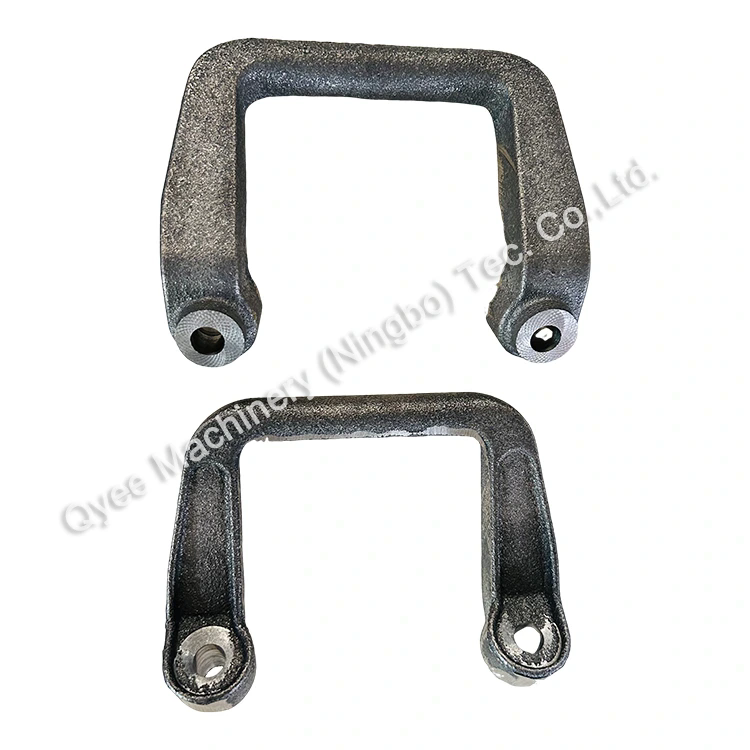
Unlike cast hooks or welded hooks, forging hooks undergo intense compressive deformation during production, resulting in aligned grain structure and enhanced impact resistance. This manufacturing advantage allows the hook to withstand shock loading, cyclic fatigue, harsh environmental conditions, and continuous operation in high-risk applications. For industries requiring uncompromised reliability, forging hooks represent a vital safety and productivity component.
To better understand how they work, it is essential to explore their engineering attributes. From load ratings and surface hardness to dimensional tolerances and safety factors, every specification contributes to the longevity and working stability of the hook.
Typical Product Parameters of a High-Grade Forging Hook
| Parameter Category | Specification Details |
|---|---|
| Material Options | Alloy steel (42CrMo, 35CrMo), carbon steel, stainless steel grades for corrosive environments |
| Manufacturing Method | Closed-die forging, open-die forging, precision forging followed by heat treatment |
| Load Capacity Range | From 0.5 tons to 300 tons, depending on size, shape, and industry application |
| Safety Factor | 4:1 or 5:1 (industry-recommended working load to breaking load ratio) |
| Heat Treatment | Quenching + tempering, normalizing, surface hardening, stress relief |
| Surface Options | Shot-blasted, anti-corrosion coated, galvanized, painted, or powder-coated |
| Hook Types | Eye hook, clevis hook, swivel hook, latch hook, double-hook configuration |
| Mechanical Properties | Tensile strength ≥ 800 MPa, elongation ≥ 17%, impact toughness optimized for shock loads |
| Standards Compliance | EN1677, ASME B30.10, ISO standards depending on region |
| Special Features | Safety latch, thrust bearing, swivel mechanism, precision-machined interface |
These parameters offer a baseline for evaluating hook quality when selecting lifting gear for demanding work environments.
Why Forging Hooks Deliver Superior Strength and Safety in High-Load Operations
Understanding why forging hooks dominate industrial lifting requires a deeper look into performance-driven engineering. Three major forces determine suitability for heavy-load operations: mechanical durability, resistance to failure, and performance consistency under fluctuating stress. Forged components excel in all three areas.
Why Forging Hooks Outperform Cast Hooks
-
Enhanced grain flow: Forging reorganizes metal structures into a unified directional pattern, increasing impact absorption.
-
Higher fatigue life: Ideal for repetitive loading found in crane operations.
-
Lower defect risk: Casting risks porosity and micro-cracks; forging dramatically reduces such issues.
-
Greater yield strength: A forged hook can tolerate load spikes that would compromise other manufacturing methods.
Why the Choice of Steel Matters
Using alloy steel such as 42CrMo increases resistance to wear, abrasion, and high-temperature operation. Carbon steels provide cost-effective durability, while stainless steels enhance corrosion resilience for marine, offshore, or chemical environments.
Why Safety Factor Is Critical
The safety factor (commonly 4:1 or 5:1) indicates the relationship between the working load limit (WLL) and the minimum breaking load (MBL). A higher safety factor ensures the hook maintains structural integrity even under unexpected dynamic forces such as sudden drops or uneven load distribution.
Why Heat Treatment Defines Strength
Proper heat treatment eliminates stress within the material and reinforces the hook’s ability to withstand sudden shocks. Common processes include:
-
Quenching: Increases hardness and strength.
-
Tempering: Restores ductility and prevents brittleness.
-
Normalizing: Helps the material remain stable under temperature variations.
Through these advantages, forging hooks remain a foundational tool for industries focused on safe, efficient, and long-term lifting solutions.
How Forging Hooks Are Applied, Selected, and Optimized for Industrial Use
Selection and application go hand-in-hand when configuring a safe lifting system. The following considerations help determine the most appropriate hook setup for an operation.
How to Select the Right Forging Hook
Selection should consider the following:
-
Load characteristics: Static load, dynamic vibrations, shock loads, and load center of gravity.
-
Connection type: Eye hooks pair with shackles; clevis hooks attach directly to chains.
-
Rotation requirement: Swivel hooks prevent chain twisting during lifting.
-
Environmental challenges: Chemicals, moisture, salt environments, extreme temperatures.
-
Operational frequency: Frequent lifting demands hooks with superior fatigue strength.
-
Safety latch options: Prevents accidental unhooking during movement or vibration.
How Forging Hooks Are Installed
Correct installation ensures load stability:
-
Inspect hook surface for deformation.
-
Confirm that pin, shackle, or chain link dimensions match the hook eye.
-
Ensure the hook seats fully in the lifting point.
-
Tighten locking mechanisms and confirm no misalignment.
-
Perform pre-lift checks with low tension before full load is applied.
How Forging Hooks Improve Operational Efficiency
-
Reduce downtime caused by failures.
-
Support higher load limits with the same equipment.
-
Lower maintenance costs through improved durability.
-
Enhance workforce safety, preventing workplace accidents.
-
Contribute to smoother material-handling cycles.
How Future Trends Are Shaping Forging Hooks
The industry is moving toward:
-
Digitally monitored lifting gear: RFID-enabled hooks track load cycles and stress accumulation.
-
Stronger alloy development: Higher-grade steels improve toughness while reducing weight.
-
Advanced surface treatments: Better coatings to resist corrosion in offshore and mining applications.
-
Automation-ready lifting systems: Smart cranes equipped with automated latch-locking mechanisms.
-
Sustainability improvements: Low-emission forging processes and recyclable materials.
These future-oriented innovations enhance performance and reliability for global industries.
What Challenges Do Users Face and How Can They Be Solved? (FAQ Included)
Industrial users frequently encounter uncertainty when choosing the correct lifting components or maintaining them over time. Addressing these topics helps prevent misuse, failure, or premature wear.
Common Industry Challenges
-
Misjudging load path and load distribution.
-
Selecting incorrect hook type for the lifting point.
-
Overlooking corrosion risk in marine or chemical environments.
-
Neglecting periodic inspection schedules.
-
Using worn-out or incompatible rigging accessories.
Maintenance Guidelines
To ensure safe operation:
-
Inspect hooks daily for cracks, twists, or deformation.
-
Replace hooks that exceed allowable wear limits (typically 10% throat opening increase).
-
Keep hooks lubricated when used with swivels or bearings.
-
Maintain clean surfaces and remove rust or dirt buildup.
-
Follow manufacturer guidelines for heat exposure and mechanical stress.
Two Frequently Asked Questions
Q1: How long can a forging hook typically last in heavy-duty environments?
A1: Service life depends on load conditions, material quality, and application frequency. Under proper maintenance and within rated working limits, a forging hook made from high-grade alloy steel can last several years in industrial environments. In high-cycle operations such as crane yards and steel mills, periodic replacement based on inspection results ensures continued safety. Fatigue cracks, throat opening, or bending are indicators that replacement is necessary.
Q2: Can any forging hook be used in corrosive or marine environments?
A2: No. Standard carbon-steel hooks may degrade quickly in saltwater, humidity, or chemical exposure. For marine operations, hooks made from stainless steel or coated with specialized anti-corrosion layers deliver longer service life. Selecting materials aligned with environmental challenges prevents premature wear and maintains structural integrity under aggressive conditions.
Reliable Forging Hooks Supported by Qyee Engineering Expertise
Forging hooks remain indispensable across industries requiring high-load stability, lifting efficiency, and unwavering safety. Their superiority comes from the forging process, advanced materials, precision heat treatment, and strict compliance with global mechanical standards. As automation, stronger alloys, and digital tracking reshape the future of lifting equipment, forging hooks will continue evolving to meet the demands of next-generation industrial operations.
Qyee provides high-performance forging hooks engineered for diverse applications, supported by strict quality control and reliable technical guidance. For specialized lifting requirements, custom dimensions, or enhanced corrosion-resistant options, contact us to receive detailed product recommendations and professional consultation tailored to your operational needs.