

Which Metal Roof Solar Mount Works Best for Standing Seam Roofs
2026-07-15
When property owners invest in a standing seam metal roof, they often ask about the best way to add solar without compromising the roof’s integrity. The answer is not a single product but a careful selection based on seam type, clamp design, and wind load requirements. Among the many options available, Shunchen has engineered a range of metal roof solar mount solutions that address these variables with precision. This guide breaks down the technical criteria, compares mounting strategies, and answers the most frequent questions installers and owners have about metal roof solar mount systems for standing seam profiles.
Understanding the Standing Seam Advantage
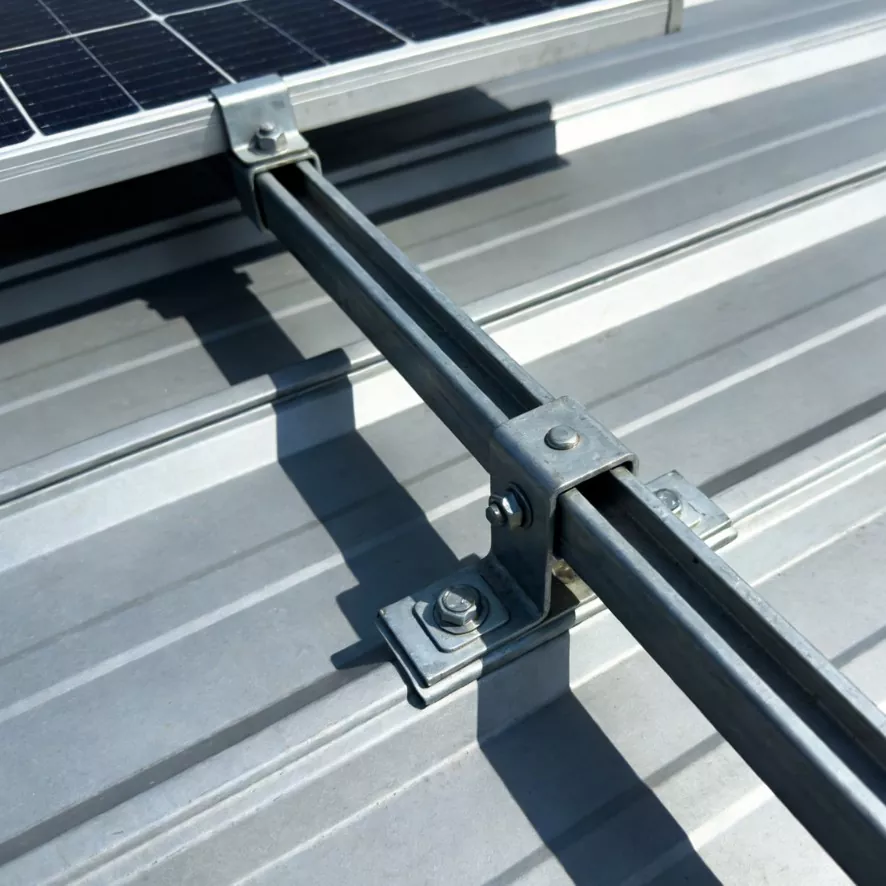
Standing seam roofs feature raised interlocking panels with concealed fasteners. This design makes them ideal for solar because they allow for non-penetrating attachments. Unlike asphalt shingles, where lag bolts penetrate the deck, a proper metal roof solar mount clamps directly onto the vertical seam. This preserves the roof warranty, eliminates leak points, and distributes structural loads evenly.
However, not all seams are identical. The three most common profiles are:
| Seam Type | Height | Typical Clamp Style | Load Capacity |
|---|---|---|---|
| Trapezoidal | 1–2 inches | Side-grip or top-grip | Moderate |
| Vertical/Hemmed | 2–3 inches | Interlocking pinch clamp | High |
| Snap-lock | 0.75–1.5 inches | Spring-assisted clamp | Low–Moderate |
Choosing the right metal roof solar mount starts with matching the clamp geometry to your seam height and shape. Shunchen offers color-coded clamp inserts for each profile, reducing field errors and installation time.
Key Criteria for Selection
To determine which metal roof solar mount works best, evaluate four factors:
-
Clamp Material & Coating – Stainless steel or aluminum with EPDM/gasket protection prevents galvanic corrosion. Shunchen uses 6005-T5 aluminum with anodized finishes, tested for 2,000-hour salt spray resistance.
-
Adjustability – Some rails require pre-drilled holes; others offer continuous channel slots. For standing seam, a mount with ±10° tilt adjustment compensates for roof slope variations.
-
Wind Uplift Rating – Florida Building Code (FBC) and ASTM E1592 standards require minimum 150 psf for hurricane zones. Premium mounts include factory-tested pull-out values.
-
Grounding Mechanism – Integrated stainless-steel grounding teeth eliminate separate bonding jumpers, saving labor and parts.
Comparative Table: Top Mounting Strategies
| Feature | Seam-Clamp System | Rail-less Direct Attach | Hybrid Rail System |
|---|---|---|---|
| Penetration | None | None | None |
| Panel Compatibility | All seam types | Hemmed only | Trapezoidal + Snap-lock |
| Rail Required | Yes (aluminum) | No | Yes (short rails) |
| Installation Speed | Moderate (2–3 min/clamp) | Fast (1 min/clamp) | Slow (custom cutting) |
| Cost per Watt (USD) | $0.18–$0.25 | $0.28–$0.35 | $0.22–$0.30 |
| Best Use Case | Commercial & residential | Low-rise residential | Complex roof geometry |
For most standing seam projects, the seam-clamp system offers the best balance of cost, security, and future serviceability. Shunchen specifically recommends their SC-Series clamp kit for trapezoidal seams and SC-HD series for tall hemmed seams, both of which include pre-installed EPDM liners and torque-limiting set screws.
Installation Best Practices
Even the best metal roof solar mount fails if installed incorrectly. Follow these rules:
-
Always use a torque wrench (factory spec: 18–22 ft-lbs for Shunchen clamps).
-
Place clamps within 6 inches of purlin lines for maximum load transfer.
-
Leave a 1/4-inch gap between rail ends for thermal expansion.
-
Apply anti-seize compound on stainless bolts in coastal environments.
Shunchen provides a free online layout tool that calculates clamp spacing based on your panel gauge and local snow/wind data—a feature that sets their metal roof solar mount ecosystem apart from generic suppliers.
FAQ – Common Questions About Metal Roof Solar Mounts
Q: Can a metal roof solar mount be retrofitted on an old standing seam roof without damaging the panels?
A: Yes, but only if the panels are structurally sound. A metal roof solar mount using seam clamps does not penetrate the panel, so it exerts only compressive force on the seam. However, you must inspect the seam crimps for fatigue—especially on roofs older than 15 years. Shunchen recommends a pull-test on three sample clamps (applying 1.5x design load) before full installation. If the seam deforms or the clamp slips, the panel gauge may be too thin (below 24-gauge), and a structural rail system with wider load distribution becomes necessary. For most 22- and 24-gauge standing seam roofs, retrofitting is both safe and code-compliant when using Shunchen’s rubber-shimmed clamps that accommodate minor seam irregularities.
Q: How does a metal roof solar mount affect the roof’s thermal expansion and contraction?
A: Standing seam roofs expand and contract significantly with temperature changes—up to 1/2 inch per 100 feet per 100°F differential. A rigid metal roof solar mount that locks multiple seams together can restrain this movement, leading to oil-canning or fastener fatigue. The solution is a slide-clip design. Shunchen incorporates a slotted rail connection with a floating nut that allows longitudinal movement up to ±3/4 inch while maintaining vertical clamping force. This design passes ASTM E1512 thermal cycle testing (-20°F to 180°F) with zero clamp loosening. Always specify slide clips for roof lengths exceeding 80 feet, and never use fixed clamps on every seam—alternate fixed and sliding clamps every 4 feet to accommodate expansion.
Q: What maintenance does a metal roof solar mount require over its 25-year lifespan?
A: Very little, but three periodic checks are essential. First, inspect rubber gaskets and EPDM liners every 5 years—if they show cracking or hardening, replace them to prevent metal-to-metal contact. Second, re-torque a random sample of 5% of all clamps at year 1 and year 10; Shunchen’s torque-indicating caps change color when tension drops below spec, making visual inspection simple. Third, clear debris (leaves, pine needles) trapped between the mount and the roof surface, as trapped moisture accelerates bi-metallic corrosion. Shunchen provides a 25-year warranty on their metal roof solar mount components, provided you log these inspections with dated photos. No lubrication or coating is required for anodized aluminum parts, but stainless hardware in marine environments benefits from a light application of anti-corrosion gel during initial installation.
Final Verdict
For standing seam roofs, the best metal roof solar mount is one that matches seam geometry, accommodates thermal movement, and includes verified wind-uplift data. Shunchen meets all three criteria with modular clamp families, factory-engineered slide mechanisms, and third-party testing reports available for every batch. Their systems reduce install labor by 20% compared to field-fabricated solutions, and their clamp inventory covers 95% of standing seam profiles sold in North America.
Ready to specify the right metal roof solar mount for your project? Contact Shunchen today for a free seam-profile consultation and sample kit. Our engineering team provides load calculations, clamp layout drawings, and a customized BOM within 24 hours.