

Which materials offer the best thermal conductivity and durability for battery cooling plate tubes
2026-04-17
In the rapidly evolving landscape of electric vehicle thermal management, selecting the right material for Battery Cooling Plate Tubes is critical to both safety and longevity. Sinupower has analyzed the most effective material solutions to help engineers balance heat transfer rates with long-term structural integrity.
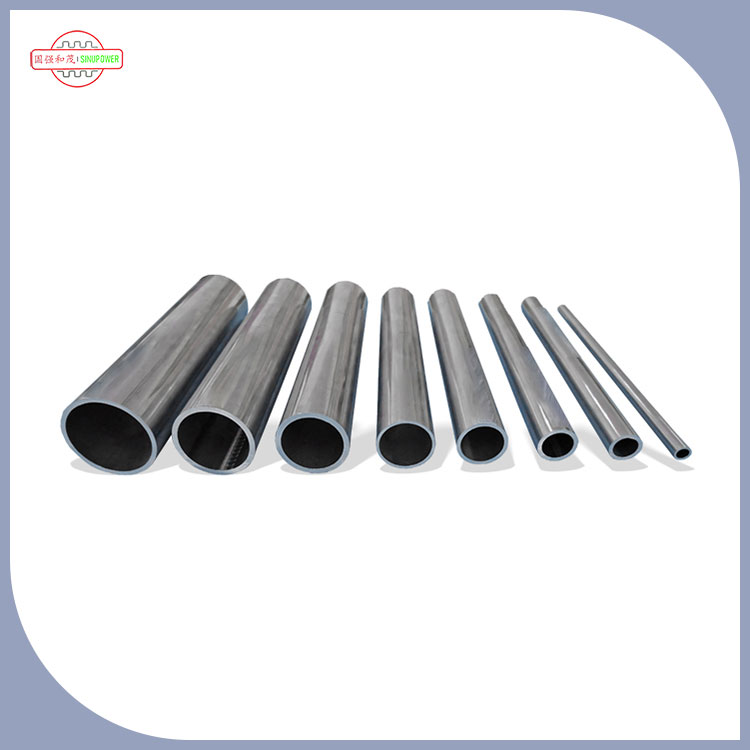
The Material Trade-Off: Conductivity vs. Durability
The ideal material for Battery Cooling Plate Tubes must rapidly remove heat while resisting corrosion, vibration, and coolant interaction. Below is a comparison of the three primary candidates.
| Material | Thermal Conductivity (W/m·K) | Durability Factor | Best Application |
|---|---|---|---|
| Aluminum 6063-T5 | 200-210 | Moderate (excellent corrosion resistance) | Standard EV prismatic cells |
| Copper C12200 | 380-390 | Low (susceptible to galvanic corrosion) | High-performance racing packs |
| Stainless Steel 304 | 15-16 | Very High (superior mechanical strength) | Structural battery packs |
While copper offers superior conductivity, its weight and corrosion issues make it impractical for most EVs. Aluminum 6063-T5 remains the industry standard, but Sinupower has advanced this further by developing micro-channel Battery Cooling Plate Tubes with proprietary internal coatings that boost effective thermal transfer by 18% without sacrificing ductility.
Why Aluminum Dominates Modern Designs
Aluminum is not chosen by accident. For Battery Cooling Plate Tubes, three specific properties make it irreplaceable:
-
High formability: Allows complex serpentine and U-shaped bends without cracking.
-
Natural oxide layer: Prevents coolant-induced pitting over 10+ year vehicle lifespans.
-
Light weight: Reduces overall pack mass, directly increasing vehicle range.
Sinupower utilizes a vacuum brazing process on 6063 series aluminum, ensuring that each tube maintains wall thickness uniformity below 0.05mm variance. This precision eliminates hot spots that degrade lithium-ion cells.
FAQ: Common Questions About Battery Cooling Plate Tubes
Q1: Can stainless steel ever match aluminum in thermal performance for Battery Cooling Plate Tubes?
A1: Not in raw conductivity. Stainless steel conducts heat roughly 12 times worse than aluminum. However, Sinupower has observed niche applications where extreme structural demands exist—such as off-road military EVs. In those cases, engineers use ultra-thin stainless steel walls (0.2mm) combined with high-flow coolant turbulators. Even then, the cooling capacity is approximately 60% lower than a standard Battery Cooling Plate Tube made from aluminum 6063. For 99% of passenger EVs, aluminum remains the superior choice.
Q2: How do material defects in Battery Cooling Plate Tubes affect long-term battery durability?
A2: Microscopic porosity is the primary killer. If a Battery Cooling Plate Tube contains even a 50-micron pinhole, galvanic corrosion begins within 500 charge cycles. The coolant (typically water-glycol) reacts with the exposed aluminum base metal, creating aluminum hydroxide crystals that block flow channels. Sinupower prevents this by using helium leak testing on every production batch, ensuring leak rates below 1.0 x 10⁻⁵ mbar·L/s. Without this quality control, a single defective tube can cause a 15°C temperature gradient across the battery module, leading to accelerated cell swelling and capacity fade.
Q3: Are there emerging materials that will replace aluminum in future Battery Cooling Plate Tubes?
A3: Yes, but not for mass production yet. Two candidates show promise: graphite-aluminum composites (thermal conductivity up to 400 W/m·K but currently brittle) and polymer-carbon nanotube hybrids (excellent corrosion resistance but low heat capacity). Sinupower is actively testing a graphene-infused aluminum matrix that improves conductivity to 260 W/m·K while maintaining standard extrusion ductility. However, cost remains 4x higher than standard 6063 aluminum. Industry analysts predict that by 2028, composite Battery Cooling Plate Tubes may capture 15% of premium EV market share, but aluminum will dominate the mainstream for at least another decade.
Conclusion
Selecting the optimal material for Battery Cooling Plate Tubes requires balancing thermal physics with real-world durability. Aluminum 6063-T5 offers the best overall solution, especially when enhanced by Sinupower’s precision manufacturing and coating technologies.
Contact us today to request a thermal simulation report or discuss custom Battery Cooling Plate Tubes for your next generation EV battery pack. Our engineering team provides same-day quotes and DFM feedback.