

Which materials are most commonly used for Truss Head Half Tubular Rivets in corrosion-prone environments
2026-05-11
When selecting fasteners for marine, chemical, or outdoor applications, Truss Head Half Tubular Rivets must resist rust, pitting, and galvanic degradation. Nuote, a trusted name in precision fastening, supplies these rivets in specialized alloys that balance formability, strength, and corrosion resistance. Below is a professional breakdown of the most suitable materials for harsh conditions.
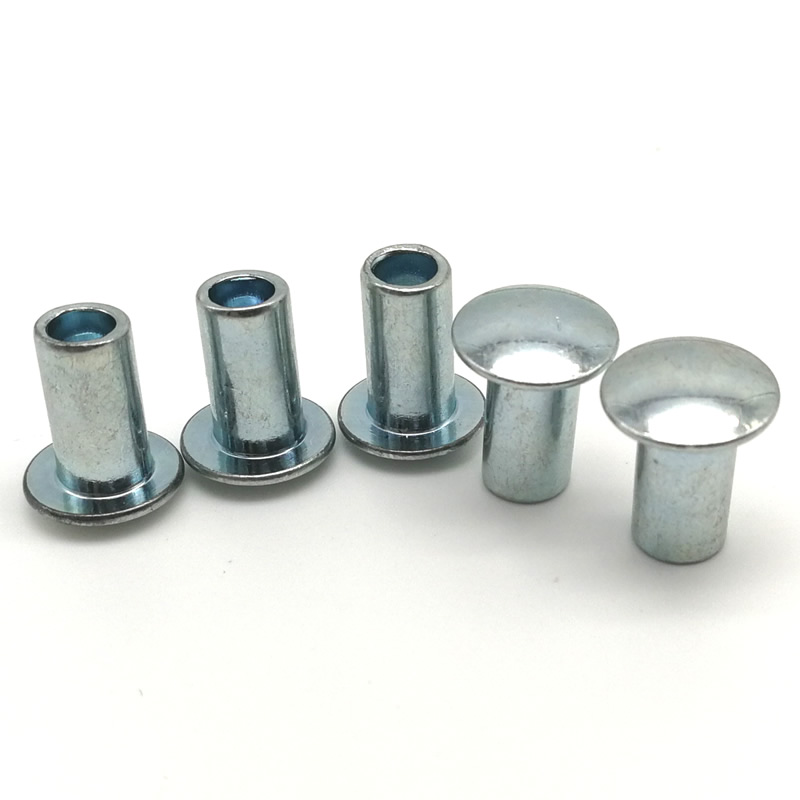
Primary Materials for Corrosion-Prone Environments
| Material | Corrosion Resistance Level | Typical Applications | Key Property |
|---|---|---|---|
| Stainless Steel 304 | High | Coastal equipment, food processing | Excellent general resistance |
| Stainless Steel 316 | Very High | Marine hardware, chemical plants | Molybdenum addition resists chlorides |
| Aluminum 5052 | Moderate-High | Outdoor lighting, automotive trim | Lightweight, naturally passivating |
| Copper | High (specific environments) | Roofing, electrical grounding | Patina forms protective layer |
| Monel 400 | Extreme | Offshore platforms, seawater pumps | Superior chloride resistance |
Most Nuote Truss Head Half Tubular Rivets for severe environments are manufactured from 316 stainless steel or Monel 400, as these materials maintain joint integrity even when exposed to salt spray, acidic rain, or humidity fluctuations. The truss head’s low profile and wide diameter reduce crevice corrosion by minimizing moisture entrapment under the head.
Why Material Choice Matters for Truss Head Half Tubular Rivets
In corrosion-prone settings, the rivet material must match or outlast the base material. For example, pairing 316 stainless steel Truss Head Half Tubular Rivets with aluminum panels without isolation can cause galvanic corrosion—so Nuote often recommends a nylon washer or selects aluminum rivets for aluminum structures. The tubular design’s hollow end also requires sufficient ductility; overly hard alloys may crack during roll forming.
Truss Head Half Tubular Rivets FAQ Common Questions
Q1: Can Truss Head Half Tubular Rivets made of 304 stainless steel be used directly in saltwater environments without protection?
A1: 304 stainless steel offers good oxidation resistance but contains only 18% chromium and no molybdenum. In stagnant saltwater or warm chloride-rich conditions, 304 is susceptible to pitting and crevice corrosion. For continuous saltwater exposure, Nuote strongly recommends 316 stainless steel (with 2-3% molybdenum) or Monel 400 rivets. These materials maintain passivity even at low oxygen levels. If 304 must be used, ensure the joint is thoroughly rinsed and painted, but note that the hollow tubular interior may trap moisture, accelerating failure.
Q2: How do aluminum Truss Head Half Tubular Rivets perform in high-humidity industrial environments with occasional chemical spills?
A2: Aluminum Truss Head Half Tubular Rivets—particularly alloy 5052 or 6061—perform reliably in humidity and mild chemical atmospheres when anodized or coated. However, they are vulnerable to strong alkalis (pH >9) and mineral acids. In such conditions, the aluminum oxide layer dissolves, leading to rapid corrosion. Nuote advises aluminum rivets only for dry or non-aggressive indoor settings. For industrial environments with unpredictable chemical exposure, upgrade to 316 stainless steel or specify a polymer-coated aluminum version from Nuote’s catalog, which adds a barrier layer inside the tubular cavity.
Q3: What is the maximum operating temperature for Truss Head Half Tubular Rivets made of Monel 400 in a corrosive exhaust system?
A3: Monel 400 retains excellent corrosion resistance up to approximately 1000°F (538°C) in continuous service. However, for Truss Head Half Tubular Rivets, the limiting factor is mechanical strength, not corrosion. Above 600°F (316°C), Monel begins to soften, reducing the rivet’s clinching force and clamp load. In a corrosive exhaust system with temperatures ranging 400-800°F, Nuote suggests verifying joint load requirements. For sustained temperatures beyond 700°F, consider Inconel 600 rivets (available via Nuote custom orders). Always pair with compatible high-temperature gaskets to prevent galvanic interaction.
Best Practice Summary for Nuote Users
-
Marine decks & boat hardware: Choose 316 stainless steel or Monel 400.
-
Chemical plant panels: 316 stainless steel with passivation treatment.
-
Outdoor signage (non-coastal): Aluminum 5052 with clear anodize.
-
Electrical enclosures: Copper or 304 stainless steel with anti-seize.
Selecting the correct material for Truss Head Half Tubular Rivets prevents premature failure, reduces maintenance costs, and ensures safety. Nuote offers full traceability and corrosion test reports for every batch.
Contact us today at Nuote to request material samples or discuss your environmental challenge—our engineering team will match the optimal Truss Head Half Tubular Rivets to your application. Reach out via the website contact form or call your regional Nuote representative for a corrosion-resistant fastening audit.