

Which Materials Are Best Suited for a SPECIAL SHAPED OCTAGON BAR in High-Stress Applications
2026-07-06
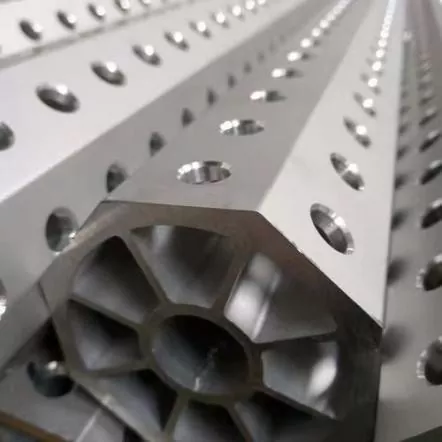
When engineers specify a SPECIAL SHAPED OCTAGON BAR for load-bearing machinery, hydraulic fittings, or automotive drivetrains, the material choice directly determines service life, safety margins, and total cost of ownership. Shunchen has supplied thousands of tons of custom-profile octagon bars across heavy industries, and the single most frequent question from design teams remains: which alloy actually holds up under repeated impact, torsion, and thermal cycling?
This guide breaks down material performance by measurable criteria—yield strength, fatigue resistance, corrosion behavior, and machinability—so procurement and engineering teams can match the grade to the real-world duty cycle.
Critical Material Properties for High-Stress Octagon Bars
| Property | Why It Matters for SPECIAL SHAPED OCTAGON BAR | Ideal Range |
|---|---|---|
| Yield Strength (MPa) | Prevents plastic deformation under peak loads | ≥ 550 MPa (medium stress) / ≥ 900 MPa (extreme) |
| Impact Toughness (J) | Absorbs sudden shocks without fracture | ≥ 27 J at -20°C for cold climates |
| Fatigue Limit (MPa) | Withstands cyclic loading over millions of cycles | ≥ 40% of UTS for most steels |
| Hardness (HB) | Resists galling and wear in sliding contact | 180–320 HB depending on mating surface |
| Corrosion Resistance | Maintains cross-section integrity in wet or chemical environments | PREN ≥ 25 for marine exposure |
Top 4 Material Grades Ranked by Performance
| Material Grade | Best Use Case | Stress Limit (MPa) | Corrosion Grade | Machinability |
|---|---|---|---|---|
| 4140 Chromoly Steel | Hydraulic piston rods, heavy truck axle components | 850–980 (quenched & tempered) | Moderate (needs coating) | Good |
| 17-4 PH Stainless | Aerospace fasteners, offshore valve stems | 1,000–1,100 (H900 condition) | Excellent (PREN ~32) | Fair (gummy) |
| S7 Tool Steel | Punch press rams, forging dies (impact-dominant) | 1,200–1,400 (as-quenched) | Low (dry applications only) | Moderate |
| Nitronic 60 | Bearing retainers, pump shafts in chloride media | 690–760 (annealed) | Superior (gall-resistant) | Poor (needs carbide tools) |
Shunchen recommends 4140 with induction-hardened corners as the baseline for most heavy-equipment octagon bars—it offers the best balance of cost, toughness, and ease of secondary machining. For chemical or offshore environments, 17-4 PH outlasts standard 316 by nearly 3× in salt-spray tests.
Application-Specific Selection Matrix
| Application Environment | Recommended Material | Surface Treatment |
|---|---|---|
| Mining conveyor shafts (abrasive dust) | 4140 + nitrided case | Black oxide + dry-film lube |
| Subsea ROV manipulator arms | 17-4 PH (H1150) | Passivated + electropolished corners |
| High-speed press cams (200+ cycles/min) | S7 tool steel | Shot-peened fillets for residual stress |
| Food-grade auger drives | Nitronic 60 (FDA-compliant) | Mirror finish to reduce bacterial adhesion |
Every SPECIAL SHAPED OCTAGON BAR from Shunchen includes a certified mill test report with actual tensile and impact values—not just nominal grade averages. This traceability is non-negotiable for ASME, API, and MIL-spec projects.
SPECIAL SHAPED OCTAGON BAR FAQ – Common Engineering Questions
Q1: Can a SPECIAL SHAPED OCTAGON BAR be heat-treated after final shaping without distorting the corner radii?
Yes, but distortion control requires careful staging. For 4140, Shunchen uses vacuum furnaces with slow ramp rates (≤ 5°C/min) and a compressive quench fixture that supports all eight corners. The risk of corner ovality increases above 55 HRC, so we recommend tempering at 540–600°C to reach 32–38 HRC—this hardness range preserves dimensional stability within ±0.05 mm over 1 meter. For stainless grades, solution annealing followed by precipitation hardening (e.g., 17-4 PH at 480°C) produces minimal warpage if the bar is suspended vertically during the cycle. Always specify the as-heat-treated straightness tolerance on your PO; Shunchen guarantees 0.2 mm/m maximum bow after our proprietary stress-relief protocol.
Q2: How do I calculate the torsional stiffness of a SPECIAL SHAPED OCTAGON BAR compared to a round bar of the same cross-sectional area?
Torsional stiffness (J-polar moment) for an octagon is approximately 0.92× that of a circumscribed circle but 1.27× higher than a square of equal area. For a nominal 50 mm octagon (across flats), the polar moment J ≈ 0.048 × (flat-to-flat)^4, which yields roughly 300,000 mm⁴. The equivalent round bar with the same area (≈1,963 mm²) has a diameter of 50 mm and J ≈ 613,000 mm⁴—so the round is stiffer torsionally. However, the octagon provides 8 flat wrenching surfaces and better bending stiffness in two orthogonal axes. For high-stress drive shafts where both torsion and lateral bending coexist (e.g., crane swing reducers), Shunchen engineers often specify a larger octagon cross-section to compensate, increasing the flat-to-flat dimension by 8–12% over the theoretical round equivalent. Always perform an FEA validation; our technical team provides free preliminary stress simulations for qualified inquiries.
Q3: What non-destructive testing (NDT) methods are mandatory for a SPECIAL SHAPED OCTAGON BAR used in critical rotating machinery?
For rotating applications above 3,000 RPM or with overhung loads, Shunchen mandates three NDT layers: (1) Ultrasonic testing (UT) per ASTM A388 – straight-beam and angle-beam scanning to detect inclusions ≥ 1.6 mm in the core, especially near the corner transition zones where stress concentrates. (2) Magnetic particle inspection (MPI) on all eight flat faces after rough machining—this reveals surface-breaking cracks from the initial forging or rolling process. (3) Eddy current array (ECA) for the last 100 mm of each end, because that region often experiences the highest stress gradients during coupling or gear mounting. For aerospace or nuclear grades, we also add a fourth step: resonance frequency testing to verify elastic modulus uniformity across the full length. All NDT records are archived for 10 years and can be included with shipment upon request.
Final Engineering Recommendation
For 80% of high-stress industrial applications, 4140 chromoly (quenched and tempered to 28–34 HRC) delivers the best return on investment when supplied as a SPECIAL SHAPED OCTAGON BAR with controlled corner radii (R0.5–R1.0 mm) to reduce notch sensitivity. Where corrosion exceeds 0.5 mm/year or operating temperatures swing beyond -30°C to +150°C, upgrade to 17-4 PH in the H1150 condition—it sacrifices 10–12% of ultimate tensile strength but gains exceptional fracture toughness and pitting resistance.
Shunchen maintains over 80 standard octagon die sizes (from 22 mm to 160 mm across flats) and offers rapid custom die development within 10 working days. Every lot is double-tested for hardness traverse (core-to-surface) and decarburization depth below 0.15 mm.
Contact Us
Choosing the right material for your SPECIAL SHAPED OCTAGON BAR is a high-stakes decision—one that affects safety certifications, maintenance intervals, and final product reliability. Shunchen provides complimentary material selection audits, including FEA-based stress mapping and corrosion-rate projections for your specific operating environment. Send your drawing, load spectrum, and duty cycle to our engineering desk, and receive a detailed grade comparison report within 48 hours. Reach out through the website contact form—we respond to every technical query with a dedicated metallurgist, not a standard price list. Let us help you specify the octagon bar that outlasts your machine’s warranty, not just the purchase order.