

Article Summary
In sanitary fluid systems, the clamp is not simply a fastening accessory. It provides the mechanical force needed to bring two ferrules together and compress the gasket between them. An interlocking or interlock-style clamp is designed to engage with the fitting in a way that helps prevent the clamp from slipping away from the connection.
For purchasing teams, equipment manufacturers and maintenance engineers, the important questions go beyond clamp size. Material grade, ferrule compatibility, gasket geometry, surface finish, locking structure, working conditions and installation practice all need to be considered together. The following sections provide a practical framework for evaluating these details.
What an Interlock Clamp Actually Does
A sanitary clamp connection normally brings together two compatible ferrules with a gasket positioned between their sealing faces. The clamp surrounds the joint and applies the force needed to keep the ferrules together. This basic arrangement allows a pipeline joint to be opened much more quickly than a permanently welded connection, which is particularly useful where equipment must be inspected, cleaned or serviced frequently.
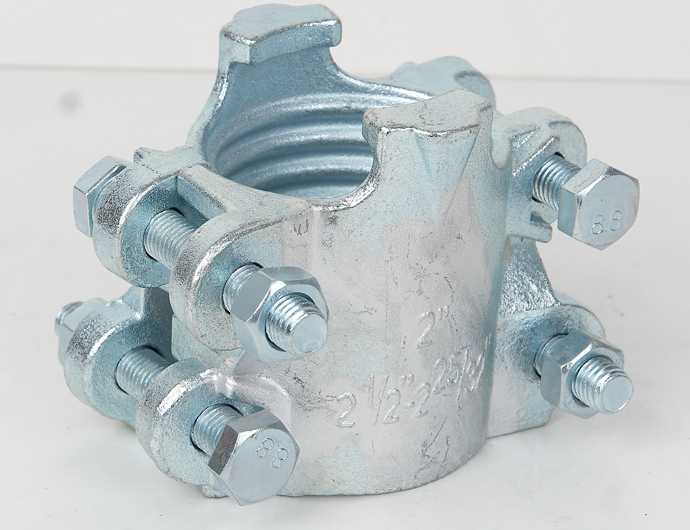
An interlock clamp adds a mechanical engagement feature intended to keep the clamp properly associated with the fitting. In technical terminology, an interlocking clamp engages the fitting so that the clamp cannot simply slide off; the engagement can involve fingers, a bolt or U-bolt interacting with a ring on the fitting.
This distinction becomes important in applications where repeated assembly and disassembly are part of normal operation. A clamp that is easy to open but poorly matched to its ferrules can create alignment problems, uneven gasket compression or leakage. The locking mechanism therefore needs to work together with the ferrule profile rather than being evaluated as an isolated component.
The Main Parts of the Connection
Looking at the complete connection is more useful than judging an interlock clamp by its appearance alone. A typical sanitary clamp assembly consists of two mating ferrules, one gasket and the clamp itself. Dixon's sanitary fitting documentation, for example, illustrates the connection as a combination of upper ferrule, clamp, gasket and lower ferrule.
| Component | Primary Function | What to Check |
|---|---|---|
| Ferrule | Provides the mating sealing faces | Size, profile, dimensional compatibility and surface condition |
| Gasket | Creates the fluid seal between ferrules | Material, size, temperature and chemical compatibility |
| Interlock Clamp | Applies and maintains joining force | Material, locking structure, size and ferrule matching |
| Fastener | Secures the clamp around the joint | Thread condition, tightening method and accessibility |
The practical lesson is simple: changing one component can affect the entire connection. A high-quality clamp cannot compensate for an incompatible ferrule or a damaged gasket. Conversely, a suitable gasket may still leak if the ferrules are misaligned or the clamp does not provide uniform mechanical engagement.
Material and Surface Considerations
Stainless steel is widely used for sanitary clamp components because sanitary processing systems may be exposed to moisture, cleaning chemicals, temperature changes and repeated washing cycles. Commercial sanitary clamp systems commonly use 304 or 316L stainless steel, with 316L selected for applications requiring higher corrosion resistance or more demanding process conditions.
Material selection should not be based on grade alone. The actual process medium, cleaning regime and operating environment should be considered. Food, beverage, dairy, pharmaceutical and biotechnology systems can have very different cleaning requirements, even though they may use visually similar clamp connections.
Surface Finish Deserves Attention
Internal surfaces in hygienic piping are normally controlled to reduce locations where product residue or contaminants can accumulate. Sanitary fitting suppliers therefore specify surface finishes for particular applications, and some systems use polished or electropolished stainless-steel surfaces.
Buyers should ask for the actual surface-finish requirement rather than assuming that every stainless-steel clamp is suitable for every hygienic process. The same principle applies to gasket materials: the elastomer must be compatible with the product, cleaning chemicals, temperature range and pressure conditions.
Key Details to Check Before Purchasing
When sourcing interlock clamps in bulk, procurement errors are often caused by incomplete specifications. Sending only a nominal pipe size may not provide enough information for a supplier to identify the correct component.
Confirm the actual ferrule or tube dimensions and whether the system follows an inch-based or metric sanitary standard.
Confirm whether 304, 316L or another material is required for the process environment.
The clamp must physically match the mating ferrule geometry and locking arrangement.
Check gasket material, dimensions and process compatibility instead of treating the gasket as an afterthought.
Pressure, temperature, vibration and cleaning cycles can all affect connection performance.
For hygienic systems, clarify polishing and surface-finish requirements before production.
Published product data also shows why pressure ratings should never be copied from a clamp specification and applied universally. Dixon notes that pressure ratings depend on factors including the matching elastomer gasket, properly aligned weld ferrules, correct assembly and tightening conditions.
How to Install an Interlock Clamp Correctly
Correct installation is just as important as the clamp specification. Even a well-machined component can perform poorly if the mating surfaces are dirty, the gasket is incorrectly positioned or the ferrules are pulled together at an angle.
- Inspect the mating ferrules. Check for scratches, dents, contamination or visible deformation around the sealing area.
- Check the gasket. Make sure the gasket is the correct size and material and has not been damaged, twisted or contaminated.
- Align the ferrules. Bring the two sealing faces together evenly. Avoid using the clamp to force badly misaligned pipework into position.
- Position the interlock clamp. Make sure the locking features engage correctly with the mating components.
- Tighten according to the component requirements. Do not assume that excessive tightening automatically produces a better seal.
- Inspect the finished joint. Confirm that the clamp is fully engaged and that the gasket has remained correctly positioned.
For applications with defined pressure or temperature limits, installation procedures should follow the manufacturer's specifications and the requirements of the complete piping system. Published sanitary clamp data reinforces that ratings depend on proper alignment, matching components and correct tightening.
Common Problems and Their Causes
| Observed Problem | Possible Cause | Practical Check |
|---|---|---|
| Leakage around the joint | Damaged gasket, poor alignment or insufficient/incorrect clamping | Inspect gasket, ferrule faces and clamp engagement |
| Clamp difficult to close | Incorrect component size or misaligned ferrules | Verify dimensions before applying additional force |
| Repeated gasket failure | Wrong gasket material, excessive compression or unsuitable process conditions | Review process temperature, chemicals and gasket specification |
| Clamp movement during service | Poor ferrule matching, inadequate engagement or unsuitable clamp design | Check the interlocking structure and mating profile |
One of the most useful troubleshooting habits is to inspect the complete connection rather than replacing the clamp immediately. A leak may originate from the gasket, ferrule, alignment or process conditions. Replacing a mechanically sound clamp without identifying the underlying cause can simply repeat the same problem.
Where Interlock Clamps Are Commonly Used
Clamp-style sanitary connections are widely used where hygienic fluid handling, accessibility and regular cleaning are important. Industry examples include food and beverage processing, dairy systems, pharmaceutical manufacturing, biotechnology, cosmetics and other sanitary process equipment.
Product transfer and hygienic process lines
Milk, cream and related fluid systems
Clean process and fluid handling equipment
Hygienic and controlled process piping
Liquid and semi-liquid product transfer
Brewing, filling and beverage processing
The advantage of a clamp connection in these environments is not merely installation speed. Easy access to a joint can simplify inspection and maintenance, while suitable sanitary geometry and materials support the requirements of hygienic processing.
What Buyers Should Confirm With a Supplier
For distributors, OEMs and project procurement teams, a clear technical inquiry can save considerable time during quotation and sampling. Instead of sending only a product name such as “stainless steel interlock clamp,” provide the information that determines compatibility.
- Required nominal size or ferrule dimensions
- Inch or metric connection standard
- 304, 316L or other required material
- Matching ferrule or fitting type
- Gasket material and sealing requirements
- Surface finish requirement, if applicable
- Operating pressure and temperature
- Process medium and cleaning conditions
- Required quantity and packaging method
- Drawings, samples or dimensional inspection requirements
A supplier should also be able to explain which clamp design is intended for the specified ferrule. This is particularly important because sanitary systems use several clamp geometries and standards. For example, commercially available sanitary clamp systems cover different sizes, materials and connection configurations, while some manufacturers specifically identify compatibility with standards such as DIN 32676 or other sanitary connection systems.
A Better Procurement Habit
When replacing an existing clamp, send a photo together with the measured ferrule dimensions, material requirement and application conditions. For OEM projects, a drawing or sample can reduce uncertainty further. This gives the manufacturer enough information to verify compatibility instead of relying on the product name alone.
Frequently Asked Questions
1. What is an interlock clamp?
An interlock clamp is a clamp designed to engage with a compatible fitting or ferrule so that the clamp remains mechanically associated with the connection. The interlocking feature helps prevent the clamp from sliding away from the fitting.
2. Is an interlock clamp the same as a standard sanitary clamp?
Not necessarily. “Sanitary clamp” describes a broad category of clamp connections used in hygienic piping, while an interlock design refers specifically to the way the clamp engages with the fitting. The correct terminology depends on the product design and applicable connection system.
3. Which stainless steel is commonly used for sanitary clamps?
304 and 316L stainless steel are both common choices. The appropriate grade depends on the process medium, cleaning chemicals, temperature, corrosion exposure and application requirements.
4. Can I select a clamp based only on pipe diameter?
It is safer not to. The mating ferrule profile, actual tube dimensions, connection standard, gasket configuration and clamp geometry also need to match. Published sanitary fitting information specifically warns that pipe-size and tube-OD dimensions may not be interchangeable.
5. Why does a correctly sized clamp still leak?
Possible causes include an incorrectly positioned or damaged gasket, dirty sealing faces, ferrule misalignment, unsuitable gasket material or incorrect tightening. The clamp is only one part of the complete sealing system.
6. Are interlock clamps suitable for food and pharmaceutical piping?
Clamp connections are widely used in food, beverage, dairy, pharmaceutical and biotechnology applications. Suitability depends on the specific clamp, ferrule, gasket, material, finish and applicable hygienic requirements of the installation.
7. Should the clamp be tightened as much as possible?
No. Excessive tightening is not automatically better. The appropriate tightening method depends on the clamp and complete connection design. Component ratings can depend on correct assembly, gasket selection, ferrule alignment and tightening conditions.
8. What information should I provide when requesting a quotation?
Provide the clamp size, ferrule type, material, gasket requirement, connection standard, application medium, operating conditions, surface-finish requirements and order quantity. A drawing or photograph of the existing connection is also useful for compatibility verification.
Need the Right Interlock Clamp for Your Sanitary Piping System?
Looking for the correct size, material or connection specification? CIXI BEIDELI PIPE FITTING CO.,LTD. can help you confirm interlock clamp dimensions, ferrule compatibility and application requirements before placing an order. Send us your product specifications, drawings or samples, and our team will provide suitable product information for your project.
Contact Us