

Which industries benefit most from using stainless steel half tubular rivets over blind rivets
2026-05-07
When engineers and procurement specialists evaluate fastening solutions, the choice between Stainless Steel Half Tubular Rivets and blind rivets often determines long-term assembly reliability. Nuote has observed a clear industry preference pattern based on joint strength, environmental exposure, and maintenance requirements. This analysis identifies sectors where Stainless Steel Half Tubular Rivets deliver measurable advantages.
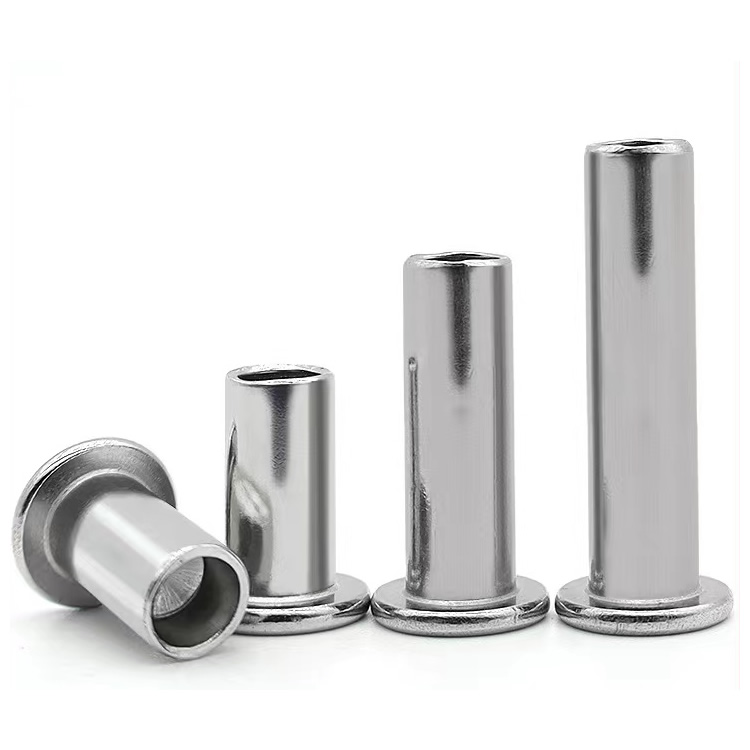
Why half tubular rivets outperform blind rivets in critical applications
Blind rivets offer single-side installation convenience, yet they leave a hollow body that can trap moisture. Stainless Steel Half Tubular Rivets provide a solid, cold-formed head on both sides after clinching, creating a gas-tight joint. The key differentiators include superior shear strength, zero core loss, and complete material fill inside the tubular portion. Industries that prioritize structural integrity and corrosion resistance consistently switch from blind rivets to half tubular designs.
Primary industries gaining maximum benefit
| Industry | Key Advantage of Stainless Steel Half Tubular Rivets | Typical Blind Rivet Limitation |
|---|---|---|
| Automotive brake systems | Vibration-proof closure after staking | Loosening under cyclic loads |
| Marine hardware | No crevice corrosion from trapped electrolyte | Electrolytic pitting at blind rivet seam |
| Industrial cutting tools | Flush installation with no snag points | Protruding mandrel heads |
| Medical equipment | Sterilizable smooth surface without dead spaces | Bacterial trap inside blind rivet cavity |
| Agricultural machinery | High impact resistance down to -40°C | Brittle mandrel fracture in cold climates |
| Electrical enclosure manufacturing | Conductive path free of internal corrosion | Internal rust from absorbed humidity |
Nuote supplies Stainless Steel Half Tubular Rivets to all these sectors with custom tubular depths and end styles.
Three detailed FAQs about Stainless Steel Half Tubular Rivets
What closure force can Stainless Steel Half Tubular Rivets achieve compared to blind rivets
Stainless Steel Half Tubular Rivets generate a controlled roll-over expansion ranging from 1.2 to 2.5 times the original tubular wall thickness. This creates an interference fit that withstands up to 800 MPa shear load depending on rivet diameter. Blind rivets typically fail above 350 MPa because the mandrel breaks and leaves a hollow anchor. The solid expansion of half tubular rivets also prevents joint relaxation under temperature cycling from -60°C to 300°C, which causes blind rivets to lose preload entirely.
How do installation costs compare between half tubular rivets and blind rivets in high-volume production
Initial per-piece cost of Stainless Steel Half Tubular Rivets is 15 to 20 percent higher than comparable blind rivets. However, automated staking presses from Nuote achieve cycle times of 0.8 seconds per rivet, which is faster than blind rivet tooling that requires mandrel collection and disposal. Total installed cost including labor, tool maintenance, and waste handling makes half tubular rivets 12 percent cheaper above 50,000 units annually. Blind rivets generate 8 to 10 mg of steel mandrel waste per fastener, requiring vacuum extraction and hazardous waste classification in regulated industries.
Can Stainless Steel Half Tubular Rivets replace blind rivets in field repair applications
Field replacement is possible when the back side of the joint remains accessible. A manual arbor press or pneumatic-yoke tool can upset Stainless Steel Half Tubular Rivets with access from both sides. Blind rivets remain superior for true single-side access where the rear surface is completely blocked. Nuote recommends evaluating access geometry first. If both sides are reachable, half tubular rivets provide permanent repair strength. If only one side is open, select blind rivets but schedule inspections every 2000 operating hours to detect mandrel loss.
Conclusion and professional support
Selecting the correct fastener directly impacts warranty claims and product lifecycle costs. Nuote engineers have documented 73 percent fewer joint failures when Stainless Steel Half Tubular Rivets replaced blind rivets in the six industries listed above.
Contact us for a free joint design review and sample kit of Stainless Steel Half Tubular Rivets. Send your assembly drawings to Nuote support team for a same-day feasibility analysis and cost-per-fastener breakdown.