

Which C7 Large Lead Ball Screw Is Best for Industrial Robots?
2026-11-11
Industrial robots depend on reliable mechanical transmission systems to achieve consistent movement, efficient operation, and dependable positioning. A C7 large lead ball screw can provide an effective solution for robotic applications that require relatively high linear speed, stable load transmission, and practical positioning accuracy. However, choosing the right ball screw involves more than checking its nominal diameter or lead. Engineers must consider load capacity, operating speed, axial rigidity, backlash, mounting conditions, lubrication, and service life. This guide explains the essential characteristics of C7 large lead ball screws, their advantages in industrial robots, and the key factors buyers should evaluate before selecting a suitable solution.
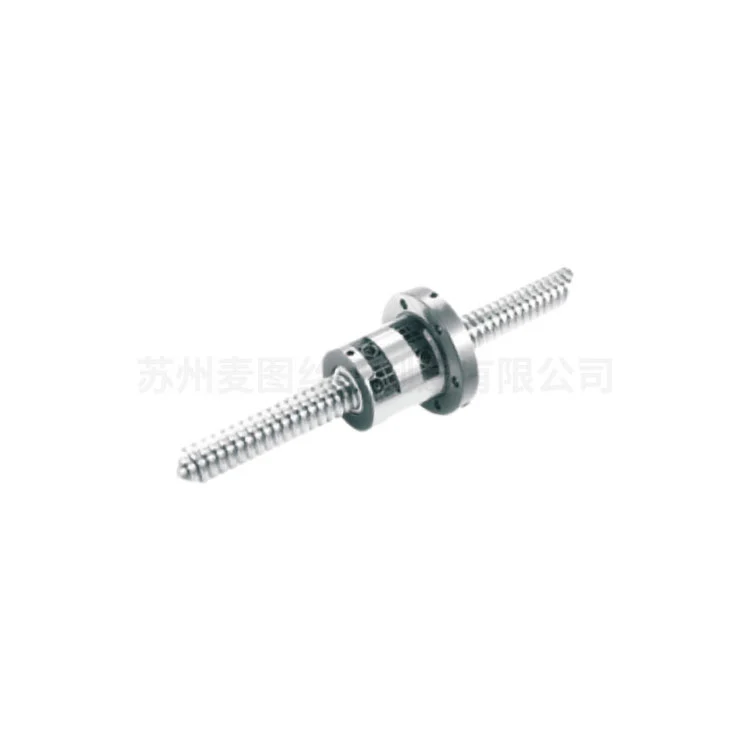
1. Understanding C7 Large Lead Ball Screws
A ball screw is a mechanical transmission component that converts rotary motion into linear motion through the rolling contact between steel balls, a threaded screw shaft, and a matching ball nut. Compared with conventional sliding lead screws, ball screws generally offer lower friction, higher transmission efficiency, and more predictable motion characteristics.
A C7 large lead ball screw combines a C7 accuracy classification with a relatively large lead. This configuration is particularly useful when a machine requires fast linear movement without demanding the extremely high positioning accuracy associated with precision-grade transmission systems.
What Does the C7 Accuracy Grade Mean?
The C7 designation refers to a ball screw accuracy classification. Under commonly used ball screw standards, C7 is associated with travel distance accuracy requirements. It is important to understand that the C7 grade does not independently describe backlash, rigidity, load capacity, or service life.
For example, the permissible lead deviation depends on the effective threaded length and the applicable standard. Therefore, buyers should request the actual accuracy specifications and inspection information rather than evaluating a product based on its C7 label alone.
What Does Large Lead Mean?
The lead is the linear distance traveled by the ball nut during one complete revolution of the screw shaft.
Linear Speed = Screw Rotational Speed × Lead
For example, a screw with a 20 mm lead rotating at 1,500 rpm theoretically produces a linear speed of 30,000 mm/min, or 30 m/min, before considering operating limitations.
A larger lead allows the ball nut to travel farther with each screw revolution. This makes large lead ball screws suitable for applications where faster positioning and shorter operating cycles are important.
2. Why Large Lead Ball Screws Matter in Industrial Robots
Modern industrial robots are expected to perform repetitive movements with consistent speed, controlled positioning, and minimal downtime. Their mechanical transmission systems directly influence operational efficiency and overall equipment performance.
2.1 Faster Linear Movement
In robotic linear axes, transfer modules, and automated positioning mechanisms, movement speed affects the total production cycle. A large lead ball screw can achieve greater linear displacement per motor revolution, helping reduce the time required for repeated movements.
This characteristic is useful in material handling, automated assembly, and production lines where equipment must move between multiple working positions efficiently.
2.2 Efficient Power Transmission
Ball screws use rolling contact instead of the sliding contact found in traditional lead screws. This reduces friction-related energy losses and supports efficient motion conversion.
For industrial robot manufacturers, efficient transmission can help reduce the drive power required for a specific motion task, although actual performance depends on the screw design, preload, lubrication, loading conditions, and operating speed.
2.3 Stable and Repeatable Motion
Industrial robots frequently perform the same movement thousands of times. Variations in mechanical transmission can lead to inconsistent positioning, vibration, and increased process errors.
A properly selected C7 ball screw can provide stable motion for applications whose positioning requirements are compatible with its specified accuracy. The complete motion system must also account for motor control, bearing support, structural deformation, and installation alignment.
2.4 Practical Balance Between Performance and Cost
Not every industrial robot requires an ultra-precision ball screw. Some linear positioning systems prioritize production efficiency, durability, and reasonable procurement costs over extremely tight positioning tolerances.
In these situations, a C7 large lead ball screw may offer a practical balance between movement speed, mechanical performance, and manufacturing requirements.
3. Key Technical Characteristics of C7 Large Lead Ball Screws
Before purchasing a C7 large lead ball screw for industrial robots, engineers should evaluate several technical characteristics. These specifications determine whether the component can operate reliably under the actual working conditions.
3.1 Lead and Linear Speed
Lead selection directly affects the relationship between motor speed and linear movement. A larger lead increases linear speed at the same rotational speed, but it also changes the torque requirements for a given axial force.
Engineers should calculate the required speed based on the robot's movement distance, cycle time, motor speed, and acceleration profile.
3.2 Axial Load Capacity
The ball screw must withstand the axial forces generated by the moving assembly, payload, acceleration, and external resistance.
Both dynamic and static load ratings should be considered. The dynamic load rating is used for life calculations, while the static load rating helps evaluate the risk of permanent contact deformation under high loads.
3.3 Backlash and Preload
Backlash refers to axial clearance between the screw and nut. Excessive backlash can cause positioning errors, particularly when the direction of movement changes.
Preloading applies an internal axial force to reduce or eliminate clearance and improve axial stiffness. However, excessive preload can increase friction, operating temperature, and wear.
3.4 Rigidity and Structural Stability
Axial rigidity influences how much the transmission system deforms under load. In robotic equipment, insufficient rigidity can affect positioning consistency, especially during acceleration, deceleration, or frequent direction changes.
Rigidity depends on the screw shaft diameter, unsupported length, bearing arrangement, nut construction, preload, and mounting structure.
3.5 Allowable Rotational Speed
High-speed operation requires careful evaluation of critical speed and the ball screw's DN value, which relates to ball diameter and rotational speed. Excessive shaft speed may cause vibration, noise, heat generation, or unstable operation.
Therefore, a large lead alone does not guarantee high-speed suitability. The complete assembly must be checked against the manufacturer's allowable speed specifications.
Important Specifications to Review
| Parameter | What It Determines | Why It Matters |
|---|---|---|
| Accuracy Grade | Travel distance accuracy | Helps meet positioning requirements |
| Lead | Travel per revolution | Determines linear speed and torque relationship |
| Shaft Diameter | Load capacity and stiffness | Supports mechanical stability |
| Dynamic Load Rating | Fatigue life calculation | Helps estimate operating service life |
| Static Load Rating | Resistance to permanent deformation | Protects against excessive stationary loads |
| Preload | Axial clearance and rigidity | Influences positioning and friction |
| Critical Speed | Rotational stability | Helps prevent excessive vibration |
4. Common Industrial Robot Applications
C7 large lead ball screws can be considered for different industrial automation systems when their accuracy, load, speed, and service-life characteristics match the application requirements.
4.1 Robotic Linear Motion Modules
Linear motion modules extend the working range of robotic systems. They allow a robot or its working assembly to move along a fixed axis between multiple operating positions.
A large lead ball screw can help achieve faster linear travel, making it useful for material transfer, machine loading, and automated positioning systems.
4.2 Automated Assembly Equipment
Automated assembly machines often require repeated movements to transport components, position workpieces, and operate mechanical fixtures.
When the required positioning tolerance is compatible with C7 accuracy, a C7 ball screw can provide an economical transmission solution for these movements.
4.3 Material Handling Systems
Industrial robots used for loading, unloading, sorting, and transferring materials require reliable movement under changing load conditions.
The ball screw diameter, support arrangement, and dynamic load rating should be selected according to the payload and acceleration characteristics.
4.4 Packaging and Production Automation
Packaging machinery and automated production equipment often operate through repeated positioning cycles. Faster linear movement can contribute to shorter cycle times and improved equipment productivity.
For these systems, engineers should also consider lubrication intervals, contamination protection, and operating temperature.
4.5 Robotic Positioning Platforms
Multi-axis positioning platforms use mechanical transmission components to control movement along different directions. A ball screw can provide controlled linear displacement when integrated with suitable guide rails, support bearings, and servo motors.
5. How to Select the Right C7 Ball Screw for Industrial Robots
Choosing a suitable ball screw requires a systematic evaluation of the working environment and performance targets. Selecting a component based only on price or nominal dimensions can result in premature wear, vibration, or insufficient positioning accuracy.
Step 1: Determine the Required Travel Distance
Identify the effective stroke required by the robotic system. Include the nut length, installation space, and necessary end allowances when calculating the overall screw dimensions.
Insufficient thread length can restrict movement, while excessive length may increase cost and create additional shaft stability concerns.
Step 2: Calculate the Required Linear Speed
Determine the target linear speed and the available motor rotational speed. The lead should be selected to meet the required travel speed without exceeding the motor or screw's operating limitations.
Step 3: Evaluate the Applied Load
Calculate the total axial load, including:
- Moving assembly weight.
- Robot payload and workpiece weight.
- Acceleration and deceleration forces.
- External resistance and process forces.
- Additional forces resulting from installation orientation.
For vertical applications, engineers should pay particular attention to gravity loads and the safety of the complete lifting system.
Step 4: Confirm Positioning Accuracy
Define the required positioning tolerance over the actual working stroke. Compare it with the permissible travel error of the proposed C7 ball screw.
If the positioning requirement is tighter than the available C7 specification, a higher precision grade or an additional position feedback arrangement may be necessary.
Step 5: Select Preload and Nut Configuration
The nut configuration should reflect the required rigidity, backlash, operating speed, and service conditions. A suitable preload can improve axial positioning behavior, but the resulting friction and heat generation must also be evaluated.
Step 6: Check Critical Speed and Service Life
Confirm the allowable rotational speed, shaft stability, and expected fatigue life. Consider the complete duty cycle rather than only the maximum speed or peak load.
Before requesting a quotation, prepare a specification sheet containing the shaft diameter, lead, overall length, stroke, accuracy grade, nut type, preload requirement, axial load, rotational speed, and operating environment. This allows manufacturers to evaluate the application more accurately.
6. C7 Ball Screws vs. Higher Precision Grades
Different ball screw accuracy grades serve different positioning requirements. Selecting the highest available grade is not always the most economical engineering decision.
| Accuracy Grade | General Characteristics | Potential Applications |
|---|---|---|
| C3 | High precision | Precision machinery and demanding positioning systems |
| C5 | Precision transmission | CNC equipment and precision automation |
| C7 | General-purpose travel accuracy | Material handling and suitable robotic linear axes |
| C10 | Lower travel accuracy requirements | Applications with less demanding positioning needs |
The specific permissible travel errors must always be verified against the applicable standard, effective thread length, and manufacturer's inspection data.
When Is C7 a Suitable Choice?
C7 can be appropriate when the equipment requires efficient linear transmission and its positioning tolerance can accommodate the specified C7 travel accuracy.
For applications involving extremely precise machining, optical positioning, or highly demanding robotic manipulation, engineers may need to consider C5 or higher precision grades.
The important principle is to match the accuracy grade to the actual machine requirements rather than automatically purchasing a more expensive precision class.
7. Installation and Maintenance Considerations
Even a well-manufactured ball screw can experience premature failure if it is installed incorrectly or operated without proper maintenance. Installation quality is therefore an important part of achieving consistent transmission performance.
7.1 Maintain Proper Alignment
The screw shaft, support bearings, nut mounting surface, and linear guide system must be correctly aligned. Misalignment can create additional radial forces, uneven contact, increased friction, and premature wear.
7.2 Use Appropriate Lubrication
Lubrication reduces friction between the rolling elements and raceways. The lubricant type and replenishment interval should follow the manufacturer's recommendations and reflect operating speed, load, temperature, and environmental conditions.
7.3 Prevent Dust and Contamination
Metal particles, dust, moisture, and other contaminants can damage the rolling contact surfaces. Protective covers, suitable seals, and effective cleaning procedures help maintain reliable operation.
7.4 Monitor Temperature and Vibration
Unexpected temperature increases, unusual noise, or excessive vibration may indicate insufficient lubrication, excessive preload, misalignment, or overloading.
Regular inspection helps identify these problems before they lead to serious equipment failure.
7.5 Follow a Preventive Maintenance Schedule
- Inspect lubrication condition regularly.
- Check mounting bolts and bearing support conditions.
- Monitor changes in positioning repeatability.
- Inspect seals and protective covers.
- Record unusual noise, vibration, and temperature changes.
8. Common Problems and Practical Solutions
Understanding typical operating problems can help robot manufacturers and maintenance engineers reduce unexpected downtime.
| Common Problem | Possible Cause | Recommended Action |
|---|---|---|
| Excessive backlash | Wear, unsuitable nut configuration, insufficient preload | Inspect the nut and evaluate preload requirements |
| Abnormal noise | Contamination, misalignment, damaged rolling elements | Inspect lubrication and mechanical alignment |
| Overheating | Excessive preload, friction, high-speed operation | Review preload, lubrication, and operating conditions |
| Positioning errors | Lead deviation, backlash, structural deformation | Check transmission accuracy and the complete control system |
| Premature wear | Overloading, poor lubrication, contamination | Review load calculations and maintenance procedures |
| Vibration at high speed | Critical speed, shaft deflection, poor support | Evaluate shaft length, support conditions, and speed limits |
It is important to identify the actual cause before replacing the ball screw. In many cases, installation conditions, bearing arrangements, or lubrication problems may contribute to the failure.
9. Why Manufacturing Quality Matters
The performance of a C7 large lead ball screw depends on more than its nominal specifications. Manufacturing consistency, material quality, thread geometry, heat treatment, surface condition, and assembly accuracy all influence its actual operating behavior.
9.1 Material and Heat Treatment
Suitable steel materials and controlled heat treatment processes help provide the hardness, strength, and wear resistance required for ball screw applications.
Manufacturing specifications should be selected according to the expected load, operating environment, and service-life requirements.
9.2 Thread Processing and Inspection
Consistent thread geometry is essential for smooth ball circulation and stable contact between the balls and raceways. Dimensional inspection and travel accuracy testing help verify whether the finished product meets the specified requirements.
9.3 Customization for Different Applications
Industrial robot manufacturers may require different shaft diameters, leads, lengths, nut configurations, end machining, and mounting arrangements.
Working with a manufacturer that can evaluate these requirements helps reduce design mismatches and simplifies mechanical integration.
9.4 Working with an Experienced Supplier
Suzhou Maitu Screw Rod Manufacturing Co., Ltd. is a manufacturer name buyers can consider when evaluating ball screw sourcing options. When discussing a C7 large lead ball screw project, customers should communicate their technical drawings, working conditions, dimensional requirements, and expected performance targets.
Clear technical communication helps establish whether the proposed screw design is suitable for the intended industrial robot application and whether additional customization or inspection requirements are necessary.
10. Frequently Asked Questions About C7 Large Lead Ball Screws
Q1: What is a C7 large lead ball screw?
A C7 large lead ball screw is a rolling transmission component with a C7 travel accuracy classification and a relatively large linear travel distance per screw revolution. It is used in machinery and automation systems requiring efficient linear movement.
Q2: Is a C7 ball screw suitable for industrial robots?
Yes, it can be suitable for industrial robot linear axes, transfer modules, and automated positioning equipment when its accuracy, load capacity, speed, and rigidity meet the application requirements.
Q3: What advantages does a large lead ball screw offer?
A larger lead allows greater linear travel per revolution. This can help increase linear movement speed and reduce the number of screw rotations required for a given travel distance.
Q4: Does C7 indicate the backlash of a ball screw?
No. C7 primarily identifies the travel accuracy classification. Backlash is a separate characteristic determined by the nut design, internal clearance, preload, and manufacturing specifications.
Q5: Can a C7 ball screw operate at high speed?
It can operate at high speeds when the shaft design, lead, ball circulation system, lubrication, and support arrangement are suitable. Allowable rotational speed and critical speed must be checked before operation.
Q6: How do I select the correct lead?
Start with the required linear speed and available motor rotational speed. Calculate the necessary lead, then verify motor torque, acceleration requirements, load capacity, and allowable screw speed.
Q7: What factors affect ball screw service life?
Service life is influenced by dynamic loading, lubrication, contamination, preload, installation alignment, rotational speed, and operating duty cycle. Correct selection and regular maintenance help extend service life.
Q8: Can C7 large lead ball screws be customized?
Customization may include shaft diameter, lead, overall length, nut configuration, end machining, mounting dimensions, and other application-specific requirements. Buyers should provide technical drawings and operating parameters for evaluation.
Q9: What information should I provide when requesting a quotation?
Prepare the required diameter, lead, stroke, total length, accuracy grade, load, speed, nut type, mounting conditions, and quantity. Technical drawings are also helpful for confirming dimensions and customization details.
Q10: How can I reduce maintenance problems with a ball screw?
Use the recommended lubricant, maintain correct installation alignment, protect the screw from contamination, avoid excessive loading, and inspect temperature, noise, and vibration regularly.
Conclusion: Choose a Ball Screw That Matches Your Robot's Motion Requirements
A C7 large lead ball screw can be a practical transmission solution for industrial robots and automation equipment that require efficient linear movement, stable mechanical performance, and appropriate positioning accuracy.
However, reliable operation depends on selecting the correct lead, shaft diameter, load rating, preload, and support arrangement. Engineers should evaluate the complete motion system instead of focusing on a single specification.
For manufacturers developing industrial robots, automated positioning modules, or material handling systems, choosing a suitable ball screw supplier is an important step toward achieving consistent equipment performance.
Looking for a Reliable C7 Large Lead Ball Screw Manufacturer?
Are you sourcing C7 large lead ball screws for industrial robots, automation equipment, or customized linear motion systems?
Suzhou Maitu Screw Rod Manufacturing Co., Ltd. welcomes inquiries from industrial equipment manufacturers, engineering companies, and international B2B buyers. Share your drawings, required dimensions, operating conditions, and application details to discuss a suitable ball screw solution.
Contact us today to discuss your project requirements and request product information or a quotation. Let us help you find a suitable transmission solution for your industrial automation applications.
Contact Us