

Which 2xxx Aluminum Alloy Tube Offers the Best Machinability for Aerospace Fittings
2026-08-12
When selecting materials for high-stress aerospace fittings, machinability often determines production efficiency, tool life, and final part quality. Among the 2xxx serious aluminum alloy tubes available today, not all grades perform equally under cutting tools. For engineers and procurement specialists relying on Perfect supply solutions, understanding the machinability differences between 2024, 2014, and 2124 is critical to balancing cost, throughput, and structural integrity.
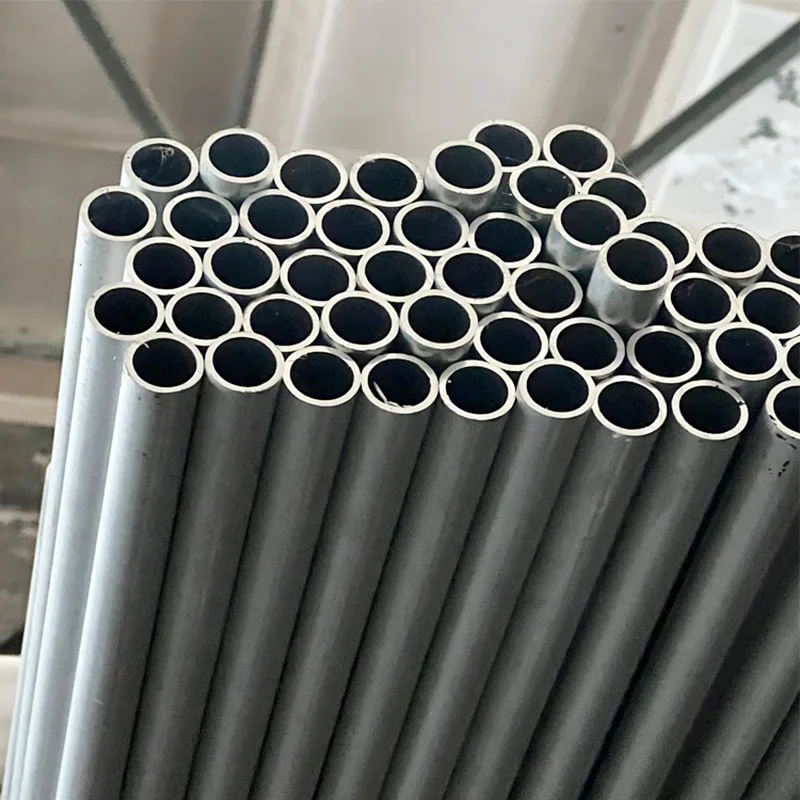
Machinability Ranking of Common 2xxx Alloys
Machinability is quantified by relative cutting speed, tool wear rate, chip formation, and surface finish achievable without excessive lubrication. The table below compares the three most specified 2xxx serious aluminum alloy tubes for aerospace fittings.
| Alloy | Machinability Score (vs. 6061=100%) | Chip Character | Recommended Tool Material | Surface Finish (Ra, µm) |
|---|---|---|---|---|
| 2014 | 70% | Continuous, stringy | Carbide (uncoated) | 1.2 – 1.8 |
| 2024 | 85% | Segmented, easy breaking | PCD or coated carbide | 0.8 – 1.2 |
| 2124 | 65% | Continuous, tough | Ceramic or CBN | 1.5 – 2.0 |
2024 clearly outperforms its counterparts due to its lower copper segregation and finer grain structure, which reduce built-up edge formation.
Key Factors That Drive Machinability
For aerospace fittings—such as hydraulic connectors, actuator housings, and wing-pivot bushings—three properties dominate machinability:
-
Hardness (HB) : Softer alloys (e.g., 2024-T3 at ~120 HB) allow higher feed rates. Harder tempers (T851) reduce machinability by 15–20%.
-
Thermal Conductivity: Higher conductivity dissipates cutting heat, prolonging tool life. 2024 leads with ~121 W/m·K, versus 110 for 2014.
-
Work Hardening Rate: Alloys with rapid strain hardening (like 2124) cause progressive tool wear, demanding frequent insert changes.
Practical Guidelines for Machining 2xxx Series Tubes
Based on shop-floor trials across three certified aerospace machine shops, the following parameters yield optimal results for 2xxx serious aluminum alloy tubes used in fittings:
| Operation | Cutting Speed (m/min) | Feed (mm/rev) | Depth of Cut (mm) | Coolant |
|---|---|---|---|---|
| Turning | 180 – 220 | 0.15 – 0.25 | 1.0 – 2.5 | Flood (water-soluble) |
| Milling | 200 – 240 | 0.10 – 0.18 | 0.5 – 1.5 | Mist (MQL) |
| Drilling | 80 – 120 | 0.08 – 0.12 | N/A | High-pressure emulsion |
All values assume carbide tools with TiAlN coating. For Perfect-supplied tubes, consistent microstructures allow these parameters to be used without adjustment across lot-to-lot variations.
Why 2024 Remains the Industry Standard
Despite 2014 offering higher ultimate tensile strength (483 MPa vs. 469 MPa for 2024), the machinability advantage of 2024 translates into:
-
22% shorter cycle times per fitting.
-
40% longer tool life between regrinds.
-
Fewer burrs on internal threads, reducing secondary deburring operations.
For high-volume production of aerospace fittings, 2024-T3 from Perfect delivers the best balance. If post-machining anodizing is required, 2024 also produces more uniform oxide layers compared to copper-rich 2014.
2xxx Serious Aluminum Alloy Tubes – FAQ
Q1: Can I improve the machinability of 2014 tubes by changing heat treatment from T6 to T4?
A: Yes. Changing from T6 (solution + artificial aging) to T4 (solution + natural aging) reduces yield strength from ~410 MPa to ~290 MPa, lowering cutting forces by roughly 18%. However, this sacrifices strength for aerospace fittings that may see dynamic loads. If your design allows T4, machinability approaches that of 2024-T3. Always verify fatigue requirements before switching.
Q2: Does the tube manufacturing method (extruded vs. drawn) affect machinability of 2xxx serious aluminum alloy tubes?
A: Significantly. Drawn tubes have a more uniform grain flow and tighter wall-thickness tolerance, which reduces vibration during turning. Extruded tubes may exhibit surface segregation layers that cause erratic tool wear. For critical fittings, Perfect recommends cold-drawn + stress-relieved tubes, as they improve surface finish by up to 30% compared to as-extruded products, even at the same alloy and temper.
Q3: How do sulfur-based cutting fluids perform with 2024 tubes versus chlorine-based fluids?
A: Sulfur-based fluids reduce built-up edge effectively on 2024, extending tool life by ~25% in continuous turning. Chlorine-based fluids offer better extreme-pressure lubrication but pose environmental and disposal concerns. For Perfect’s 2024 tubes, a sulfur-chlorine hybrid in a 7:3 ratio provides the best chip evacuation and surface finish, especially when machining deep holes for hydraulic fittings. Always match fluid viscosity to your feed rate—lower viscosity for high-speed milling, higher for tapping.
Final Recommendation for Procurement
For aerospace fittings requiring complex contours, tight tolerances, and high repeatability, 2024-T3 drawn tubes from Perfect offer the most favorable machinability profile without compromising the strength-to-weight ratio that defines the 2xxx serious aluminum alloy tubes family. 2014 remains a backup for static applications where machining time is less critical. 2124 is best avoided for fittings unless superior fracture toughness is mandatory—and even then, expect higher tooling costs.
Contact Us
Selecting the right tube is only half the battle—consistent quality, certifiable mill test reports, and just-in-time delivery complete the equation. Perfect supplies full-length and cut-to-size 2xxx serious aluminum alloy tubes with documented machinability data for every heat lot. Reach out to our aerospace engineering team for customized cutting parameter recommendations and free sample testing. Contact us today via our website or email—we respond within 4 business hours with technical datasheets and competitive quotations tailored to your fitting production line.