

When Should You Use Cold Formed Steel Purlins Instead of Hot Rolled Steel
2026-09-28
Selecting the right structural framing member is one of the most consequential decisions in any steel building project. Cold Formed Steel Purlins and hot rolled steel sections both serve as critical load-bearing components, yet they perform very differently depending on span, load, budget, and site conditions. At Energet Solar, we supply and engineer both systems for commercial, industrial, and renewable energy structures, so we understand exactly where each option delivers the greatest value. This guide breaks down the technical and economic factors that determine when Cold Formed Steel Purlins become the smarter choice.
Understanding the Fundamental Difference
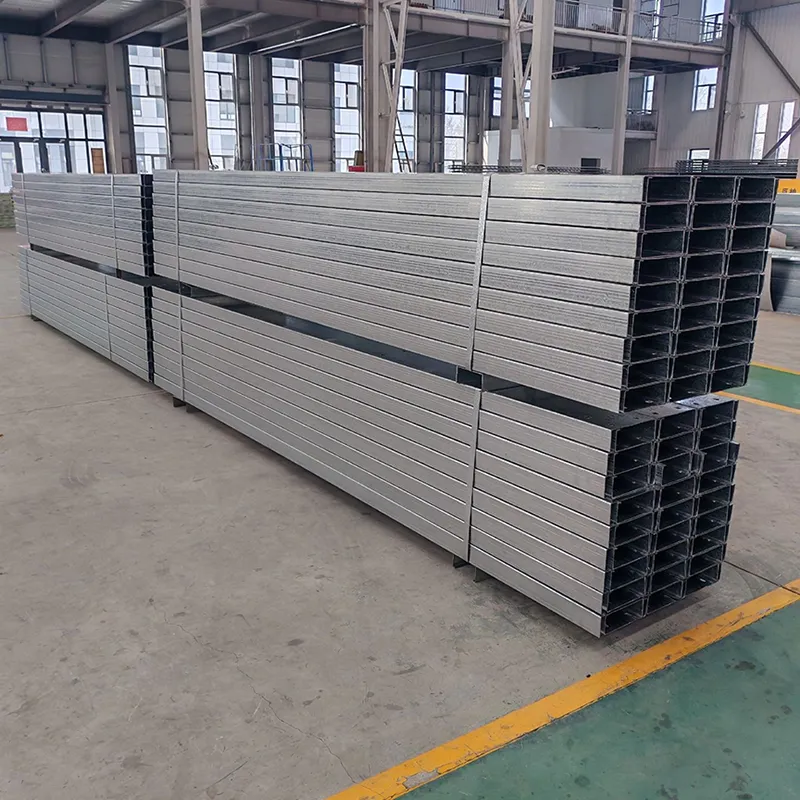
Cold Formed Steel Purlins are manufactured by bending thin-gauge steel sheet (typically 0.5 mm to 3 mm thick) at room temperature into C, Z, or sigma profiles. Hot rolled steel, by contrast, is shaped at temperatures above 1,000°C, producing thicker, heavier I-beams, channels, and angles.
| Property | Cold Formed Steel Purlin | Hot Rolled Steel |
|---|---|---|
| Typical thickness | 0.5–3.0 mm | 6–40 mm+ |
| Weight per metre | Low | High |
| Span capability | Short to medium (up to ~12 m) | Medium to long (12 m+) |
| Strength-to-weight ratio | Excellent | Moderate |
| Lead time | Fast, often stock items | Longer, mill-dependent |
| Relative cost | Lower | Higher |
| Corrosion protection | Galvanised or AZ-coated | Requires painting or coating |
When Cold Formed Steel Purlins Are the Right Choice
1. Short to Medium Spans With Closely Spaced Frames
When bay spacing falls between 4 and 8 metres, Cold Formed Steel Purlins deliver optimal efficiency. Their thin walls and folded geometry create high stiffness without excess material, reducing dead load on the primary frame.
2. Light Roof and Wall Cladding Systems
Metal roofing sheets, sandwich panels, and solar mounting rails impose relatively light distributed loads. In these applications, Cold Formed Steel Purlins outperform hot rolled sections on cost per square metre.
3. Weight-Sensitive Structures
For rooftop solar arrays, modular buildings, and mezzanine floors, every kilogram matters. Energet Solar frequently specifies Cold Formed Steel Purlins for solar carports and rooftop PV framing because they minimise structural dead load while maintaining required capacity.
4. Projects With Tight Budgets and Schedules
Cold forming is a high-speed, low-waste process. Purlins can be cut to exact length, nested for transport, and installed with simple bolted connections — cutting both material and labour costs.
5. Highly Corrosive Environments
Hot dipped galvanised Cold Formed Steel Purlins offer superior corrosion resistance in coastal, agricultural, and industrial settings compared with painted hot rolled steel.
When Hot Rolled Steel Is Preferable
-
Spans exceeding 12 metres without intermediate support
-
Heavy concentrated loads such as crane rails or rooftop HVAC plant
-
Fire-rated assemblies requiring thick, non-combustible sections
-
Multi-storey primary framing where moment connections are essential
Key Design Considerations
| Factor | Recommended Selection |
|---|---|
| Span < 8 m, light load | Cold Formed Steel Purlin |
| Span 8–12 m, moderate load | Cold Formed Steel Purlin (deep section) |
| Span > 12 m, heavy load | Hot rolled steel |
| Solar mounting structure | Cold Formed Steel Purlin |
| Crane-supporting frame | Hot rolled steel |
Engineers must verify local buckling, web crippling, and distortional buckling — failure modes unique to thin-walled sections. Energet Solar provides certified load tables and span calculators to simplify this process.
Cold Formed Steel Purlin FAQ
What is a Cold Formed Steel Purlin used for?
A Cold Formed Steel Purlin is used to support roof sheeting, wall cladding, and solar mounting rails, transferring loads from the building envelope to the primary structural frame, and it is especially common in metal buildings, warehouses, and photovoltaic installations.
How do you determine the correct spacing for Cold Formed Steel Purlins?
Spacing depends on the cladding span rating, the purlin section depth, and the applied wind and live loads, with typical centres ranging from 1.0 to 2.0 metres for roof applications, and engineers should always confirm spacing using manufacturer load-span tables and local building codes.
Are Cold Formed Steel Purlins suitable for solar panel installations?
Yes, Cold Formed Steel Purlins are widely used for solar panel installations because their high strength-to-weight ratio reduces roof loading, their galvanised coating resists weather exposure, and they can be pre-punched for rapid mounting of rails and brackets.
Can Cold Formed Steel Purlins be welded on site?
Welding thin-gauge Cold Formed Steel Purlins is generally discouraged because it burns away protective coatings and can distort the section, so bolted or screwed connections with compatible fasteners are the recommended method.
Final Thoughts
Choosing between Cold Formed Steel Purlins and hot rolled steel comes down to span, load, weight, corrosion exposure, and budget. For the majority of light-to-medium duty roofs, walls, and solar structures, Cold Formed Steel Purlins offer the most efficient and economical solution. Energet Solar engineers and supplies optimised purlin systems tailored to your project's exact requirements, backed by full technical documentation and compliance support.
Contact us today for a free consultation and quote — our structural team will help you specify the right Cold Formed Steel Purlin system for your next build.