

What Tolerance Can You Expect from a CNC Machined Aluminum Housing with Grooves and Cutouts
2026-10-28
When engineers specify a CNC Machined Aluminum Housing with Grooves and Cutouts, tolerance capability is one of the first questions raised in design reviews. At Boyuan, we machine these housings daily for applications ranging from industrial electronics to precision instruments, and the achievable tolerance depends on feature type, part size, alloy, and inspection method. This guide explains what to expect and how to specify tolerances that balance function, cost, and manufacturability.
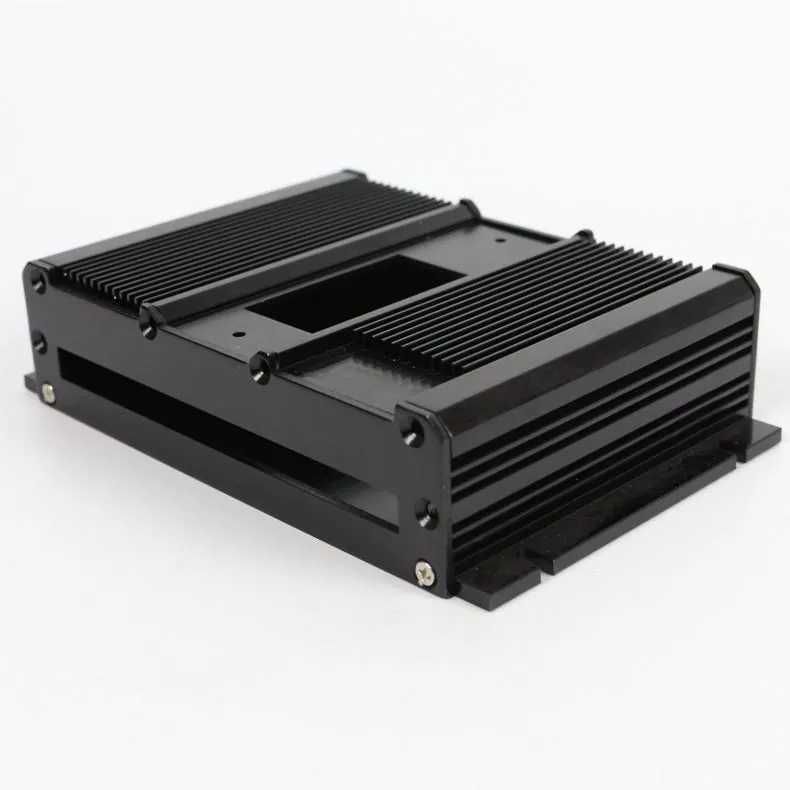
Typical Tolerance Ranges by Feature Type
The table below summarizes common tolerance capabilities for a CNC Machined Aluminum Housing with Grooves and Cutouts produced on 3-axis and 4-axis CNC machining centers under normal production conditions.
| Feature | Standard Tolerance | Precision Tolerance | Notes |
|---|---|---|---|
| Overall length / width / height | ±0.10 mm | ±0.05 mm | Depends on part size and fixturing |
| Pocket and cutout dimensions | ±0.10 mm | ±0.05 mm | Corner radii limited by tool diameter |
| Groove width | ±0.10 mm | ±0.05 mm | Depth-to-width ratio affects stability |
| Groove position | ±0.10 mm | ±0.03 mm | Datum scheme must be defined |
| Hole diameter | ±0.05 mm | ±0.02 mm | Reaming or boring for tight limits |
| Hole position | ±0.10 mm | ±0.03 mm | CMM verification recommended |
| Flatness / parallelism | 0.05 mm | 0.02 mm | Influenced by wall thickness |
| Surface roughness (Ra) | 1.6 µm | 0.8 µm | Additional finishing operations apply |
Factors That Influence Achievable Tolerance
-
Part size and wall thickness: Thin walls and large footprints amplify deflection during clamping and cutting. A CNC Machined Aluminum Housing with Grooves and Cutouts with walls below 1.5 mm typically requires light finishing passes and stress-relieved stock.
-
Groove geometry: Deep, narrow grooves are harder to hold than shallow, open ones. Specify depth-to-width ratios and corner radii early so tooling can be selected correctly.
-
Material condition: 6061-T6 and 7075-T6 are common choices. Heat-treated alloys can move after material removal, so rough machining followed by stress relief improves dimensional stability.
-
Datum strategy: A clear datum reference frame on the drawing prevents tolerance stack-up disputes. Boyuan reviews datum schemes during DFM to align inspection with design intent.
-
Inspection method: Calipers, micrometers, and CMMs produce different measurement uncertainty. For tolerances tighter than ±0.05 mm, CMM inspection with a documented report is standard practice.
How to Specify Tolerances Effectively
-
Apply general tolerances to non-critical features and reserve tight tolerances for mating surfaces, bearing bores, and sealing grooves.
-
Define datums on machined surfaces rather than cast or extruded surfaces.
-
Call out groove position relative to a single datum to avoid accumulation.
-
Request first article inspection reports for production runs of a CNC Machined Aluminum Housing with Grooves and Cutouts.
-
Discuss tolerance versus cost trade-offs during quoting; tightening from ±0.10 mm to ±0.02 mm can add significant inspection and process time.
FAQ
Q: What is the tightest tolerance Boyuan can hold on a CNC Machined Aluminum Housing with Grooves and Cutouts?
A: For critical features such as bearing bores and dowel holes, Boyuan routinely holds ±0.02 mm and can achieve ±0.01 mm on select features with CMM verification, provided part size, wall thickness, and datum design support it.
Q: Do grooves and cutouts reduce the achievable tolerance of an aluminum housing?
A: Yes, they can. Grooves and cutouts interrupt material continuity and can cause distortion during machining and after clamping release, so a CNC Machined Aluminum Housing with Grooves and Cutouts with thin walls or deep pockets may require stress relief, light finishing cuts, and careful fixture design to maintain tight tolerances.
Q: How are tolerances on a CNC Machined Aluminum Housing with Grooves and Cutouts verified before shipment?
A: Boyuan verifies critical dimensions with CMM inspection, uses calibrated gauges for hole and groove features, and provides dimensional reports with first article inspection documentation so customers can confirm conformance before assembly.
Contact Us
Ready to discuss tolerance requirements for your CNC Machined Aluminum Housing with Grooves and Cutouts project? Contact Boyuan today to request a DFM review, a tolerance feasibility assessment, and a competitive quotation for your next production run.