

What Quality Standards Define Excellence in Hot Forged Stainless Steel Components for Industrial Use
2026-03-25
When industrial operations demand uncompromised performance, the selection of a Hot Forged Stainless Steel Machinery Part is often the deciding factor between operational efficiency and costly downtime. At Losier, we understand that true excellence in this field is not accidental; it is defined by a strict adherence to internationally recognized quality standards, meticulous process control, and a deep understanding of metallurgical science. For engineers and procurement specialists, knowing these benchmarks is essential to ensuring safety, longevity, and return on investment.
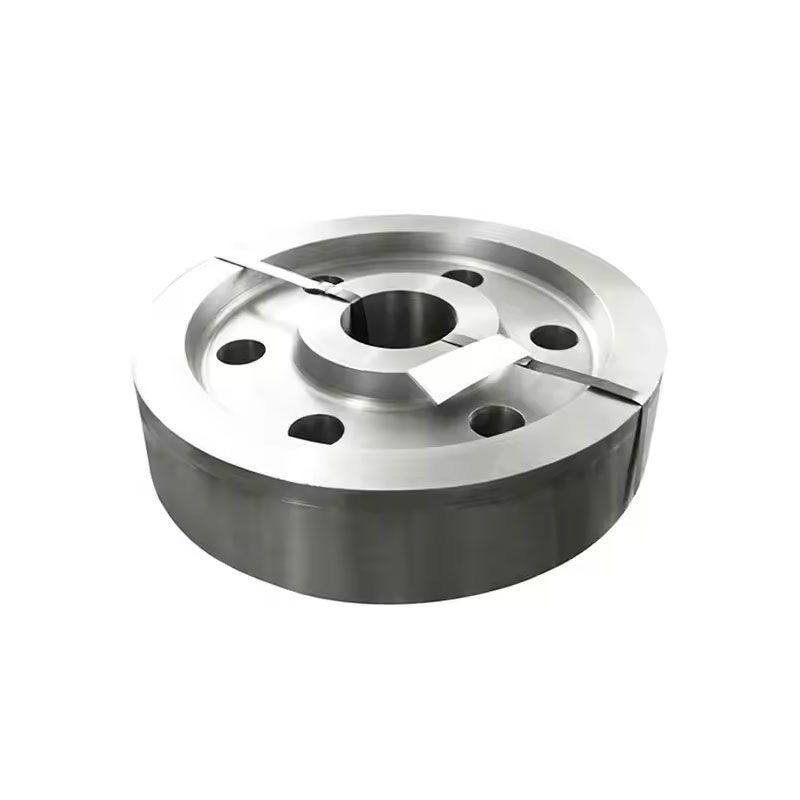
The Pillars of Quality: Standards and Certifications
Excellence in hot forged stainless steel components is quantified by compliance with rigorous standards. These certifications ensure that every Hot Forged Stainless Steel Machinery Part leaving a facility meets global expectations for mechanical properties, chemical composition, and structural integrity.
| Standard | Scope | Relevance to Hot Forging |
|---|---|---|
| ASTM A788 / A182 | Specification for Steel Forgings | Defines the general requirements for forged stainless steel grades, ensuring heat treatment and tensile strength are optimal for high-pressure environments. |
| ISO 9001:2015 | Quality Management Systems | Certifies that the manufacturer, such as Losier, maintains consistent quality through controlled processes, traceability, and continuous improvement protocols. |
| EN 10204 3.1 | Inspection Certification | Guarantees full material traceability. The manufacturer provides a certificate verifying the chemical and mechanical properties directly linked to the specific melt of steel used. |
| NORSOK M-650 | Special Material Requirements | A critical standard for the oil and gas industry, demanding stringent qualification of forging suppliers to handle corrosive environments with duplex and super duplex stainless steels. |
The Role of Process Control in Defining Excellence
Beyond certifications, the actual manufacturing process determines whether a component is merely adequate or truly excellent. Losier employs advanced hot forging techniques where temperature control, grain flow manipulation, and post-forging heat treatments are monitored to the highest degree.
Hot forging refines the grain structure of stainless steel, creating a continuous grain flow that follows the shape of the part. This results in superior impact resistance and fatigue strength compared to cast or fabricated components. To maintain this advantage, quality standards dictate strict controls:
-
Temperature Uniformity: Ensuring the stainless steel is heated uniformly to avoid surface decarburization or internal stresses.
-
Die Alignment: Precision tooling ensures dimensional accuracy, reducing the need for excessive machining which can compromise the forged integrity.
-
Non-Destructive Testing (NDT): Ultrasonic testing (UT) and dye penetrant inspection (DPI) are mandatory for high-grade components to certify zero porosity or internal flaws.
Frequently Asked Questions (FAQ)
To clarify the complexities surrounding quality assurance, here are three common inquiries regarding Hot Forged Stainless Steel Machinery Part specifications.
Q: What is the most critical quality test to look for when sourcing a Hot Forged Stainless Steel Machinery Part for high-pressure applications?
A: For high-pressure applications, such as those in hydraulic systems or subsea equipment, the Non-Destructive Testing (NDT) report is the most critical quality indicator. Specifically, you should demand Ultrasonic Testing (UT) . Unlike surface-level inspections, UT scans the internal structure of the forged component to detect hidden flaws like inclusions, laminations, or voids that are not visible to the naked eye. At Losier, we ensure that any Hot Forged Stainless Steel Machinery Part destined for high-pressure environments is backed by a certified UT report, guaranteeing that the internal integrity matches the surface finish, thereby eliminating the risk of catastrophic failure under load.
Q: How does grain flow orientation affect the performance of a forged stainless steel component?
A: Grain flow orientation is the defining characteristic that separates a forged part from a machined bar or casting. During the hot forging process at Losier, the stainless steel is plastically deformed under immense pressure, causing the metal’s crystalline grains to align with the geometric contours of the part. This is visually confirmed through a grain flow test (macro-etch). If a component is machined directly from a solid bar, the grain structure is cut, leaving the grain ends exposed at the surface, which creates a path for stress fractures and corrosion. In contrast, a Hot Forged Stainless Steel Machinery Part maintains continuous, unbroken grain flow around corners and flanges. This results in significantly higher impact strength, ductility, and resistance to stress corrosion cracking, which are essential for industrial machinery subjected to cyclical loads.
Q: What specific material grades should I specify to ensure corrosion resistance in marine environments?
A: For marine or chloride-rich environments, standard 304 stainless steel often fails due to pitting corrosion. To ensure excellence, you should specify Duplex Stainless Steel (UNS S31803 or S32205) or Super Duplex (UNS S32750) for your Hot Forged Stainless Steel Machinery Part. These grades offer a balanced microstructure of austenite and ferrite, providing nearly double the yield strength of conventional austenitic steels and superior resistance to chloride stress corrosion cracking. At Losier, we specialize in hot forging these complex duplex grades, adhering to strict temperature windows to preserve the metallurgical balance. By selecting a certified manufacturer who understands the nuances of duplex forging, you ensure that the component will maintain its structural integrity and corrosion resistance for decades, even when fully submerged or exposed to salt spray.
Why Consistency Equals Excellence
In the industrial sector, excellence is measured by consistency. A manufacturer might produce one perfect prototype, but true quality is defined by the ability to replicate that precision across thousands of units. Losier utilizes statistical process control (SPC) to monitor every stage of production—from raw material receiving to final inspection. This data-driven approach ensures that every Hot Forged Stainless Steel Machinery Part we deliver maintains the same high standard of mechanical properties and dimensional tolerances, reducing variability in our clients’ supply chains.
Partnering for Long-Term Reliability
Choosing the right partner for your forged components means looking beyond the initial price point and evaluating the value of compliance. When a component meets ASTM, ISO, and NORSOK standards, it provides the assurance needed to minimize maintenance cycles and prevent unplanned outages.
If your operations require components that must withstand extreme pressure, corrosive media, or critical safety factors, do not compromise on quality.
Contact us today to discuss your specifications. Let Losier provide the engineering expertise and certified quality assurance your next project deserves.