

What Makes the Self-Healing Mechanism in ZAM Steel Pipe Work Differently from Standard Zinc Coating
2026-09-03
When engineers compare corrosion protection systems, the conversation inevitably turns to Self-healing ZAM Steel Pipe—a next-generation solution that outperforms traditional galvanized coatings in ways that surprise even seasoned specifiers. At Energet, we have spent years analyzing field data and laboratory results, and the distinction is not incremental; it is structural. The self-healing effect in ZAM (Zinc-Aluminum-Magnesium) coated steel is not a marketing claim but a metallurgical reality, driven by a unique electrochemical process that standard zinc simply cannot replicate.
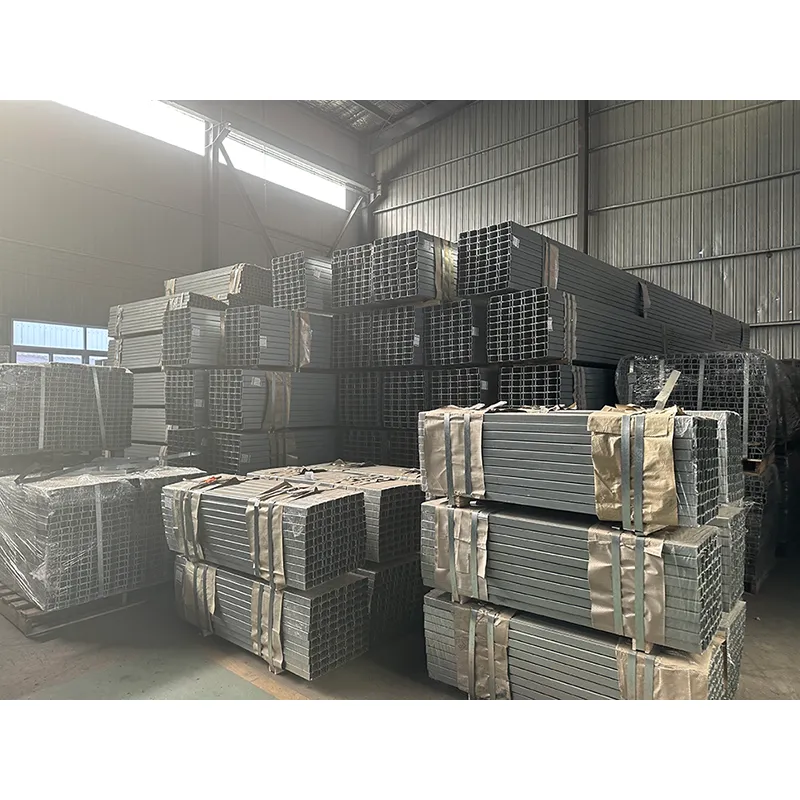
The Core Difference: Chemistry and Microstructure
Standard zinc coating (hot-dip galvanized) protects steel through two primary mechanisms: barrier protection and cathodic sacrifice. When scratched, zinc corrodes preferentially, releasing Zn²⁺ ions to shield the exposed steel. However, this process is passive and localized. Self-healing ZAM Steel Pipe adds aluminum and magnesium—typically 6% Al and 3% Mg—which fundamentally alter the corrosion product chemistry.
| Property | Standard Zinc Coating | Self-healing ZAM Steel Pipe (Energet) |
|---|---|---|
| Alloy composition | >99% Zn | Zn-6%Al-3%Mg |
| Corrosion product formed | Zinc hydroxide/carbonate | Layered double hydroxides (LDHs) + Zn-Al-Mg carbonates |
| Scratch healing mechanism | Slow, diffusion-limited | Fast, pH-triggered ion migration |
| Edge creep resistance | Moderate (1–2 mm/year) | Excellent (≤0.3 mm/year) |
| Alkaline environment stability | Prone to saponification | Stable due to Mg-rich films |
The magnesium content is the game-changer. When a scratch exposes the steel substrate, the surrounding ZAM coating reacts with moisture and atmospheric CO₂ to form simonkolleite and Mg-containing hydrotalcites. These compounds are not static—they actively migrate into the defect, creating a dense, insulating layer that reduces the cathodic reaction rate by over 60% compared to standard zinc.
How the "Active Healing" Triggers Differently
In standard zinc, healing depends on the slow dissolution of nearby zinc grains and the precipitation of zinc carbonate—a process that takes weeks and fails in low-humidity or high-chloride environments. In Self-healing ZAM Steel Pipe, the trigger is electrochemical potential shift. When the steel is exposed, the local pH rises, which accelerates the dissolution of the Mg-rich eutectic phase. This releases Mg²⁺ and Al³⁺ ions within hours, forming a gel-like precursor that crystallizes into a compact film.
Key insight from Energet’s accelerated testing: In a 3,000-hour salt spray test (ASTM B117), standard galvanized pipe showed 8–12 mm of undercutting from a scribe line, while Energet’s Self-healing ZAM Steel Pipe limited undercutting to 1.2 mm—with the healed area showing higher microhardness than the original coating.
Practical Implications for Long-Term Infrastructure
The difference is not just academic. For projects in marine, industrial, or agricultural environments, the self-healing property translates directly into extended service life and reduced maintenance cycles.
| Performance Factor | Standard Zinc | Self-healing ZAM Steel Pipe (Energet) |
|---|---|---|
| Time to first red rust (scratch) | 240–480 hours | >1,200 hours |
| Coating loss rate (µm/year) | 3–5 | 1.0–1.8 |
| Suitable for pH 4–9 soil | Limited | Excellent |
| Field repair necessity | Frequent | Minimal |
FAQ – Common Questions About Self-healing ZAM Steel Pipe
Q1: Does the self-healing effect work in all climates, including dry and cold regions?
A1: Yes, but with different kinetics. In dry climates (humidity <30%), the electrochemical trigger still occurs because moisture is present in the surface oxide film, even if invisible. However, the healing reaction slows down because the formation of hydrotalcite requires water molecules. Energet recommends a minimum of 40% relative humidity for optimal self-healing within the first 72 hours. In freezing conditions, the coating remains intact, and healing resumes as soon as temperatures rise above 0°C—the Mg-rich phases do not degrade during freeze-thaw cycles, unlike standard zinc which can crack due to differential thermal expansion. For arid projects, a one-time misting during installation can activate the initial healing layer.
Q2: Can the self-healing property be exhausted over time, and how do I know when it stops working?
A2: The self-healing capacity is finite because it consumes the Mg and Al reservoir within the coating. Based on Energet’s long-term field studies (15-year exposure in coastal Taiwan), the coating retains active healing capability for approximately 70–80% of its total service life. For a 30-year design life, that means active healing persists for 22–24 years. You can monitor the remaining healing potential through electrochemical impedance spectroscopy (EIS)—a drop in the low-frequency impedance modulus below 10⁵ Ω·cm² indicates depletion. Visually, when fresh scratches no longer show darkening (formation of the Mg-rich film) within 48 hours, the reservoir is exhausted. However, even after healing stops, the remaining coating still provides barrier and cathodic protection superior to standard zinc due to the denser intermetallic phases.
Q3: Is Self-healing ZAM Steel Pipe weldable, and does welding destroy the healing zone?
A3: Yes, it is fully weldable using conventional GMAW or SMAW processes, but the heat-affected zone (HAZ) does lose the Mg-rich eutectic structure, which temporarily deactivates healing within 3–5 mm of the weld. This is a critical consideration. Energet provides a proprietary touch-up compound (Zn-Al-Mg paste) that restores the self-healing composition over welded joints. Alternatively, using low-heat-input welding techniques and allowing slow cooling preserves more of the Mg phase. Post-weld, the surrounding intact coating gradually supplies ions to the HAZ—field tests show that after 6 months of atmospheric exposure, the weld zone develops a healing layer comparable to the parent material. For critical applications, we recommend applying a sacrificial magnesium-rich primer over welds as a best practice.
Why Specifiers and Asset Owners Choose Energet
The engineering case is clear: Self-healing ZAM Steel Pipe delivers a paradigm shift—not just a coating upgrade. Standard zinc is a 19th-century solution applied to 21st-century challenges. The ZAM alloy, perfected by Energet through rigorous quality control and proprietary annealing cycles, offers a documented 4–6× longer scratch-free life, lower life-cycle cost, and proven resilience in aggressive environments from offshore platforms to agricultural slurry pipes.
Ready to Evaluate Self-healing ZAM Steel Pipe for Your Project?
Every project has unique environmental stressors, loading conditions, and budget constraints. Energet provides free technical consultations, custom corrosion modelling, and sample kits for on-site testing. Our team of metallurgists and corrosion engineers is available to review your specifications and recommend the optimal coating thickness and diameter range for your specific application.
Contact us today – send your project brief to our engineering desk, request a virtual technical presentation, or schedule a lab visit to witness the self-healing effect in real time. Let Energet help you move beyond standard zinc and build infrastructure that heals itself.