

What Makes Stainless Steel Wire a Safer Choice for Demanding Spring and Industrial Parts?
2026-05-12
When I evaluate wire materials for spring manufacturing, electrical components, pump sprayers, automotive parts, or precision hardware, I usually look beyond the surface finish first. The real question is whether the wire can keep its shape, resist corrosion, and perform consistently after forming, coiling, and heat treatment. That is why I have paid attention to suppliers such as Ningbo Dingyan Metal Products Co.Ltd., especially when the project calls for reliable Stainless Steel Wire that can support stable production rather than create extra problems on the workshop floor.
For many buyers, the challenge is not simply finding a wire supplier. The harder part is choosing a material that works smoothly with existing machines, keeps spring dimensions stable, and reduces the risk of batch variation. A wire may look acceptable when it arrives, but if it causes unstable coiling, poor surface performance, or unexpected corrosion during use, the purchasing decision becomes expensive very quickly.
In this article, I want to explain how I look at Stainless Steel Wire from a practical purchasing angle. Instead of repeating generic product claims, I will focus on the concerns that matter to manufacturers, engineers, and procurement teams.
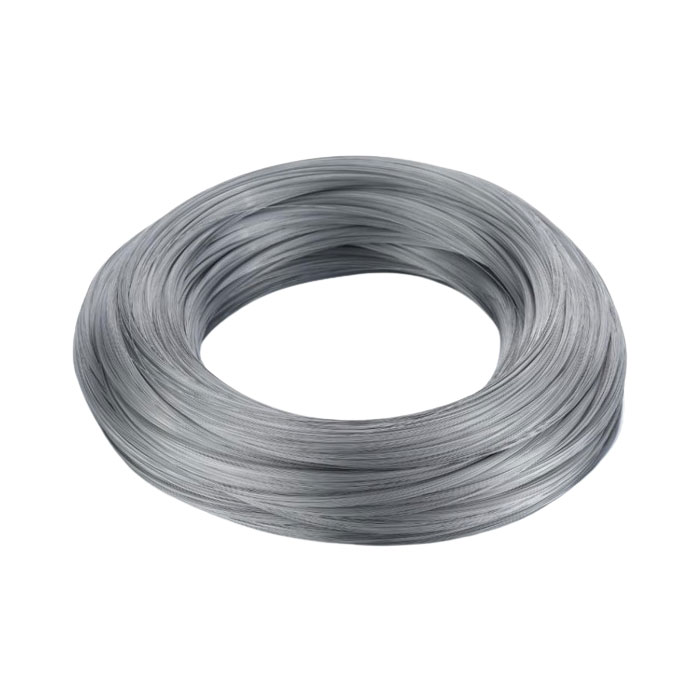
Why Do I Consider Stainless Steel Wire Before Ordinary Steel Wire?
I consider Stainless Steel Wire when a component needs more than basic tensile strength. Ordinary steel wire can be cost-effective in dry and low-risk environments, but stainless steel wire offers better resistance to moisture, oxidation, temperature changes, and chemical exposure. This makes it useful for parts that cannot afford early rust, surface failure, or unstable mechanical behavior.
For spring makers, the material choice directly affects production efficiency. If the wire has inconsistent surface lubrication or uneven mechanical properties, the coiling process becomes harder to control. The result may be more rejected pieces, more machine adjustments, and more time spent solving problems that should have been avoided at the material selection stage.
- I choose stainless steel wire when corrosion resistance is important.
- I choose it when the product must keep a clean appearance for a long service life.
- I choose it when the wire needs to perform in automotive, medical, electronic, or pump-related applications.
- I choose it when dimensional stability during spring forming matters.
- I choose it when the customer expects a material that supports repeatable production.
Which Product Features Matter Most When I Source Stainless Steel Wire?
When I source Stainless Steel Wire, I do not judge the material only by diameter or price. A good wire should balance surface quality, mechanical performance, corrosion resistance, and processing suitability. If one of these factors is weak, the buyer may save money at first but lose more during production.
For spring applications, the surface condition is especially important. A bright finish can support a cleaner product appearance, while soap-coated wire can help the forming process. Nickel-plated stainless steel wire may help reduce friction during coiling, which can support more stable spring dimensions and reduce load variation. These details sound technical, but they are exactly the details that affect real factory output.
| Buyer Concern | What I Check | Why It Matters |
|---|---|---|
| Corrosion resistance | Material grade, surface condition, and application environment | It helps reduce rust risk and extends service life. |
| Coiling performance | Wire surface, lubrication, and diameter tolerance | It supports smoother spring forming and fewer rejected parts. |
| Dimensional stability | Consistency across batches and mechanical properties | It helps keep spring size and load performance under control. |
| Heat treatment response | Surface change and post-processing behavior | It helps avoid unexpected color change or performance loss. |
| Application fit | Industry use, wire type, and required standard | It prevents mismatched material selection before production starts. |
Is Stainless Steel Wire Suitable for Spring Manufacturing?
Yes, I see Stainless Steel Wire as a strong option for many spring manufacturing projects, especially when the spring must work in demanding environments. Compression springs, tension springs, torsion springs, and other formed spring parts often need a wire that can handle repeated stress while keeping reliable shape and surface quality.
The main value is not only strength. It is the combination of strength, corrosion resistance, and process stability. A spring may be small, but it often plays a critical role inside a larger product. If the spring fails, the final product may fail with it. That is why wire selection should never be treated as a minor purchasing detail.
In my experience, buyers usually care about three practical outcomes when they choose spring wire.
- They want the wire to run smoothly on coiling equipment.
- They want the finished spring to meet load and size requirements.
- They want fewer quality complaints after shipment.
This is where a supplier with wire drawing equipment, inspection capacity, and experience in spring-related applications becomes valuable. A factory that understands spring production can provide more helpful suggestions than a general metal trader.
What Types of Stainless Steel Wire Should I Compare Before Ordering?
Before placing an order, I usually compare wire type, finish, diameter range, and final use. Different projects need different wire behavior. A wire for a pump sprayer spring may not have the same requirements as a wire for an electrical part or medical component.
| Wire Type | Typical Advantage | Common Application Direction |
|---|---|---|
| Bright stainless steel wire | Clean appearance and smooth surface | Visible parts, springs, and precision components |
| Soap-coated stainless steel wire | Better processing support during forming | Compression springs, tension springs, and torsion springs |
| Nickel-plated stainless steel wire | Reduced friction and stable coiling behavior | Spring production requiring consistent dimensions |
| Round stainless steel wire | Standard shape for broad industrial use | Automotive, electronics, medical, and pump parts |
| High-strength stainless steel spring wire | Good strength and ductility balance | High-performance spring components |
This comparison helps me avoid one common mistake. Some buyers only ask for the cheapest wire with the correct diameter. That approach may work for simple parts, but it can create trouble when the application requires stable forming, clean finishing, or strong corrosion resistance.
How Do I Judge Whether a Stainless Steel Wire Supplier Is Reliable?
I do not judge a supplier only by the product photo. A polished image does not prove stable production. When I assess a Stainless Steel Wire supplier, I look at factory background, production equipment, quality inspection, export experience, product range, and technical communication.
A practical supplier should be able to discuss the relationship between material grade, diameter, surface finish, processing method, and final application. If a supplier only answers with a price, I become cautious. Price matters, but technical matching matters more when the wire will be used in springs or precision parts.
- I check whether the supplier understands spring manufacturing requirements.
- I ask whether the wire can be supplied in suitable finishes for coiling.
- I confirm whether the product can meet common international standards when required.
- I look for stable communication before placing a larger order.
- I prefer suppliers that can explain the best wire choice for my application.
Ningbo Dingyan Metal Products Co.Ltd. presents itself as a manufacturer focused on stainless steel wire and related metal products, with production experience and product options for different spring and industrial uses. For buyers who need a more application-driven discussion, this kind of product focus can make communication more efficient.
Do Surface Finish and Wire Coating Really Affect Production Efficiency?
Yes, they do. Surface finish is not just about appearance. It can influence friction, machine running condition, coiling quality, and the stability of finished spring dimensions. When the surface is inconsistent, the spring maker may face uneven forming resistance, scratches, or variation in load performance.
For example, nickel-plated stainless steel wire can be useful when the coiling process needs smoother movement and more uniform lubrication behavior. Soap-coated wire can also support forming performance in many spring applications. Bright wire is often chosen when the finished part needs a cleaner visual result.
That is why I always recommend discussing the production process before confirming the wire finish. The right finish can reduce workshop adjustments and improve output consistency. The wrong finish may look acceptable on paper but create delays once production begins.
Which Industries Can Benefit from Stainless Steel Wire?
I often see Stainless Steel Wire used in industries where reliability and resistance matter. It is suitable for many products because it combines formability with corrosion protection. In spring production, the material can be used across both consumer and industrial fields.
| Industry | Common Use | Why Stainless Steel Wire Helps |
|---|---|---|
| Automotive | Springs, clips, small mechanical parts | It supports durability under vibration and changing conditions. |
| Medical | Precision springs and small components | It provides clean surface potential and reliable corrosion resistance. |
| Electrical and electronics | Contact springs and small formed parts | It helps maintain stable performance in compact components. |
| Pump sprayers | Return springs and internal mechanisms | It resists moisture and supports repeated use. |
| Industrial hardware | Fastening, forming, and mechanical support parts | It offers a useful balance of strength and corrosion resistance. |
What Should I Confirm Before Sending an Inquiry?
Before I send an inquiry for Stainless Steel Wire, I prepare the basic technical details. This makes supplier communication faster and helps avoid unsuitable quotations. A clear inquiry also shows the supplier that the buyer understands the application, which often leads to more accurate recommendations.
- Required wire diameter or diameter range
- Preferred material grade or equivalent standard
- Surface finish such as bright, soap-coated, or nickel-plated
- Application such as compression spring, tension spring, torsion spring, or formed part
- Expected order quantity and packaging requirements
- Performance concerns such as corrosion resistance, heat resistance, or coiling stability
- Destination market and any required testing documents
The more clearly I describe the application, the easier it is for the supplier to recommend the right wire. This also reduces the risk of receiving a quotation that looks attractive but does not match production needs.
Why Is Stainless Steel Wire a Long-Term Cost Decision Rather Than Only a Material Purchase?
I see Stainless Steel Wire as a long-term cost decision because wire quality affects more than the purchase price. It influences machine efficiency, labor time, rejection rate, customer complaints, and the final product’s service life. A slightly cheaper wire may become expensive if it causes unstable coiling or early corrosion.
Good wire helps a manufacturer protect production rhythm. It allows the engineering team to spend less time correcting preventable problems. It also helps the purchasing team build a more stable supply chain, especially when repeat orders require consistent quality across batches.
For buyers who manufacture springs or precision metal parts, this stability is often more valuable than a small price difference. A reliable wire supply can help keep delivery schedules under control and protect the reputation of the final product.
How Can I Start a Practical Stainless Steel Wire Purchase Discussion?
If I were starting a new project, I would not begin by asking only for the lowest price. I would explain the application first, then ask for a suitable wire type, finish, diameter range, and production suggestion. This approach gives the supplier enough information to provide a more useful answer.
Ningbo Dingyan Metal Products Co.Ltd. offers stainless steel wire options for spring and industrial applications, including wire types designed for forming, corrosion resistance, and stable production performance. For buyers who care about practical manufacturing results, the next step is to share the technical details of the project and request a recommendation based on real use conditions.
If you are looking for dependable Stainless Steel Wire for spring manufacturing, automotive parts, medical components, electronics, pump sprayers, or other industrial applications, please send your requirements and contact us for a quotation. Leave an inquiry with your wire diameter, finish, application, and order plan, and the team can help you find a suitable wire solution for your production needs.