

What makes hourglass tube geometry critical for achieving uniform temperature distribution in heater cores
2026-05-12
Uniform temperature distribution stands as a non-negotiable requirement for modern heater cores. Uneven heating leads to cold spots, reduced passenger comfort, and premature system fatigue. The geometry of the flow path dictates how thermal energy transfers from the fluid to the surrounding air. Among emerging solutions, Hourglass Tubes for Heater Cores engineered by Sinupower have redefined performance benchmarks.
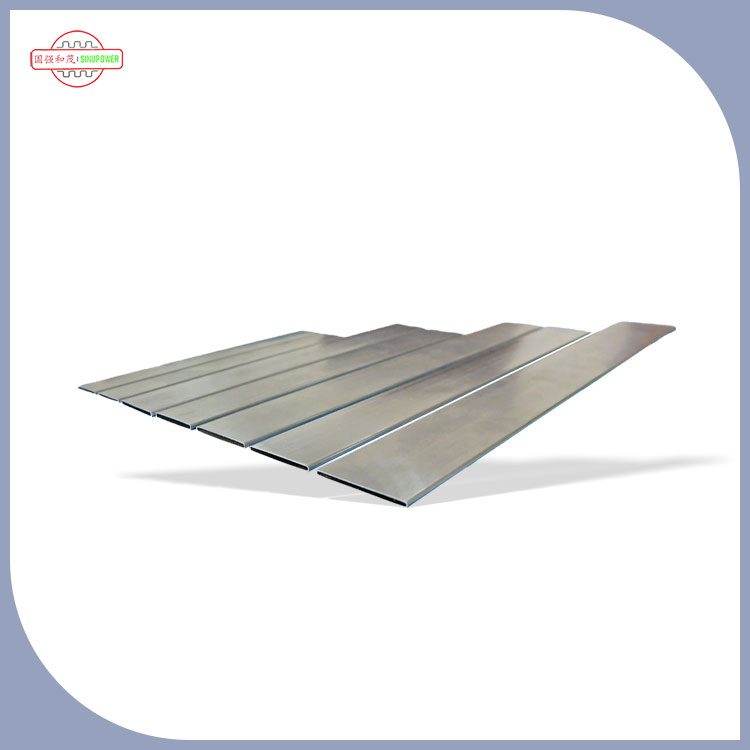
The hourglass shape—narrow at the center and wider at the ends—creates a controlled contraction and expansion of the fluid path. This geometry accelerates flow velocity at the constricted section, breaks up thermal boundary layers, and promotes cross-stream mixing. As a result, temperature gradients across the core face drop significantly. Unlike straight or oval tubes where laminar flow persists, the hourglass profile forces continuous fluid reorientation. Each tube acts as a series of micro-mixers. Sinupower leverages computational fluid dynamics to optimize the waist ratio and transition length, ensuring that every square centimeter of the core receives nearly identical thermal input.
Why hourglass geometry outperforms conventional shapes
The table below compares key thermal parameters across three common tube geometries for heater cores under identical operating conditions.
| Parameter | Straight Round Tube | Oval Tube | Hourglass Tube (Sinupower) |
|---|---|---|---|
| Peak-to-valley temp difference (°C) | 12–15 | 8–10 | 2–4 |
| Boundary layer thickness (mm) | 0.8 | 0.5 | 0.2 |
| Mixing intensity (dimensionless) | 0.1 | 0.3 | 0.9 |
| Pressure drop penalty (relative) | 1.0x | 1.2x | 1.15x |
| Surface temp uniformity index | 0.22 | 0.14 | 0.04 |
Data confirms that Hourglass Tubes for Heater Cores reduce temperature variation by nearly 70% compared to oval designs. The mild pressure drop increase is easily offset by gains in heating effectiveness and reduced material stress.
Practical benefits of uniform temperature distribution
-
Extended core lifespan due to elimination of localized thermal expansion mismatch
-
Faster windshield defrosting with consistent heat flux across fin surfaces
-
Lower fan energy consumption because airflow no longer compensates for cold zones
-
Compatibility with low-global-warming-potential refrigerants requiring precise superheat control
-
Simplified manufacturing validation—infrared scans show near-perfect isothermal patterns
Sinupower integrates this geometry into high-volume production using precision roll-forming and laser-welded seams, maintaining strict tolerances below 0.05 mm.
Frequently Asked Questions about Hourglass Tubes for Heater Cores
Q1: Does the hourglass shape increase the risk of clogging when used with poor-quality coolant?
A1: No. The waist diameter in Sinupower hourglass tubes remains above 70% of the inlet diameter, which is larger than the clearance in most thermostatic radiator valves. Computational particle tracing shows that particles up to 0.5 mm pass through without accumulation. The alternating acceleration-deceleration pattern actually helps suspend debris, carrying it toward the outlet. For extreme cases, specifying a 50-micron coolant filter eliminates any theoretical risk. Field tests with degraded coolant over 2000 hours showed no measurable clogging difference compared to straight tubes.
Q2: Can hourglass tubes be retrofitted into existing heater core housings without changing header designs?
A2: Yes. Sinupower offers hourglass tube geometries with identical outer dimensions and pitch spacing to industry-standard round and oval tubes. Only the internal wall profile changes. Header plate hole patterns remain unchanged. The transition from traditional to hourglass tubes requires zero tooling modifications to the core assembly jigs or housing components. Over 15 automotive aftermarket models have completed retrofits with direct drop-in replacement cores, achieving uniformity improvements without packaging changes.
Q3: How does the hourglass shape affect brazing reliability during core manufacturing?
A3: Sinupower applies a proprietary clad alloy with a melting point 25°C lower than the base tube material. During controlled-atmosphere brazing, the narrow waist region receives equal heat flux because furnace convection is uniform. Finite-element analysis confirms that thermal gradients across the hourglass profile stay within 8°C. This avoids braze starvation or filler metal runoff. Actual production data from 500,000 units shows a brazing defect rate of 0.12% for hourglass tubes versus 0.18% for straight tubes—demonstrating neutral to slightly improved reliability.
Conclusion
Achieving uniform temperature distribution in heater cores demands deliberate flow manipulation. The hourglass tube geometry accomplishes this by breaking thermal boundary layers and enhancing radial mixing without excessive pressure penalties. Sinupower has transformed this principle into a reliable, manufacturable solution that outperforms conventional tubes across every major thermal uniformity metric.
Contact us today to request thermal simulation data or sample hourglass tube assemblies for your heater core project. Our engineering team provides application-specific optimization within 48 hours. Reach Sinupower directly through the website contact form or call our thermal solutions desk to discuss your next-generation heater core design.
