

Manufacturing Insights · Precision Engineering
Steel components CNC machined are essential to equipment that depends on dimensional accuracy, mechanical strength, consistent assembly, and dependable service life. Yet selecting the right material and machining process can be challenging when a project must balance performance, production cost, delivery schedules, and quality requirements. This guide explains how steel grades, CNC machining methods, tolerances, surface finishes, and inspection practices affect the final component, helping engineers, purchasing teams, and manufacturers make informed decisions for demanding applications.
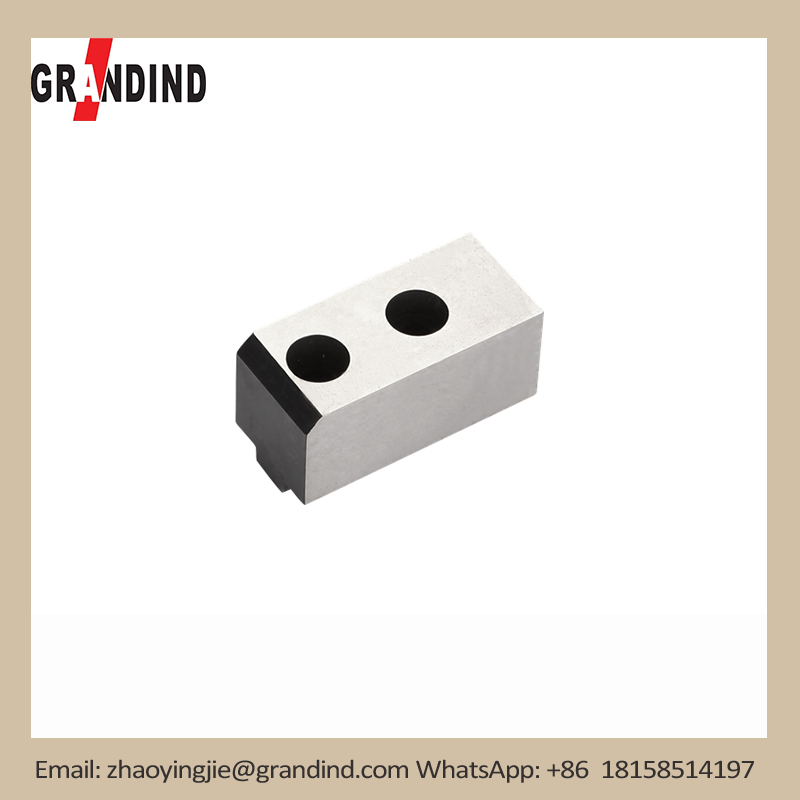
1. Understanding CNC-Machined Steel Components
CNC stands for computer numerical control. In CNC machining, programmed instructions guide cutting tools and machine movements to remove material from a steel workpiece until it reaches the required geometry. Depending on the design, the process can produce flat surfaces, precision bores, threads, grooves, slots, complex contours, and other functional features.
Steel components CNC machined are used when a part must combine structural strength with accurate dimensions and repeatable manufacturing. Typical examples include shafts, brackets, housings, connecting components, mounting blocks, fixtures, and custom mechanical parts. Their performance depends not only on the machine itself but also on the selected steel grade, cutting strategy, tooling, workholding, and inspection plan.
Unlike a loosely specified general-purpose part, a precision-machined component must satisfy the requirements of its actual assembly and operating environment. A bore may need to align with a bearing, a threaded hole may need to withstand repeated fastening, or a contact surface may require a particular finish to reduce wear. Defining these functional needs before production helps avoid unnecessary machining operations and costly redesigns.
2. Why CNC Machining Matters for Steel Parts
Steel offers a broad range of mechanical properties, but turning raw stock into a dependable component requires control over geometry and process consistency. CNC machining makes it possible to manufacture parts from a defined digital design while controlling tool paths, cutting parameters, and machining sequences.
Repeatability across production batches
Once a suitable process has been developed and validated, CNC equipment can reproduce the same features across multiple parts. Repeatability is especially valuable for manufacturers assembling products in which small dimensional differences can affect fit, alignment, or operating performance. Appropriate setup verification and inspection remain essential; automation alone does not guarantee that every part conforms.
Complex geometry with controlled dimensions
Multi-axis machining, CNC turning, and milling allow manufacturers to produce a range of features that may be difficult to achieve consistently through manual operations. Accurate positioning is useful for components containing intersecting holes, multiple mounting faces, precision shoulders, or detailed contours.
Better coordination between design and production
Digital drawings and CAD/CAM workflows help communicate geometry and manufacturing intent. When a design changes, updated programs and controlled revision records can reduce confusion between engineering and production teams. The benefits are greatest when drawings clearly identify critical dimensions, tolerances, material specifications, and inspection requirements.
Reduced assembly and maintenance problems
A correctly machined component can reduce fitting adjustments, alignment issues, and avoidable rework during assembly. For maintenance teams, consistent replacement parts also make repairs more predictable. These outcomes depend on the whole manufacturing system, including material traceability, process stability, and verification of critical features.
3. Choosing the Right Steel Grade for the Job
Material selection is one of the most important decisions in a CNC machining project. Steel grades differ in strength, hardness, toughness, corrosion resistance, heat-treatment response, weldability, and machinability. Selecting a material based only on purchase price or a general label such as "steel" can create performance problems later.
| Material Category | Typical Characteristics | Common Considerations |
|---|---|---|
| Low-carbon steel | Generally good machinability and formability, depending on grade and condition | May require additional protection where corrosion resistance is important |
| Alloy steel | Can provide enhanced strength, toughness, or wear performance through suitable grade selection and heat treatment | Machining strategy may need adjustment for hardness and material condition |
| Stainless steel | Selected grades provide useful corrosion resistance and mechanical properties | Grade selection matters; work hardening, heat generation, and chip control can affect machining |
| Pre-hardened steel | Supplied in a hardened condition suitable for certain precision parts and tooling applications | Hardness can increase cutting-tool demands and influence achievable cycle time |
| Heat-treated alloy steel | Can offer high strength or wear resistance for demanding mechanical functions | Machining before or after heat treatment must be planned around distortion, hardness, and final tolerances |
These are general material categories, not interchangeable specifications. Actual performance depends on the exact grade, material condition, dimensions, heat treatment, and service environment.
Questions to ask before confirming a material
- What loads will the part experience, including impact, vibration, and repeated cycling?
- Will it operate in a humid, corrosive, hot, or chemically aggressive environment?
- Does the part require wear resistance, hardness, toughness, or a combination of properties?
- Will it be welded, coated, heat-treated, or assembled with dissimilar materials?
- Are material certificates or traceability records required by the project?
For alloy steel and stainless steel components, consult the applicable material specification and verify that the proposed grade meets the engineering requirements. If a part needs heat treatment, define the required condition and when critical dimensions will be inspected. This helps prevent a common issue: achieving the correct geometry before heat treatment only to discover that distortion has affected the finished part.
4. Common CNC Machining Processes for Steel Components
Different component geometries call for different machining operations. Selecting an appropriate process can improve accuracy, tool life, productivity, and cost control.
CNC turning
Turning is commonly used for rotational components such as shafts, pins, bushings, sleeves, and threaded parts. The workpiece rotates while a cutting tool removes material. This process is useful for controlling diameters, shoulders, grooves, and concentric features. For parts with tight runout requirements, workholding and the relationship between machining operations must be considered carefully.
CNC milling
Milling is suitable for flat faces, pockets, slots, mounting surfaces, contours, and many non-rotational geometries. Multiple setups may be required when features lie on different sides of a component. Combining features into fewer setups, where practical, can reduce repositioning errors and shorten production time.
Drilling, boring, and tapping
Drilling creates holes, boring refines existing holes, and tapping forms internal threads. These operations have different purposes and should not be treated as interchangeable. When a hole must locate a bearing or precision pin, its diameter, position, depth, and surface condition may all affect function. Thread specifications should identify the thread standard, size, pitch, depth, and any relevant fit requirements.
Multi-axis machining
Multi-axis CNC machines can access features at different orientations with fewer separate setups. This may improve positional relationships between holes, faces, and contours. However, the most advanced machine is not automatically the most economical choice for every part. Geometry, batch size, machine availability, and inspection needs should guide process selection.
5. Tolerances and Dimensional Accuracy
A part can look correct and still fail during assembly if critical dimensions are outside the required limits. Tolerances define the permitted variation in a dimension or feature. The challenge is deciding which dimensions need tight control and which can use more practical limits.
Applying unnecessarily tight tolerances throughout a drawing can increase machining time, inspection effort, tool costs, and rejection risk. On the other hand, tolerances that are too loose may cause vibration, leakage, poor alignment, excessive play, or interference between mating components.
How to specify tolerances effectively
- Identify functional features. Focus on bearing seats, sealing surfaces, mating diameters, locating holes, and other dimensions that directly influence performance.
- Establish clear datums. Use consistent reference surfaces and axes so manufacturing and inspection teams measure features from the same basis.
- Specify fits where needed. For mating parts, define the intended fit rather than assuming that two individually accurate components will automatically work together.
- Account for material behavior. Long, thin, or asymmetrical steel components may move during material removal or heat treatment.
- Confirm measurement methods. Critical tolerances should be paired with suitable inspection equipment and a clear measurement plan.
Geometric dimensioning and tolerancing may be appropriate for complex relationships involving position, flatness, perpendicularity, concentricity-related requirements, or profile. The drawing should communicate the actual functional requirement clearly. A shared understanding between the design engineer and the machinist reduces ambiguity and helps prevent avoidable inspection disputes.
6. Surface Finish and Corrosion Protection
Surface finish affects more than appearance. Depending on the application, it can influence friction, wear, sealing, fatigue performance, coating adhesion, and the quality of contact between mating components. Different surfaces on the same part may need different finish requirements.
A bearing seat, for example, may require a controlled surface texture and diameter, while a non-functional exterior face may only need to be free of harmful burrs and obvious machining defects. Specifying a premium finish on every face can add cost without improving performance.
Deburring and edge control
Burrs can interfere with assembly, damage seals, create handling hazards, or contaminate a mechanism. Drawings should identify important edge conditions, including sharp edges that must be removed and edges that must remain intact for a specific function. Deburring methods must also suit the geometry; aggressive finishing can unintentionally change small features or critical dimensions.
Protective finishes
Depending on the steel grade and service environment, components may require a suitable coating, plating, passivation process for applicable stainless steel grades, or another corrosion-control method. Not every treatment is suitable for every steel or operating condition. Coatings can also alter dimensions, affect thread fit, or change the behavior of contact surfaces.
Before specifying a surface treatment, confirm the environmental exposure, required appearance, corrosion expectations, and any dimensional allowances. If a treated part has precision bores or threaded features, clarify whether those features must be masked, machined after treatment, or measured in the final condition.
7. Quality Control and Inspection: What Should Be Verified?
Reliable manufacturing requires more than a final visual check. A suitable inspection plan verifies the characteristics that determine whether a component meets its drawing and intended application. The appropriate plan depends on part complexity, order quantity, criticality, and customer requirements.
Incoming material verification
Confirm that the material matches the order specification. Where required, review material certificates, grade identification, heat or batch numbers, and relevant mechanical-property information. Traceability can be particularly important when components are used in regulated, safety-critical, or tightly controlled industrial systems.
In-process inspection
Checking selected dimensions during production can reveal tool wear, setup errors, thermal effects, or other process changes before a full batch is completed. In-process measurement is especially useful for long runs, precision features, and parts whose geometry is sensitive to machining sequence.
Final inspection
Final verification may include dimensional measurement, thread checks, visual examination, surface-finish evaluation, and review of specified post-processing requirements. Depending on the drawing, measurement tools can include calipers, micrometers, bore gauges, height gauges, thread gauges, coordinate measuring machines, or specialized fixtures.
- Verify dimensions and tolerances identified as critical.
- Check hole locations, thread quality, and mating features.
- Inspect edges, visible surface defects, and specified finishes.
- Confirm material and treatment documentation when required.
- Record nonconformities and agree on corrective actions before shipment.
Inspection reports should be relevant to the purchase specification rather than simply extensive. A clear agreement on sample size, measurement method, acceptance criteria, and required documents helps both the buyer and supplier avoid delays at shipment or incoming inspection.
8. Where CNC-Machined Steel Components Are Used
CNC-machined steel components serve many industries because steel grades can be selected for a wide range of mechanical and environmental demands. The exact material and machining route should always be matched to the component's operating conditions.
Industrial machinery and automation
Shafts, mounting blocks, brackets, fixtures, and connecting parts support machine movement and equipment alignment. Dimensional consistency helps reduce installation adjustments and unexpected downtime.
Automotive and transportation equipment
Precision steel parts may be used in mechanical assemblies, mounting systems, housings, and other components where repeatable geometry and suitable strength are important. Applicable industry specifications and validation requirements should be established for the intended use.
Energy and heavy equipment
Industrial systems may require steel components that tolerate demanding loads, vibration, or challenging operating environments. Material selection, heat treatment, corrosion protection, and verification should be planned around the actual service conditions.
Tooling and custom equipment
Custom fixtures, locating elements, machine adapters, and tooling components often depend on accurately machined surfaces and holes. In these applications, clear datum schemes and repeatable dimensions can be just as important as the material's strength.
No single steel grade or machining process is suitable for every industry. The most dependable specification is the one developed around real operating requirements, practical manufacturability, and a documented acceptance plan.
9. Managing Machining Cost, Lead Time, and Production Risk
The lowest quoted unit price does not always represent the lowest total cost. A part that requires repeated adjustments, extra finishing, special inspection, or extensive rework may become more expensive over its full production cycle. Buyers should evaluate price alongside technical suitability, consistency, communication, and delivery reliability.
Factors that influence cost
- Material: Grade, stock availability, workpiece size, and material condition affect purchasing and preparation costs.
- Geometry: Deep pockets, thin walls, complex contours, and difficult-to-reach features may require additional operations or specialized tooling.
- Tolerances: Tighter limits can require slower machining, more stable processes, and more detailed inspection.
- Batch quantity: Setup and programming costs are distributed differently across prototypes, small batches, and high-volume orders.
- Finishing: Heat treatment, coating, grinding, deburring, and other secondary operations add time and cost.
- Documentation: Certificates, inspection reports, traceability, and special packaging may affect the production plan.
How buyers can reduce avoidable expenses
Provide complete drawings, clarify critical dimensions, confirm the exact material specification, and disclose annual or expected order quantities as early as possible. If a design is still under development, ask the manufacturer to review features that may be difficult to machine or inspect.
Consider whether standard hole sizes, accessible tool paths, fewer setups, and more consistent wall thicknesses can meet the design intent. Such changes should be reviewed by the responsible engineer before approval; cost reduction must not compromise strength, fit, safety, or performance.
Lead time should account for material sourcing, programming, machine scheduling, machining, secondary treatments, inspection, and shipping. Agreeing on drawing revisions, sample approval, and acceptance criteria in advance helps prevent avoidable delays.
10. A Practical Checklist for Selecting a CNC Machining Supplier
A capable supplier should understand both the manufacturing details and the intended function of the component. Use the following checklist when evaluating a potential partner for steel machining projects.
- Can the supplier review drawings and identify potential manufacturing challenges?
- Can it work with the required steel grades and specified material conditions?
- Does it have suitable CNC turning, milling, drilling, and related capabilities?
- Can it explain how critical dimensions will be measured and verified?
- Are material identification and traceability available when required?
- Can it coordinate heat treatment, surface finishing, or other secondary processes?
- Are quotation assumptions, lead times, packaging, and delivery terms clearly stated?
- Is there a defined process for handling nonconforming parts and engineering changes?
When requesting a quotation, provide a current drawing, material grade, quantity, tolerance requirements, surface-finish specifications, treatment details, and any documentation needs. If some requirements remain undecided, identify them clearly so the supplier can explain the available options and their implications.
Effective communication is a key part of supplier qualification. A useful technical discussion should clarify not only whether a component can be produced, but also how its critical features will be controlled, how changes will be managed, and what evidence will demonstrate conformity.
11. Frequently Asked Questions
Q1. What are steel components CNC machined?
They are steel parts manufactured using computer-controlled cutting operations such as turning, milling, drilling, boring, and tapping. These processes remove material from a workpiece to produce specified dimensions, shapes, holes, threads, and surfaces.
Q2. Which steel grade is best for CNC machining?
There is no universal best grade. Low-carbon steel may suit general-purpose parts, alloy steel may be appropriate for specific strength or wear requirements, and selected stainless steel grades can be useful where corrosion resistance is important. The final choice should reflect the component's loads, environment, required properties, and manufacturing constraints.
Q3. Are CNC-machined steel parts suitable for custom designs?
Yes. CNC machining is commonly used for custom components because programmed tool paths can produce parts based on engineering drawings and approved CAD models. Manufacturability still depends on the geometry, material, machine capability, tolerances, and production quantity.
Q4. Which factors affect the accuracy of steel CNC machining?
Accuracy can be affected by machine condition, tool wear, workholding, cutting forces, temperature, material stress, setup strategy, and measurement methods. A stable process and suitable inspection plan help control variation in critical dimensions.
Q5. Do CNC-machined steel components need surface treatment?
Not every part does. Treatment may be needed for corrosion protection, wear performance, appearance, or a specific functional requirement. The correct treatment depends on the steel grade, operating environment, dimensional limits, and any contact or assembly requirements.
Q6. How can I reduce the cost of CNC-machined steel parts?
Provide complete specifications, avoid unnecessarily tight tolerances, simplify difficult-to-machine features where function permits, select an appropriate material, and discuss production quantities early. Any design changes should be validated to ensure that performance and safety requirements remain satisfied.
Q7. What information should I provide when requesting a quotation?
Share the latest drawing or CAD file, material grade, order quantity, critical tolerances, surface finish, heat-treatment or coating requirements, inspection documentation, packaging needs, and target delivery date. Clear information helps the supplier estimate cost and lead time more accurately.
Q8. Why is final inspection important after machining?
Final inspection verifies that the completed part meets the agreed requirements. It can identify dimensional deviations, thread issues, surface defects, or finishing problems before shipment and helps provide evidence that critical features conform to the drawing.
12. Conclusion: Building More Reliable Steel Components
Dependable CNC-machined steel components begin with a clear understanding of function and continue through material selection, process planning, dimensional control, finishing, and inspection. Each decision influences the finished part's performance, manufacturability, cost, and service life.
By defining critical requirements early, specifying realistic tolerances, considering the operating environment, and working with a technically capable manufacturing partner, buyers can reduce unnecessary rework and improve consistency across production batches. A well-planned process also makes it easier to manage design changes, maintain traceability, and coordinate delivery.
For businesses sourcing alloy steel and stainless steel components, the goal is not simply to machine a shape from metal. It is to produce a component that meets the intended engineering requirements and integrates reliably into the final assembly.
Looking for a Reliable Steel CNC Machining Partner?
Hangzhou Grand Import And Export Co., Ltd. supports customers looking for steel component and material solutions for industrial applications. Whether you are developing a custom part, comparing alloy steel and stainless steel options, or preparing a new sourcing project, clear technical requirements are the first step toward an effective manufacturing solution.
Share your drawings, material requirements, quantities, tolerances, and finishing specifications to help define the right approach for your project. For product information and further discussion, visit the official website of Hangzhou Grand Import And Export Co., Ltd.
Have a steel component project in mind? Contact the team to discuss your requirements, clarify material specifications, and explore suitable solutions for your application.
Contact Us