

What Makes Capillary Tube Pins a Critical Precision Component for High-Performance Fluid and Thermal Control Systems?
2025-11-27
Capillary Tube Pins are micro-engineered tubular components designed to control, restrict, measure, or deliver micro-volumes of fluids and gases with extremely high consistency. They serve as essential elements in refrigeration systems, analytical instruments, medical devices, laboratory automation, automotive sensors, and high-precision industrial assemblies. Their performance directly influences pressure stabilization, heat transfer efficiency, metering accuracy, and long-term mechanical reliability.
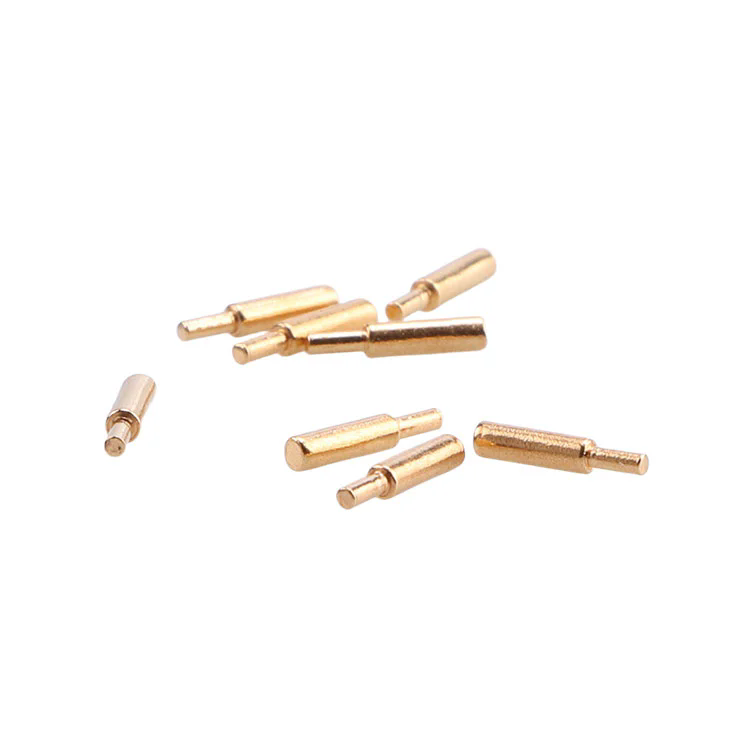
In a global market that increasingly relies on miniaturization, stable flow dynamics, and temperature-controlled mechanisms, Capillary Tube Pins are becoming indispensable. Engineers and procurement specialists frequently evaluate these components with a focus on dimensional accuracy, corrosion resistance, micro-flow stability, and compatibility with various media.
Core Parameter Specifications of Capillary Tube Pins
| Parameter Category | Typical Specification Range | Functional Significance |
|---|---|---|
| Outer Diameter | 0.30 mm – 3.0 mm | Determines flow capacity and structural strength |
| Inner Diameter | 0.10 mm – 2.2 mm | Controls capillary action and micro-flow rate |
| Length | 5 mm – 100 mm (customizable) | Configured based on system layout and flow requirements |
| Material Options | Stainless steel 304/316L, copper, nickel alloys | Provides optimal corrosion resistance and thermal performance |
| Surface Roughness | Ra ≤ 0.2 μm | Ensures laminar flow and reduces fluid friction |
| Tolerance Accuracy | ±0.01 mm or tighter | Supports precision-critical applications |
| Thermal Endurance | −200°C to 600°C depending on material | Allows usage in cryogenic and high-temperature systems |
| Pressure Rating | Up to 40 MPa | Ensures safe performance under demanding conditions |
These parameters vary based on application needs, but they collectively define whether a Capillary Tube Pin can achieve the expected performance stability in fields such as refrigeration throttling, gas chromatography, micro-dosing, or sensor calibration.
Why Are Capillary Tube Pins Essential in Modern Fluid, Gas, and Thermal Systems?
Understanding why Capillary Tube Pins are required begins with recognizing how micro-flow control impacts system stability. Modern engineering systems are increasingly dependent on fine fluid management, pressure accuracy, and thermal regulation. Capillary Tube Pins solve several core technical challenges that cannot be addressed by standard tubes or mechanical orifices.
Why Are These Components Critical?
1. They Enable Precise Flow Metering
Capillary Tube Pins create a controlled pressure drop to achieve predictable and stable flow rates. This capability is indispensable for refrigeration cycles, laboratory diagnostics, catalyst analysis, and pneumatic instrumentation.
2. They Maintain System Stability Under Variable Conditions
Temperature fluctuations, pressure surges, and chemical exposure can compromise ordinary tubing. High-grade Capillary Tube Pins maintain dimensional integrity and fluid stability even under extreme environments.
3. They Improve Thermal Exchange Efficiency
The geometry and material composition of the tube influence heat absorption and dissipation. Stainless steel and copper-based Capillary Tube Pins are especially effective in thermal control systems.
4. They Support Miniaturized Industrial Designs
As devices become smaller and more sophisticated, Capillary Tube Pins offer compact, stable, and scalable flow solutions without compromising system accuracy.
Why Material Selection Matters
Material quality directly affects:
-
corrosion resistance
-
heat tolerance
-
media compatibility
-
long-term fatigue resistance
-
chemical stability
-
cleanliness and extractables control
Industries such as medical diagnostics, food analysis, and semiconductor manufacturing have strict cleanliness and chemical compatibility standards. Capillary Tube Pins manufactured with premium alloys ensure uninterrupted performance over long operational cycles.
Why Dimensional Accuracy Impacts Flow Quality
Even microscopic variations influence:
-
pressure drops
-
laminar vs. turbulent flow
-
heat exchange efficiency
-
dosing precision
High-precision machining ensures that every pin delivers consistent performance, reducing system errors, leakage risk, and calibration issues.
How Do Capillary Tube Pins Deliver High-Level Performance and Operational Efficiency?
How They Work: Functional Logic Explained
Capillary Tube Pins operate based on fundamental fluid dynamics principles. Their small internal diameter creates flow resistance, producing a predictable and stable movement of liquid or gas.
The controlled resistance allows:
-
precise throttling without additional valves
-
consistent metering in automated systems
-
stable micro-flow under fluctuating pressures
-
accurate sample delivery in analytical instruments
-
improved refrigeration efficiency with reduced noise
How Manufacturing Quality Affects System Outcomes
High-grade Capillary Tube Pins undergo:
-
Cold-drawing and fine-tube forming
-
Precision internal polishing to achieve low roughness
-
Dimensional grinding and tolerance calibration
-
Deburring to ensure clean fluid paths
-
Material surface treatments if needed
This ensures improved structural integrity and longer service life.
How Capillary Tube Pins Benefit Key Applications
Refrigeration & HVAC
-
Optimizes refrigerant throttling
-
Ensures stable thermal cycles
-
Reduces energy loss
Medical Equipment
-
Provides accurate micro-fluid dosing
-
Improves diagnostic repeatability
-
Supports sterile, corrosion-free operation
Scientific Laboratories
-
Ensures consistent sample introduction
-
Reduces contamination risk
-
Enhances analytical precision
Automotive Sensors
-
Improves fluidic response time
-
Stabilizes pressure within sensor modules
By enabling these critical functionalities, Capillary Tube Pins enhance overall device performance, efficiency, and reliability.
Future Trends, Industry Adoption, and Common Questions
What Trends Will Shape the Future of Capillary Tube Pins?
1. Growth of Miniaturized Mechanical Systems
Bio-analytic devices, micro-reactors, and portable life-science tools require ultra-small Capillary Tube Pins with tighter tolerances.
2. Higher Demand for Corrosion-Resistant Materials
Industries working with aggressive chemicals are adopting nickel-alloy and special stainless-steel variants.
3. Integration Into Smart Sensors
Capillary geometry will play a key role in next-generation pressure sensors, environmental monitors, and metering devices.
4. Cleaner Manufacturing Standards
As industries demand low-extractable and contamination-free components, Capillary Tube Pins will undergo enhanced surface finishing and cleaning protocols.
5. Automation-Ready Customization
Customizable geometries, precision machining, and controlled surface roughness are becoming essential for robotic and automated production lines.
Frequently Asked Questions (FAQ)
Q1: What factors should be considered when selecting a Capillary Tube Pin?
A selection should take into account the intended fluid or gas, the required flow rate, temperature range, pressure conditions, material compatibility, inner diameter precision, and the level of corrosion resistance needed. System engineers should also evaluate whether the assembly requires custom tolerances or specific surface finishing.
Q2: Why does inner diameter accuracy affect performance so significantly?
The inner diameter determines the pressure drop and flow resistance, directly influencing how fluid or gas behaves inside the system. Any deviation—even a few microns—can alter metering accuracy, disturb laminar flow, cause inconsistent dosing, or reduce heat-transfer efficiency. Therefore, precision machining is essential for applications that depend on strict flow stability.
High-Precision Capillary Tube Pins and the Value of Choosing Gaxis
Capillary Tube Pins continue to play a vital role in the evolution of precision engineering, fluid management, analytical instrumentation, and advanced thermal control systems. As industries demand cleaner, smaller, more accurate, and more efficient components, the reliability and performance of Capillary Tube Pins have become indispensable. Gaxis provides high-precision, stable-performance Capillary Tube Pins engineered to support demanding applications across scientific, industrial, and technological fields.
For tailored specifications, professional guidance, or customized manufacturing solutions, contact us to learn how Gaxis can support your engineering and procurement needs.