

What Makes Blind Stainless Steel Flange Essential for Piping System Isolation and Maintenance?
2026-11-23
Pipeline maintenance often requires more than closing a valve. In oil and gas facilities, chemical plants, water treatment works and industrial process lines, maintenance teams may need a positive physical barrier to separate a section of pipe from the operating system. A stainless steel flange in blind configuration provides this barrier by closing a flanged pipe end, valve outlet or equipment nozzle with a solid plate. Unlike a valve, it does not rely on a moving closure mechanism or internal seat to maintain isolation. When correctly selected, installed and verified, it provides a robust mechanical boundary for inspection, cleaning, equipment replacement and planned shutdown work.
The value of a blind flange is closely connected to the conditions in which it operates. Pressure, temperature, fluid composition, gasket selection, bolt loading and flange dimensions all influence the integrity of the joint. A suitable blind flange must therefore be specified as part of the complete piping connection rather than selected by nominal pipe size alone. Wenzhou Longan Flange Co., Ltd. manufactures blind flanges in stainless steel and other material options, with standard and custom dimensions for different industrial requirements. Understanding the engineering factors behind this component helps plant operators, piping contractors and procurement teams make more reliable decisions.
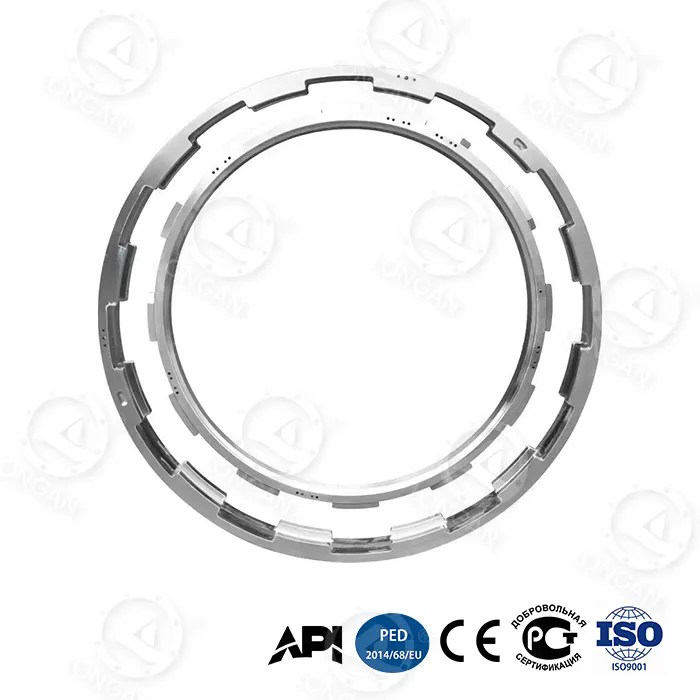
Why Is a Blind Flange Used for Positive Isolation During Pipeline Maintenance?
A blind flange is a solid flange without a central bore. It is bolted to a matching flange at the end of a pipeline, vessel nozzle or equipment connection. Because there is no flow passage through the plate, it closes the opening and creates a physical barrier against the process medium. This simple construction makes it useful wherever a pipe section needs to be taken out of service without removing the connected pipework.
In an operating plant, maintenance work may involve opening a pump casing, replacing a valve, cleaning a heat exchanger or inspecting a pipeline section. Before work begins, the relevant equipment must be isolated from process pressure and hazardous substances. A closed valve may form part of the isolation arrangement, but valves can leak through their seats, suffer from wear or fail to provide the required level of separation. A correctly rated blind flange can provide a more direct physical barrier when installed under an approved isolation procedure.
Typical situations where a blind flange is used include:
- Closing an unused branch connection or spare nozzle until future expansion.
- Isolating a pipeline section during inspection, repair or replacement.
- Blanking the inlet or outlet of equipment removed from service.
- Closing temporary process connections during plant modification.
- Providing a pressure boundary at the end of a flanged pipe section.
- Separating equipment for cleaning, flushing or internal inspection when the approved isolation plan requires a physical blank.
The distinction between operational shutoff and physical isolation matters. A valve is designed to regulate or stop flow while remaining installed in the system. A blind flange is a static pressure-retaining component that closes the connection itself. It normally requires the joint to be depressurised before installation or removal, and it is not intended to be used as an operating valve. Maintenance teams should follow site lockout, depressurisation, draining, purging and verification procedures before disturbing any bolted joint.
For a stainless steel flange used in an isolation point, the material and pressure rating must match the actual service conditions. The blind plate is exposed to the pressure acting across its internal face. This produces a load that is transferred through the flange body, gasket and bolting into the mating connection. The flange must have sufficient mechanical capacity for the specified design conditions, including applicable pressure and temperature limits.
Wenzhou Longan Flange Co., Ltd. supplies blind flange products for industrial piping and equipment connections. Our selection can cover different material grades, dimensions and flange standards, allowing the connection to be specified according to the project drawing and operating requirements. A properly selected blanking component helps maintenance planners establish a defined isolation point while keeping future removal and reinstatement practical.
How Do Material Grade, Pressure Class and Dimensions Affect Blind Flange Selection?
Material selection is one of the first decisions when specifying a blind flange. Stainless steel grades differ in chemical composition and resistance to particular corrosive environments. The correct choice depends on the process fluid, concentration, temperature, chloride exposure, cleaning chemicals and the possibility of crevice or pitting corrosion. A grade that performs well in a general water line may not be suitable for a chloride-rich or chemically aggressive service.
Common material options published for Longan blind flange production include austenitic stainless steels, duplex grades and selected heat-resistant grades. Their general characteristics are different:
- 304 stainless steel is widely used in general industrial and utility applications where its corrosion resistance is suitable for the process medium.
- 304L offers a lower carbon content than standard 304 and is often considered where welding-related sensitisation needs to be controlled.
- 316L contains molybdenum, which improves resistance to pitting and crevice corrosion in many chloride-containing environments compared with 304L. It is not immune to all chloride corrosion or stress corrosion cracking.
- Duplex 2205 combines austenitic and ferritic microstructures and is selected for applications requiring a combination of strength and corrosion resistance.
- Super duplex 2507 is used in more demanding environments where its higher alloy content may provide improved resistance to localised corrosion, subject to service conditions.
- TP310S and TP321 are considered for particular high-temperature or process requirements, with final suitability determined by the applicable design code and service data.
Pressure class is equally important. ASME Class 150, 300, 600 and higher classes are not direct pressure values in psi or bar. Their allowable pressure depends on the material group and temperature in the governing standard. A flange marked with a particular class must be checked against the relevant pressure-temperature table rather than treated as having one universal pressure limit. DIN, JIS, GOST and GB/T systems use their own designation and dimensional conventions, so cross-standard substitutions require engineering review.
Dimensions determine whether the blind flange can be installed correctly and mate with the existing piping connection. Procurement teams should confirm nominal pipe size, outside diameter, thickness, bolt circle, number of bolt holes, hole diameter and facing type. The gasket seating area must also match the mating flange. A dimensional mismatch can prevent proper assembly or create uneven gasket compression even when the nominal size appears correct.
| Specification item | Published product options | Selection consideration |
| Product type | Blind flange | Solid plate for closing a flanged opening |
| Standard size range | DN15 to DN600 | Confirm the required nominal size and matching dimensions |
| Custom size capability | Up to DN4000 on request | Large-diameter designs require drawing and engineering confirmation |
| Pressure class | Class 150 to Class 2500 for listed standard offerings | Verify pressure-temperature ratings under the selected standard |
| Stainless steel grades | 304, 304L, 316L, 2205, 2507, TP310S and TP321 | Match grade to fluid chemistry, temperature and corrosion exposure |
| Other material options | Carbon steel and selected alloy materials on request | Confirm material availability and project requirements |
| Applicable standards | ASME, DIN, JIS, GOST, GB/T and selected HG/T standards | Use the same dimensional and rating system as the mating connection |
| Facing | Confirm RF, FF or other specified facing | Match the gasket and mating flange surface |
Wenzhou Longan Flange Co., Ltd. offers standard and customised manufacturing options for projects with different dimensional requirements. Our factory reviews drawings and product specifications to establish the required dimensions, material and manufacturing route. For a large-diameter blank, the design should not be scaled up from a smaller product without checking plate thickness, bolting arrangement, deflection and the applicable design requirements.
When ordering, provide the flange standard, nominal size, pressure class, material grade, facing type and quantity. If the item is a replacement for an existing installation, a dimensional drawing or a verified sample can help reduce the risk of mismatched bolt patterns or sealing faces. For non-standard connections, include the design pressure, design temperature and relevant process information so the specification can be reviewed before production.
What Sealing and Mechanical Factors Determine the Reliability of a Blind Flange Joint?
A blind flange does not seal by itself. The complete joint depends on the mating flange faces, gasket, bolting and installation procedure. When the bolts are tightened, they create a clamping force that compresses the gasket between the two sealing surfaces. The gasket must deform sufficiently to fill surface irregularities and maintain contact pressure under the operating conditions. If the bolt load is uneven or the facing is damaged, the joint may leak even when the flange material and pressure class are correct.
Raised face and flat face connections have different gasket and assembly requirements. A raised face concentrates gasket seating load over a defined area, while a flat face connection generally uses a gasket arrangement that covers the relevant face. Ring-type joint connections require a matching groove and ring gasket. These facing styles are not interchangeable without checking the design specification.
Before installation, technicians should examine the following areas:
- Sealing face condition: check for deep scratches, dents, corrosion pits, embedded particles or other defects that may interrupt gasket contact.
- Gasket compatibility: confirm gasket material, dimensions and type against the process medium, temperature and pressure.
- Bolt and nut condition: use the specified grade, size and length, and replace damaged or heavily corroded fasteners.
- Bolt-hole alignment: ensure the flange can be assembled without forcing the bolts or introducing unwanted mechanical stress.
- Flange alignment: check that connected components are properly aligned before tightening.
- Torque procedure: follow the project-approved tightening sequence and specified torque or tensioning method.
- Inspection records: document the material, dimensions and inspection results required by the project quality plan.
Pressure loading on a blind plate deserves particular attention. Unlike a reducing or slip-on connection, the closed end is directly exposed to the pressure acting over its effective area. This creates a force that the plate and bolted joint must resist. The actual design assessment depends on the flange standard, pressure class, temperature, material properties, geometry and applicable code rules. A thicker plate is not automatically an acceptable substitute for a correctly engineered flange because bolt loading, facing geometry and overall connection behaviour must also be considered.
For demanding services, buyers may require material traceability and additional inspection. Material Test Certificates, positive material identification, dimensional reports, hardness checks and non-destructive examination may be specified according to the project, material and applicable code. These inspections provide evidence about material identity and manufacturing quality, but they do not replace the design verification of the complete piping joint.
Our manufacturing process includes forging and machining capabilities for standard and large-diameter flange products. CNC machining is used to control critical dimensions such as the outside diameter, thickness, bolt-hole positions and sealing face geometry. Our inspection approach should be aligned with the order requirements, approved drawings and relevant standards, so the finished component can be checked against the dimensions and material grade specified by the customer.
Wenzhou Longan Flange Co., Ltd. supports project-specific requirements for stainless steel and other flange materials. Where a customer requires third-party inspection, special material documentation or a defined non-destructive testing scope, those requirements should be stated during the quotation and technical review stage. This allows inspection hold points and acceptance criteria to be agreed before manufacturing begins.
How Does a Blind Flange Support Different Industrial Maintenance Applications?
The role of a blind flange varies with the process layout, fluid properties and maintenance strategy. In an oil and gas facility, it may close a spare nozzle, isolate a section of process piping or provide a blanking point during equipment replacement. In a chemical plant, material selection becomes especially important because the flange may be exposed to acids, alkalis, solvents or mixed process streams. The material grade must be checked against the actual chemical composition, concentration and temperature rather than chosen solely because it is stainless steel.
Water treatment and utility systems use blanking components to close unused branches, separate equipment for cleaning and manage pipeline modifications. In these applications, the key considerations may include water chemistry, disinfectants, temperature, pressure and the risk of crevice corrosion beneath deposits or gaskets. In power generation and process industries, temperature cycling and pressure fluctuations can place additional demands on the bolted connection.
Large equipment connections introduce another set of considerations. A large-diameter blind plate may be required for a vessel opening, filter housing, pipe header or other fabricated assembly. Its weight, lifting arrangement, thickness, flatness and bolting pattern need to be addressed during design and installation planning. The connection should be supported and handled in a way that avoids damaging the sealing face or introducing unnecessary bending loads.
For maintenance planning, the main benefits of a properly specified blind flange include:
- A physical closure for an open flanged connection.
- A removable design that allows future access to the pipeline or equipment.
- Compatibility with established flange and gasket systems when manufactured to the correct standard.
- Material choices for different process environments.
- Availability in standard sizes and custom dimensions for project-specific connections.
- A practical blanking solution for planned shutdowns, inspection and equipment replacement.
However, a blind flange should not be treated as a substitute for a complete isolation procedure. The pipeline must be depressurised and made safe before the joint is opened. Where hazardous fluids, toxic gases, flammable media or high-temperature contents are involved, the site isolation plan must define draining, venting, purging, testing and personal protection requirements. The flange itself is one part of the mechanical boundary, not a standalone safety procedure.
Our product range is intended to support piping connections across different industrial sectors and project configurations. Customers can specify material, standard, pressure class, size and facing according to the equipment interface. For a replacement order, our engineering review should compare the new component with the original drawing or verified flange measurements rather than assuming that a visually similar part will fit.
How Can Buyers Verify Specifications Before Ordering a Blind Flange?
Procurement errors often occur when an enquiry includes only a nominal diameter and a material grade. Those details are not enough to identify a complete flange specification. A reliable purchase order should state the standard, pressure class, material, facing, dimensions, inspection requirements and any project-specific documentation. If the flange is being installed in an existing system, the mating flange details must also be confirmed.
Use the following checklist when preparing a technical enquiry:
- Identify the applicable standard, such as ASME B16.5, DIN, JIS, GOST or GB/T.
- Specify nominal pipe size or DN and the required pressure class or rating.
- State the exact material grade, including the required material designation where relevant.
- Confirm the facing type and gasket arrangement.
- Provide the required outside diameter, thickness, bolt circle and bolt-hole details if the design is non-standard.
- State design pressure, design temperature and process medium.
- List any requirements for MTC, PMI, hardness testing, NDT or third-party inspection.
- Confirm quantity, delivery schedule, marking and packaging requirements.
For a stainless steel flange used in a critical isolation point, buyers should also check that the documentation corresponds to the exact product supplied. A material certificate for a different heat or a test report for another size does not automatically verify the ordered item. Traceability should connect the material identification, production record, inspection results and final shipment documents where required by the purchase specification.
Wenzhou Longan Flange Co., Ltd. provides blind flange manufacturing for standard and customised requirements, with production capabilities that include forging and precision machining. Our factory can review customer drawings and technical specifications to confirm whether the requested dimensions and material are within the available manufacturing scope. For large-diameter or non-standard products, a drawing review is particularly useful because the connection may require additional checks beyond a standard catalogue description.
When comparing suppliers, avoid relying only on unit price or a broad statement such as stainless steel construction. Check whether the supplier can confirm the material grade, applicable standard, dimensional tolerances, inspection scope and delivery documentation. A technically complete quotation makes it easier to compare equivalent products and reduces the likelihood of changes after order placement.
Before releasing an order, our team recommends confirming the complete flange designation and the interface dimensions with the project engineer or piping designer. This is especially important where the connection is part of a pressure boundary or a planned maintenance isolation point. Clear technical information at the enquiry stage helps prevent delays during manufacturing, installation and commissioning.
Conclusion
A blind flange is essential to piping system isolation and maintenance because it provides a removable physical closure for a flanged opening. Its reliability depends on more than the material name or nominal size. Pressure class, material grade, plate dimensions, facing, gasket compatibility, bolting and inspection requirements must all be considered together. Wenzhou Longan Flange Co., Ltd. manufactures blind flange products in a range of stainless steel grades, standards and dimensions, including customised large-diameter requirements. Contact our team with your drawings, operating conditions and technical specifications to discuss a suitable product configuration and request a quotation for your project.
Frequently Asked Questions
1. Can a blind flange be used as a permanent pipeline closure?
Yes. A blind flange can be used as a permanent closure when it is designed, rated and installed for the pipeline's specified pressure, temperature and service conditions. The flange standard, material grade, facing, gasket and bolting must all be suitable for the application. The connection should also remain accessible for inspection where required by the maintenance plan. A permanent closure should not be created by selecting a flange based only on nominal pipe size.
2. How do I choose between 304 and 316L stainless steel for a blind flange?
The choice depends on the process medium and operating environment. Grade 304 is commonly used in general industrial services, while 316L contains molybdenum and generally offers better resistance to pitting and crevice corrosion in many chloride-containing environments. Neither grade is suitable for every chemical or concentration. The final selection should consider chloride level, temperature, chemical composition, cleaning conditions and the possibility of corrosion under deposits or gaskets. For more demanding services, duplex or other alloy options may need to be evaluated.
3. What information is needed to order a custom blind flange?
Provide the applicable flange standard, nominal size, pressure class, material grade, facing type, outside diameter, thickness, bolt circle, number of bolt holes and hole diameter. The design pressure, design temperature and process medium are also important for technical review. If the flange is a replacement item, an approved drawing or verified measurements of the mating connection can help confirm fit. Any requirements for material certificates, PMI, NDT, third-party inspection, marking and packaging should be stated before production.