

What Makes a Brazed Plate Heat Exchanger a Smart Choice for Modern Thermal Management?
2026-09-03
Article Summary
A brazed plate heat exchanger is an advanced thermal transfer solution designed to provide efficient heat exchange in compact systems. With increasing demands for energy savings, reliable performance, and space optimization, industries are looking for heat exchangers that can deliver stable operation while reducing maintenance costs. This article explains what a brazed plate heat exchanger is, why it is widely used, how it solves common industrial challenges, and what factors should be considered when selecting the right model.
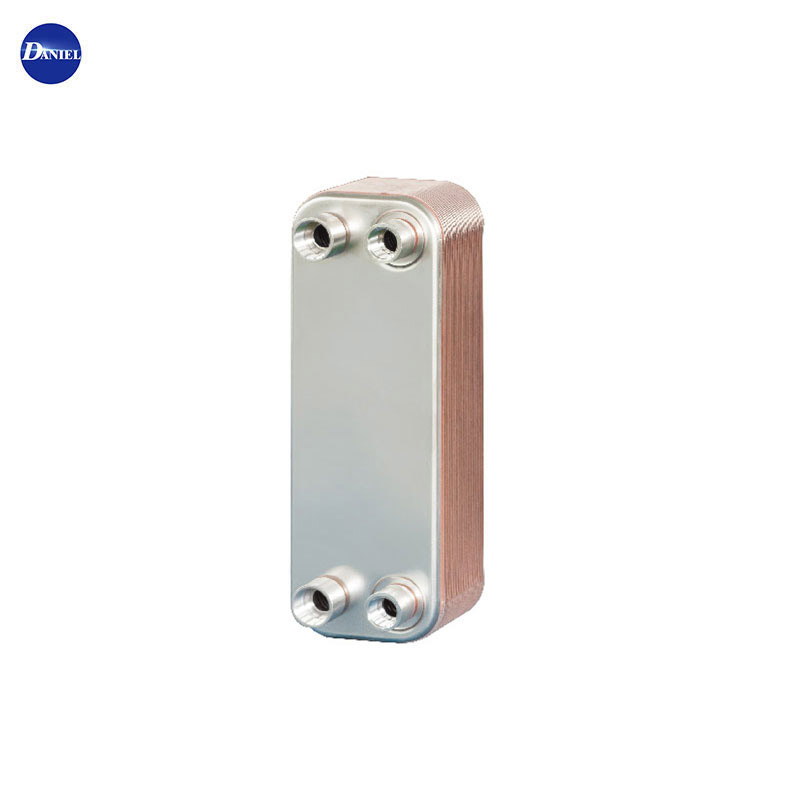
From HVAC systems and refrigeration equipment to industrial processing applications, brazed plate heat exchangers offer excellent heat transfer efficiency, durability, and flexibility. Jiangyin Daniel Cooler Co., Ltd. provides professional heat exchange solutions designed to meet different application requirements and help customers improve system performance.
Table of Contents
- What Is a Brazed Plate Heat Exchanger?
- Why Are Brazed Plate Heat Exchangers Widely Used?
- How Does a Brazed Plate Heat Exchanger Work?
- Key Advantages of Brazed Plate Heat Exchangers
- Applications of Brazed Plate Heat Exchangers
- How to Select the Right Brazed Plate Heat Exchanger?
- Common Problems and Solutions
- Frequently Asked Questions
Article Outline
- Understanding the structure and operating principle of brazed plate heat exchangers
- Exploring performance advantages compared with traditional heat exchangers
- Identifying suitable applications and selection methods
- Solving common challenges in thermal management systems
- Choosing a reliable heat exchanger manufacturer
What Is a Brazed Plate Heat Exchanger?
A brazed plate heat exchanger is a compact heat transfer device consisting of multiple stainless steel plates that are stacked together and permanently bonded through a brazing process. During manufacturing, copper or nickel-based brazing materials create strong connections between plates, forming sealed channels for fluid flow.
Unlike traditional shell-and-tube heat exchangers, brazed plate heat exchangers do not require large housings or mechanical gaskets. Their compact structure allows two different fluids to exchange heat efficiently while maintaining a smaller installation footprint.
The specially designed corrugated plates increase turbulence inside the channels, improving heat transfer performance. This design allows systems to achieve higher efficiency with less material usage and reduced operating costs.
| Feature | Description |
|---|---|
| Structure | Stacked stainless steel plates permanently brazed together |
| Heat Transfer Method | Indirect heat exchange between two separate fluid circuits |
| Design Advantage | Compact size with high thermal efficiency |
| Maintenance | Low maintenance requirement due to gasket-free construction |
Why Are Brazed Plate Heat Exchangers Widely Used?
Modern industries face several challenges, including limited installation space, rising energy costs, and strict requirements for system reliability. A brazed plate heat exchanger addresses these problems by combining high performance with a compact design.
One major reason for its popularity is energy efficiency. The corrugated plate structure creates strong fluid turbulence, allowing heat to transfer quickly between fluids. This means systems can reach desired temperatures faster while consuming less energy.
Another important advantage is durability. Since the plates are brazed into a single structure, there are fewer components that can fail compared with gasketed heat exchangers. This reduces leakage risks and extends service life.
| Customer Challenge | Brazed Plate Heat Exchanger Solution |
|---|---|
| Limited installation space | Compact structure requires less space than conventional equipment |
| High energy consumption | Improved heat transfer efficiency reduces energy demand |
| Frequent maintenance | Gasket-free design minimizes maintenance requirements |
| Unstable temperature control | Fast heat exchange improves system stability |
How Does a Brazed Plate Heat Exchanger Work?
The operating principle of a brazed plate heat exchanger is based on thermal energy transfer between two separate fluid streams. One fluid enters through one port and flows through alternating channels, while another fluid enters through a different port and flows through the remaining channels.
The metal plates separate the two fluids while allowing heat energy to pass through the thin stainless steel material. Because the plates are extremely thin and have enhanced surface patterns, heat transfer occurs quickly and efficiently.
The counter-flow design commonly used in brazed plate heat exchangers allows hot and cold fluids to move in opposite directions. This maximizes temperature exchange and improves overall system efficiency.
Key Advantages of Brazed Plate Heat Exchangers
Choosing the right heat exchanger can significantly influence the efficiency and reliability of an entire system. Brazed plate heat exchangers provide several benefits:
- High Heat Transfer Efficiency: Corrugated plates increase turbulence and maximize thermal exchange.
- Compact Installation: The small footprint makes them suitable for space-limited projects.
- Strong Pressure Resistance: Brazed construction provides excellent mechanical strength.
- Reduced Maintenance: No gasket replacement is required during normal operation.
- Long Service Life: Stainless steel materials provide corrosion resistance and durability.
- Flexible Applications: Available for heating, cooling, refrigeration, and industrial processes.
| Performance Factor | Traditional Heat Exchanger | Brazed Plate Heat Exchanger |
|---|---|---|
| Size Requirement | Larger installation area | Compact and space-saving |
| Heat Transfer Efficiency | Moderate | High efficiency |
| Maintenance Frequency | Higher due to components | Lower maintenance demand |
| Installation Flexibility | Limited | Suitable for various systems |
Applications of Brazed Plate Heat Exchangers
Brazed plate heat exchangers are widely applied across many industries because of their reliable performance and adaptable design.
- HVAC Systems: Used for heating, cooling, and air conditioning systems.
- Refrigeration Equipment: Applied in chillers, condensers, and evaporator systems.
- Industrial Cooling: Helps control temperatures in manufacturing processes.
- Renewable Energy Systems: Used in heat pump and solar thermal applications.
- Marine Equipment: Provides efficient cooling solutions for demanding environments.
How to Select the Right Brazed Plate Heat Exchanger?
Selecting a suitable brazed plate heat exchanger requires careful consideration of operating conditions and system requirements. An unsuitable model may lead to poor efficiency, pressure problems, or unnecessary operating costs.
| Selection Factor | Important Considerations |
|---|---|
| Fluid Type | Check compatibility between materials and operating fluids |
| Temperature Range | Confirm inlet and outlet temperature requirements |
| Pressure Rating | Select equipment according to system pressure conditions |
| Heat Load | Calculate required heat transfer capacity |
| Installation Space | Choose a suitable size based on available area |
Working with an experienced manufacturer helps ensure accurate product selection and reliable long-term operation. Jiangyin Daniel Cooler Co., Ltd. focuses on providing customized thermal solutions according to different customer requirements.
Common Problems and Solutions of Brazed Plate Heat Exchangers
Although brazed plate heat exchangers are designed for reliable and efficient operation, some problems may occur if the equipment is incorrectly selected, installed, or maintained. Understanding these potential issues helps users improve system stability and avoid unnecessary downtime.
| Common Problem | Possible Cause | Recommended Solution |
|---|---|---|
| Reduced Heat Transfer Performance | Scaling, contamination, incorrect flow rate, or unsuitable operating conditions | Optimize fluid quality, maintain proper flow conditions, and select suitable plate designs |
| Pressure Drop Increase | Blocked channels or excessive fluid resistance | Check the system condition and clean the heat exchanger when necessary |
| Fluid Leakage | Improper installation, corrosion, or operation beyond rated conditions | Verify pressure and temperature limits before operation |
| Insufficient Cooling or Heating Capacity | Incorrect sizing or inaccurate heat load calculation | Reevaluate system requirements and choose a properly sized model |
| Shortened Service Life | Use of incompatible fluids or harsh operating environments | Select suitable materials and follow recommended operating conditions |
Most performance problems can be prevented through correct product selection and professional system design. Before installation, users should consider factors such as fluid characteristics, operating temperature, pressure conditions, and required heat transfer capacity.
Jiangyin Daniel Cooler Co., Ltd. helps customers select suitable brazed plate heat exchanger solutions by analyzing specific application requirements. Professional technical support ensures that the equipment can achieve stable performance throughout its service life.
Maintenance Tips for Better Performance
One of the biggest advantages of brazed plate heat exchangers is their low maintenance requirement. However, regular inspection and proper operation are still important for maintaining long-term efficiency.
- Monitor inlet and outlet temperatures regularly to identify performance changes.
- Check pressure differences to detect possible blockage or contamination.
- Ensure fluids are compatible with stainless steel and brazing materials.
- Avoid exceeding the designed pressure and temperature limits.
- Maintain clean operating fluids to reduce scaling risks.
- Follow professional recommendations when integrating the heat exchanger into a new system.
Compared with traditional heat exchange equipment, brazed plate heat exchangers require less maintenance because there are no replaceable gaskets. However, preventive inspections remain valuable for industries where continuous operation is critical.
Frequently Asked Questions About Brazed Plate Heat Exchangers
What industries commonly use brazed plate heat exchangers?
Brazed plate heat exchangers are widely used in HVAC, refrigeration, industrial cooling, food processing, renewable energy, marine systems, and many other fields. Their compact design and efficient heat transfer capability make them suitable for both commercial and industrial applications.
Why is a brazed plate heat exchanger more compact than traditional heat exchangers?
The compact structure comes from the use of thin corrugated stainless steel plates. These plates provide a large heat transfer area within a small volume, allowing the equipment to achieve high efficiency without requiring a large shell or external structure.
How long can a brazed plate heat exchanger operate?
The service life depends on operating conditions, fluid quality, maintenance practices, and correct installation. When used within designed parameters, a high-quality brazed plate heat exchanger can provide reliable performance for many years.
Can brazed plate heat exchangers handle high-pressure applications?
Yes. The brazed construction provides strong mechanical stability and allows many models to operate under demanding pressure conditions. However, users should always select a model according to actual system requirements.
How can I choose the correct brazed plate heat exchanger model?
The correct model depends on several factors, including heat load, fluid type, temperature difference, pressure rating, flow rate, and installation conditions. Professional guidance from an experienced supplier can help avoid incorrect selection.
Why Choose Jiangyin Daniel Cooler Co., Ltd. for Brazed Plate Heat Exchanger Solutions?
Selecting a reliable manufacturer is essential for achieving consistent thermal performance. Jiangyin Daniel Cooler Co., Ltd. focuses on developing and supplying efficient heat exchange products designed for different industrial and commercial applications.
With professional manufacturing experience and attention to product quality, Jiangyin Daniel Cooler Co., Ltd. provides brazed plate heat exchanger solutions that balance efficiency, durability, and practical installation requirements.
- Professional heat exchange technology and manufacturing capability
- Solutions designed for different operating environments
- High-quality materials for stable performance
- Support for customized application requirements
- Focus on improving energy efficiency and system reliability
Whether for HVAC projects, refrigeration systems, industrial equipment, or customized thermal management applications, selecting the right brazed plate heat exchanger can significantly improve operational efficiency and reduce long-term costs.
Conclusion
A brazed plate heat exchanger provides an efficient, compact, and reliable solution for modern thermal management challenges. Its advanced plate design, strong heat transfer capability, and durable construction make it an ideal choice for industries that require stable temperature control and energy-efficient operation.
Understanding how brazed plate heat exchangers work, why they are beneficial, and how to select the correct model allows customers to make better decisions for their systems. Proper product selection combined with professional manufacturing support can help achieve higher efficiency, lower maintenance requirements, and improved system reliability.
Jiangyin Daniel Cooler Co., Ltd. is committed to providing high-performance brazed plate heat exchanger solutions for customers worldwide. If you need professional assistance in selecting the right heat exchanger for your application, please contact us for customized support and reliable thermal management solutions.
Contact Jiangyin Daniel Cooler Co., Ltd.
Looking for an efficient brazed plate heat exchanger solution for your HVAC, refrigeration, or industrial application? Jiangyin Daniel Cooler Co., Ltd. can provide professional product recommendations, customized solutions, and technical support based on your specific requirements. For more information about our products and services, please contact us today.