

What Is the Maximum Load Capacity of Standard Zinc or Aluminum Die-Cast Rollers
2026-06-12
When selecting components for material handling systems, one of the most critical engineering questions is the load capacity of your rollers. For Die-Cast Rollers made from zinc or aluminum, the answer depends on material properties, wall thickness, bearing type, and shaft design. At Huantong, we engineer Die-Cast Rollers that balance strength, weight, and durability. Standard zinc alloy rollers typically support 80–150 kg (176–330 lbs) per roller, while aluminum variants handle 60–100 kg (132–220 lbs) under uniform load distribution. These values assume a roller length of 500 mm, a diameter of 50 mm, and operation at temperatures between -10°C and 80°C.
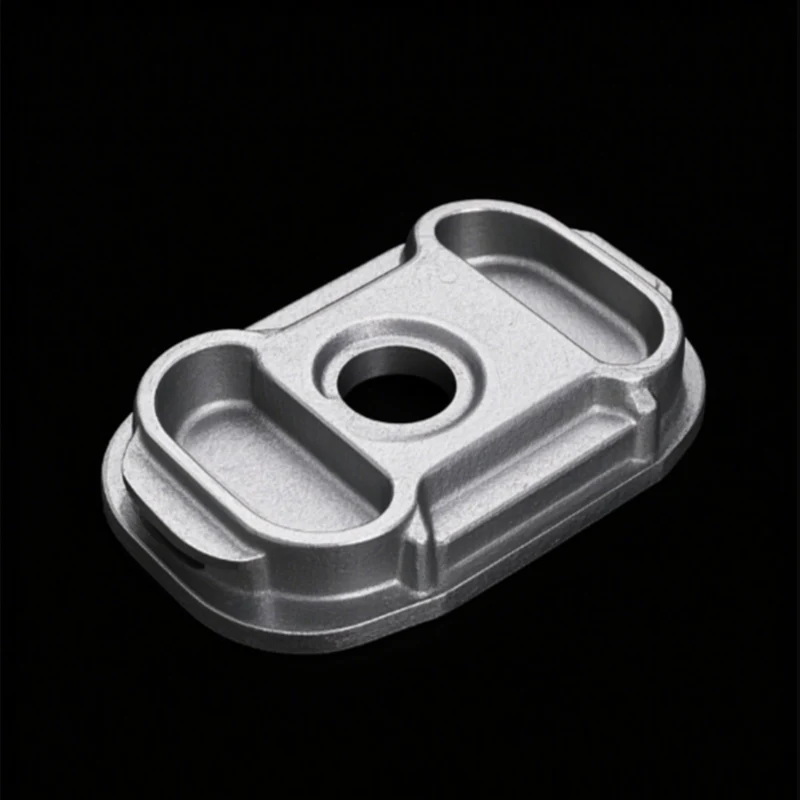
Load Capacity Comparison: Zinc vs. Aluminum Die-Cast Rollers
The table below provides a technical comparison based on Huantong laboratory tests and industry standards.
| Material | Ultimate Static Load (kg) | Dynamic Load (kg) | Fatigue Life (cycles) | Corrosion Resistance |
|---|---|---|---|---|
| Zinc Alloy (ZA-8) | 150 | 120 | 2.5 million | Moderate |
| Aluminum Alloy (A380) | 100 | 80 | 1.8 million | High (with coating) |
| Zinc (reinforced) | 180 | 150 | 3.0 million | Moderate |
| Aluminum (hard anodized) | 130 | 110 | 2.2 million | Very High |
Data based on Huantong standard series rollers with 50 mm diameter and 500 mm length. Actual capacity varies with bearing type and shaft material.
Key Factors That Reduce Load Capacity
-
Eccentric loads – Off-center forces can reduce capacity by up to 40%.
-
High temperature – Above 100°C, aluminum alloys lose 25–30% of strength.
-
Impact loading – Repeated shock loads cause premature fatigue in Die-Cast Rollers.
-
Bearing quality – Shielded ball bearings add 15–20% more usable capacity than plain bearings.
Die-Cast Rollers FAQ – Common Technical Questions
Q1: Can I exceed the rated load capacity of Die-Cast Rollers by reducing roller spacing?
A: Yes, but with caution. By reducing the center-to-center spacing between rollers from 150 mm to 100 mm, you effectively increase the system’s distributed load capacity. However, the individual Die-Cast Rollers must never exceed 110% of their static rating even for short durations. Huantong recommends a safety factor of 1.5 for dynamic applications. Exceeding the limit leads to permanent shaft bending or hub cracking, especially in zinc rollers which are harder but more brittle than aluminum.
Q2: How do I calculate the required number of Die-Cast Rollers for a 500 kg pallet?
A: Use this formula: Number of rollers = (Total load × Safety factor) / (Dynamic capacity per roller × Load distribution factor). For a 500 kg pallet with safety factor 1.5 and distribution factor 0.8 (typical for uneven pallets), using Huantong zinc rollers (120 kg dynamic capacity): (500 × 1.5) / (120 × 0.8) = 750 / 96 = 7.8, so 8 rollers minimum. Always verify that the roller shaft and frame can handle the concentrated load at entry points. Huantong provides free load calculation tools for system designers.
Q3: Why does my aluminum Die-Cast Rollers deform under loads lower than the specification?
A: The most common cause is misalignment between the roller axle and the conveyor frame. Even a 2-degree tilt can concentrate the load on one edge of the roller body, creating a point load that exceeds the material’s yield strength. Aluminum Die-Cast Rollers are more susceptible to this than zinc because aluminum has a lower hardness (HB 85 vs. HB 115 for zinc). Other causes include undersized bearings or a bent frame. Huantong recommends checking frame parallelism within 0.5 mm per meter and replacing any roller showing visible runout above 0.3 mm.
Best Practices for Maximizing Roller Life
-
Use hardened steel shafts (minimum 40 HRC) with Huantong rollers.
-
Apply anti-seize lubricant on bearing housings for aluminum rollers.
-
Replace any roller with visible cracks – zinc alloys do not show plastic deformation before failure.
-
For wet environments, choose Huantong aluminum rollers with anodized finish.
Contact Huantong for Your Precision Roller Solutions
Selecting the correct load capacity for Die-Cast Rollers prevents costly downtime and safety risks. Whether you need zinc alloy rollers for high strength or aluminum for corrosion resistance, Huantong delivers certified load ratings and custom designs. Contact us today for engineering support, free load capacity testing, or a quote on your next conveyor project.