

What is the Maximum Hardness Achievable with Heat Treated 416 Stainless Steel Dowel Pins
2026-05-09
When selecting precision fasteners for industrial applications, understanding the mechanical limits of 416 Stainless Steel Dowel Pins is critical. For manufacturers like Qihong, achieving consistent hardness through heat treatment directly impacts wear resistance, alignment accuracy, and service life. This article examines the maximum hardness values attainable and the factors that influence them.
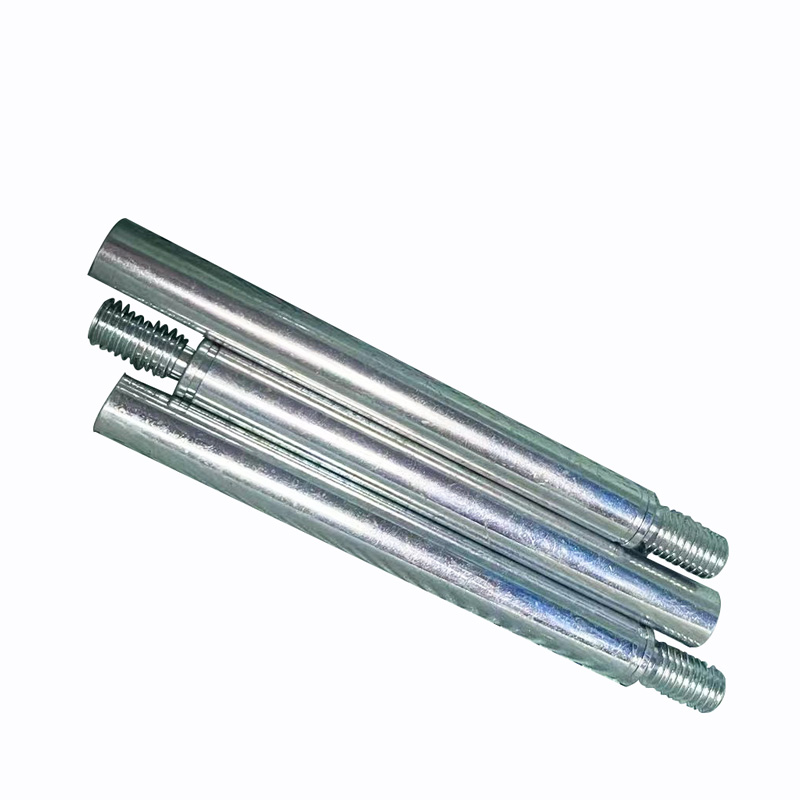
Heat Treatment Process and Hardness Range
416 Stainless Steel Dowel Pins are martensitic stainless steels containing sulfur for enhanced machinability. Through controlled heat treatment—specifically austenitizing followed by quenching and tempering—these pins reach a hardness of 35 to 45 HRC (Rockwell C scale). Under optimal conditions with precise temperature control (austenitizing at 980–1010°C, tempering at 200–370°C), the maximum practical hardness is 45 HRC.
| Heat Treatment Condition | Typical Hardness (HRC) | Applications |
|---|---|---|
| Annealed (as supplied) | 20–25 HRC | General machining |
| Quenched & Tempered (low temper) | 40–45 HRC | High wear resistance |
| Quenched & Tempered (high temper) | 35–38 HRC | Balanced toughness and hardness |
| Sub-zero treated + temper | 45–47 HRC (possible but rare) | Extreme precision guides |
Values above 45 HRC risk reduced ductility and increased brittleness, making 416 Stainless Steel Dowel Pins unsuitable for impact loading above that threshold.
Factors Limiting Maximum Hardness
Several metallurgical factors cap the hardness of 416 Stainless Steel Dowel Pins:
-
Sulfur content – Improves machinability but creates manganese sulfide inclusions that can act as crack initiation sites above 45 HRC.
-
Carbon level – Fixed at 0.15% max in standard 416 chemistry, limiting martensite formation.
-
Section thickness – Pins over 12 mm diameter may not fully harden to the core.
FAQ – Common Questions About 416 Stainless Steel Dowel Pins
What is the difference between maximum hardness and usable hardness for 416 Stainless Steel Dowel Pins?
Maximum hardness (45 HRC) is achievable in laboratory or tightly controlled production settings by Qihong. However, usable hardness for most industrial dowel pin applications is 38–42 HRC. This range provides high resistance to surface indentation and galling while retaining enough toughness to absorb moderate shock loads. Pins hardened to 45 HRC become susceptible to brittle fracture under eccentric loading or impact, especially in diameters under 3 mm. For applications requiring hardness above 45 HRC, consider 440C stainless steel or tool steel alternatives.
How does heat treatment affect the corrosion resistance of 416 Stainless Steel Dowel Pins?
Heat treatment directly alters corrosion performance. In the annealed condition, 416 Stainless Steel Dowel Pins offer moderate corrosion resistance suitable for indoor or dry environments. After hardening to 40–45 HRC, the martensitic structure slightly reduces chromium available for passive film formation, lowering resistance to pitting in chlorides. Tempering above 500°C causes chromium carbide precipitation, severely degrading corrosion resistance. Qihong recommends staying within 200–370°C tempering range to preserve both hardness and acceptable corrosion protection for hydraulic and pneumatic systems.
Can 416 Stainless Steel Dowel Pins be surface hardened beyond 45 HRC using nitriding or other case hardening methods?
Yes, but with limitations. Gas or plasma nitriding of 416 Stainless Steel Dowel Pins can create a compound layer (white layer) with surface hardness of 60–70 HRC equivalent (approx. 700–1000 HV). However, this case depth is typically only 0.05–0.10 mm. Under the thin nitrided case, the core remains at 35–45 HRC. This combination works well for anti-galling and fretting resistance but does not improve through-hardness or load capacity. Qihong offers customized surface treatments for clients needing enhanced surface durability without changing core properties.
Summary Table – Hardness vs. Performance Trade-offs
| Performance Attribute | At 35 HRC | At 45 HRC |
|---|---|---|
| Wear resistance | Moderate | Excellent |
| Impact toughness | High | Low |
| Corrosion resistance | Good | Fair |
| Machinability | Excellent | Poor (post-heat treat) |
| Dimensional stability | High | Moderate (risk of distortion) |
For most precision alignment tasks in automated machinery and aerospace tooling, Qihong produces 416 Stainless Steel Dowel Pins consistently at 40–42 HRC, balancing field reliability with manufacturing repeatability.
Contact Us
Need custom heat treated 416 Stainless Steel Dowel Pins with verified hardness reports? Qihong provides batch traceability, full dimensional inspection, and hardness testing per ASTM A582. Contact our engineering team today for quick quotes and technical support.