

What Is the Difference Between CNC Machining and 3D Printing Services
2026-09-16
Choosing the right manufacturing method can make or break a product launch. Xuxing helps engineers and buyers understand exactly when CNC Machining services outperform 3D printing, and when additive manufacturing makes more sense. Both technologies create precision parts, yet they differ fundamentally in materials, tolerances, cost structures, and production volume. This guide breaks down those differences so you can specify the right process with confidence.
Core Differences at a Glance
| Factor | CNC Machining services | 3D Printing Services |
|---|---|---|
| How it works | Subtractive — material is cut away from a solid block | Additive — material is layered to build a shape |
| Materials | Metals, engineering plastics, composites | Photopolymers, thermoplastics, some metals |
| Tolerance | ±0.005 mm and tighter | ±0.1 mm typical, ±0.05 mm on premium systems |
| Surface finish | Excellent, machined or polished | Layer lines unless post-processed |
| Setup cost | Moderate, offset by volume | Very low, ideal for one-offs |
| Best volume | Prototypes to high-volume production | Low volume, complex geometries |
| Lead time | 2–10 days depending on complexity | 1–5 days for most parts |
Precision and Mechanical Performance
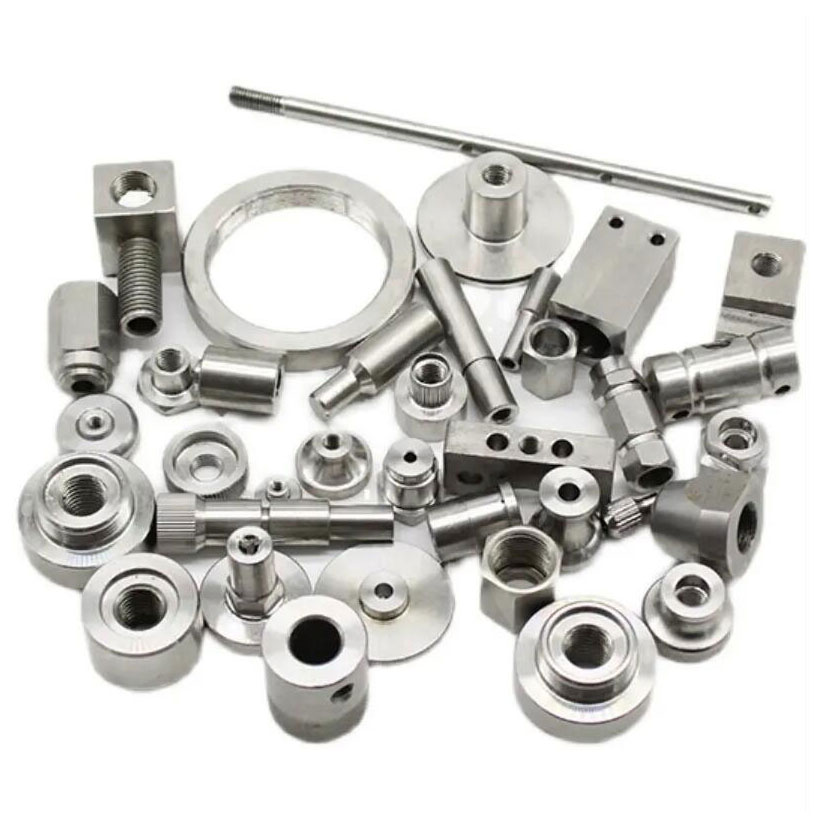
CNC Machining services produce parts with superior dimensional accuracy and structural integrity. Because the workpiece is solid, there is no layer adhesion weakness, no porosity, and no directional strength loss. Industries such as aerospace, medical, and automotive rely on CNC Machining services for mission-critical components where failure is not an option.
3D printing excels at organic shapes, internal channels, and lightweight lattices that subtractive methods cannot easily reproduce. However, printed parts generally show lower fatigue resistance and require post-processing to match machined surface quality.
Cost and Volume Economics
-
Prototyping: 3D printing usually wins on speed and upfront cost.
-
Bridge production: CNC Machining services deliver better strength without tooling investment.
-
Mass production: CNC Machining services scale efficiently, especially with multi-axis automation.
-
One-off custom fixtures: Both are viable, but machining offers longer service life.
Material Selection Comparison
| Material Class | CNC Machining services | 3D Printing Services |
|---|---|---|
| Aluminum alloys | Excellent | Limited |
| Stainless steel | Excellent | Expensive |
| Titanium | Excellent | Specialized only |
| ABS / PLA | Good | Excellent |
| PEEK / PTFE | Good | Limited |
| Carbon fiber composite | Excellent | Continuous fiber only |
When to Choose Each Process
Select CNC Machining services when you need tight tolerances, metal parts, high strength, or repeatable production. Choose 3D printing when geometry is highly complex, volume is low, or speed to first article matters most. Many teams, including those working with Xuxing, use both: print for early form checks, then machine for functional validation and end-use parts.
FAQ: CNC Machining Services
Q: What tolerances can CNC Machining services typically hold?
A: Standard CNC Machining services hold ±0.01 mm, while precision shops routinely achieve ±0.005 mm or tighter on critical features, depending on material and geometry.
Q: Are CNC Machining services more expensive than 3D printing?
A: For a single prototype, yes. However, CNC Machining services become more cost-effective as volume rises because setup costs are amortized and cycle times drop.
Q: How fast can CNC Machining services deliver production parts?
A: Most CNC Machining services providers quote 2–10 days for prototypes and 1–3 weeks for production runs, depending on complexity and finishing requirements.
Final Thoughts and Contact
Understanding these differences prevents costly redesigns and delays. Whether you need tight-tolerance metal components or rapid plastic prototypes, Xuxing delivers reliable CNC Machining services backed by engineering support and strict quality control. Contact us today to request a quote, upload your CAD files, and get expert feedback within 24 hours.