

What Is the Correct Way to Lubricate and Clean a Thread Plug Gauge (LG) Without Damaging It
2026-07-10
Precision measurement tools are the backbone of quality control in manufacturing, and among them, the Thread Plug Gauge (LG) holds a critical position. Used to verify internal thread dimensions, this instrument demands meticulous care. Improper cleaning or lubrication is one of the fastest ways to alter its certified dimensions, leading to false passes or rejects. At NERES, we have spent decades studying gauge wear patterns, and we consistently find that correct maintenance extends the service life of a Thread Plug Gauge (LG) by up to 300% while preserving its calibration integrity. This guide outlines the only professionally accepted methods for cleaning and lubricating these gauges without compromising their geometry.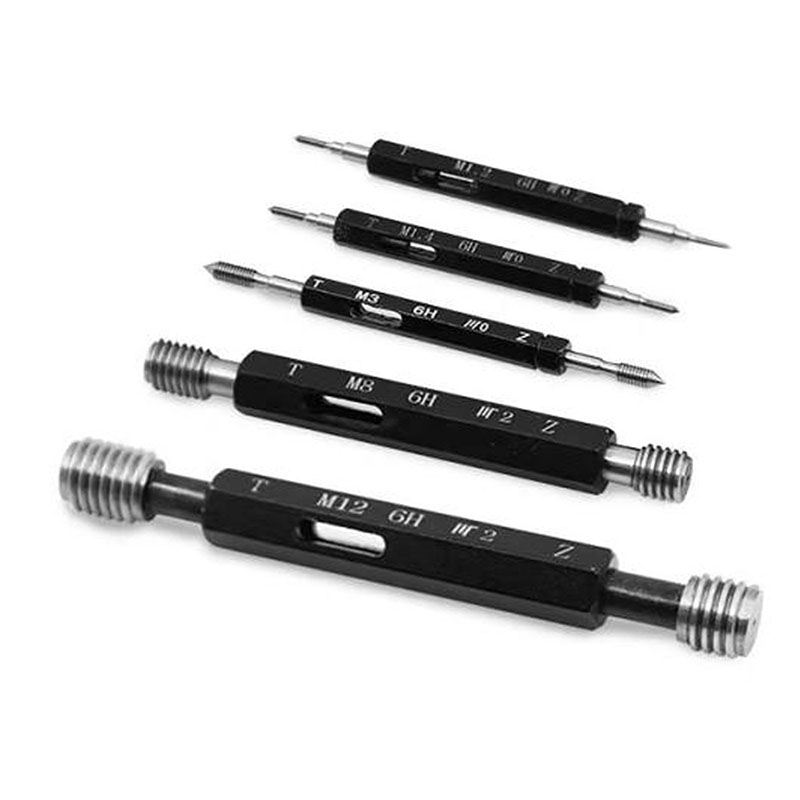
The Core Principle: Why Standard Shop Practices Fail
Most workshop workers treat a Thread Plug Gauge (LG) like any other metal tool—using compressed air, general-purpose oils, or abrasive cloths. These practices are destructive. Compressed air can drive fine metallic particles into the thread flanks, acting as lapping compound. General oils leave viscous residues that accumulate grit. The correct approach rests on three pillars: non-abrasive debris removal, evaporative cleaning, and micro-film lubrication.
Step-by-Step Cleaning Procedure (Approved by NERES Metrology Lab)
| Step | Action | Critical Detail | Prohibited Actions |
|---|---|---|---|
| 1 | Pre-Cleaning | Wipe with lint-free paper soaked in isopropyl alcohol (99%) to dissolve cutting fluids. | Do not use acetone—it can attack the gauge's surface finish. |
| 2 | Debris Dislodging | Use a soft nylon bristle brush (0.05–0.10 mm filament) along the thread helix, never across. | Never use wire brushes or steel wool. |
| 3 | Final Rinse | Immerse in clean mineral spirits for 2 minutes, then agitate gently. | Do not leave submerged over 5 minutes. |
| 4 | Drying | Blow with filtered, moisture-free nitrogen at ≤ 2 bar, holding the gauge at a 45° angle. | Do not use shop air—it contains water and oil aerosols. |
| 5 | Visual Inspection | Examine under 10× magnification for any embedded particles or scratches. | Do not skip this step before lubrication. |
The Correct Lubrication Method for a Thread Plug Gauge (LG)
Lubrication is not about reducing friction during use—it is about preventing galvanic corrosion and minimizing adhesive wear between the gauge and the workpiece. The NERES standard specifies a dry-film lubricant (e.g., micronized PTFE spray) rather than wet oils. Here is the professional protocol:
-
Apply a single, uniform mist of dry-film lubricant to the entire threaded section from a distance of 200 mm.
-
Wait 60 seconds for the carrier solvent to flash off, leaving a translucent layer of 2–5 µm thickness.
-
Buff gently with a clean, dry chamois leather—never with paper towels, which can scratch.
-
Verify that no pooled lubricant remains in the thread roots using a magnifying glass.
This method ensures that every Thread Plug Gauge (LG) from NERES retains its certified pitch diameter within ±0.002 mm after maintenance.
Why Over-Lubrication Is More Dangerous Than No Lubrication
Excess oil attracts dust and creates a hydroplaning effect during gauging, giving false "go" readings. In a controlled test by NERES, an over-lubricated Thread Plug Gauge (LG) produced 12% false-accept errors on borderline parts. The correct quantity is so minimal that it leaves no visible wet film—only a slight change in surface luster.
Thread Plug Gauge (LG) FAQ – Expert Answers from NERES
Q1: Can I use WD-40 or household penetrating oils to lubricate my Thread Plug Gauge (LG)?
A1: Absolutely not. WD-40 is a solvent-based water-displacing formula, not a precision lubricant. It evaporates unevenly, leaving a sticky varnish that traps abrasive particles. Over time, this residue builds up in the thread roots, effectively increasing the gauge's pitch diameter and causing false rejects. For a Thread Plug Gauge (LG), only use certified instrument-grade dry-film lubricants with a documented coefficient of friction ≤ 0.08. NERES recommends sprays that meet MIL-PRF-46010 specifications, as they leave no measurable thickness variation.
Q2: How often should I clean my Thread Plug Gauge (LG) during a high-production shift?
A2: The cleaning frequency depends on the workpiece material and cutting fluid type. For ferrous materials with oil-based coolants, clean the Thread Plug Gauge (LG) after every 50–70 insertions. For aluminum or brass (dry machining), you can extend to 100 insertions. However, the golden rule from NERES is: clean whenever you see any dark residue on the gauge's flanks under normal lighting. Do not wait for a sticky feel—that indicates already-embedded debris. Always log each cleaning event with the gauge serial number to track wear trends.
Q3: What is the safest way to remove a stubborn particle stuck between two threads of my Thread Plug Gauge (LG)?
A3: Never use a metal pick or a razor blade—these will instantly create burrs that alter the gauge's functional size. The NERES-approved method uses a soft brass shim (0.05 mm thickness) cut to a fine point. Gently slide the shim along the thread flank in the direction of the helix to lift the particle. Follow immediately with an alcohol rinse and a re-inspection under magnification. If the particle does not dislodge with light pressure, send the Thread Plug Gauge (LG) to a certified calibration lab for ultrasonic cleaning—do not force it.
Maintenance Schedule Summary (NERES Recommended)
| Usage Level | Cleaning Interval | Lubrication Interval | Calibration Check |
|---|---|---|---|
| Low (< 50 uses/day) | Every 2 days | Weekly | Every 12 months |
| Medium (50–200 uses/day) | Every shift (8 hours) | Every 3 shifts | Every 6 months |
| High (> 200 uses/day) | Every 50 insertions | Daily (end of shift) | Every 3 months |
Final Professional Verdict
A Thread Plug Gauge (LG) is not a consumable—it is a reference standard. Its longevity and reliability are direct functions of the care it receives. The correct cleaning and lubrication routine is non-negotiable: use only evaporative solvents, dry-film lubricants, and soft nylon or brass tools. NERES gauges are manufactured with high-speed steel and carbide options, each with a specific surface hardness (HRC 60–65). Applying the wrong maintenance protocol can void the manufacturer's warranty and, more critically, compromise your entire quality system.
Contact us at NERES today to request our free maintenance wall chart or to schedule a professional audit of your gauge management practices. Our metrology engineers are available for on-site training and calibration support. Reach out via our website or call your regional NERES representative—we are ready to help you protect every Thread Plug Gauge (LG) in your inventory and ensure that your inspection data remains trustworthy, shift after shift.