

What Forming Techniques Are Used to Produce Octagonal Steel?
2026-10-08
A steel fabricator receives a shipment of Octagonal Steel for a batch of drill collars. The drawing specifies an across-flats tolerance of ±0.10 mm and a surface roughness of Ra 3.2. The incoming inspection reveals that the across-flats dimension varies by 0.35 mm, and the surface has visible scale. The material cannot be used without additional machining. The supplier had produced the Octagonal Steel by hot rolling, which does not hold tight tolerances or provide a clean surface. The fabricator needed cold-drawn or machined Octagonal Steel. This scenario is common because the forming technique determines the dimensional accuracy, surface finish, and mechanical properties of the final product. This guide explains the three main forming techniques and their suitability for different applications.
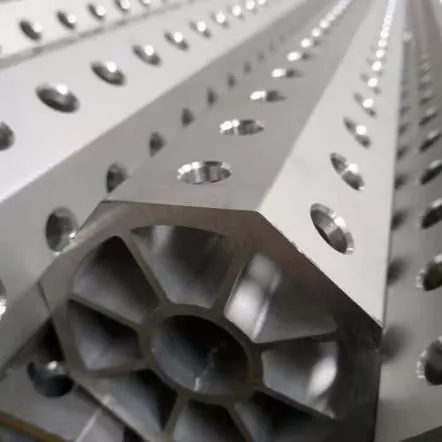
1. How Does Hot Rolling Produce Octagonal Steel?
Hot rolling is the most common method for producing Octagonal Steel in large quantities. A billet is heated to 1,100°C to 1,250°C, which makes the steel plastic and easy to deform. The billet is passed through a series of rolls that gradually shape it into an octagonal cross-section. The rolls are grooved with the octagonal profile. The hot rolling process is fast and economical for large volumes. However, the dimensional tolerance is wide because the steel shrinks as it cools, and the rolls wear over time. The surface finish is rough because of the oxide scale that forms at high temperature. The table below shows the typical specifications for hot-rolled Octagonal Steel.
| Parameter | Hot-rolled Octagonal Steel |
| Across-flats tolerance | ±0.30 – 0.50 mm |
| Surface finish (Ra) | 6.3 – 12.5 µm |
| Straightness | 1.5 – 3.0 mm per meter |
| Surface condition | Oxide scale, may require pickling |
| Typical size range | 20 – 200 mm across flats |
| Minimum order quantity | 5 – 10 tons |
In our factory, we produce hot-rolled Octagonal Steel for applications where the tolerance is not critical, such as fence posts, structural bracing, and general fabrication. The material is supplied in black or pickled condition. Tianjin Shunchen Hongye Enterprise Management Co., Ltd. has been producing hot-rolled Octagonal Steel for over 15 years.
2. How Does Cold Drawing Improve Dimensional Accuracy?
Cold drawing is a process that improves the dimensional accuracy and surface finish of Octagonal Steel. The starting material is a hot-rolled octagonal bar that has been pickled and lubricated. The bar is pulled through a carbide or diamond die that has the exact octagonal profile. The die reduces the cross-section by 5 to 15 percent, which cold-works the steel and increases its yield strength. The cold drawing process produces a smooth surface finish and holds tight tolerances. The table below compares cold-drawn Octagonal Steel with hot-rolled.
| Parameter | Hot-rolled | Cold-drawn |
| Across-flats tolerance | ±0.30 – 0.50 mm | ±0.05 – 0.10 mm |
| Surface finish (Ra) | 6.3 – 12.5 µm | 0.8 – 1.6 µm |
| Straightness | 1.5 – 3.0 mm per meter | 0.5 – 1.0 mm per meter |
| Yield strength increase | Baseline | +10 – 20% |
| Typical size range | 20 – 200 mm | 10 – 80 mm |
| Minimum order quantity | 5 – 10 tons | 1 – 3 tons |
Cold-drawn Octagonal Steel is used for applications that require precise dimensions and a smooth surface, such as hydraulic cylinders, pneumatic components, and precision shafts. The cold working also improves the machinability of the steel. In our factory, we produce cold-drawn Octagonal Steel in sizes from 10 mm to 80 mm across flats. We also offer a ground and polished version for applications that require an even finer surface finish.
3. When Is Machining Used to Produce Octagonal Steel?
Machining is used when the required quantity is small or when the octagonal profile is not a standard size. The starting material is a round bar or a square bar. The bar is mounted in a CNC milling machine or a planer, and the octagonal flats are cut one by one. Machining is slow and expensive compared to hot rolling or cold drawing. However, it offers the highest dimensional accuracy and the most flexibility in terms of size and material. The table below compares the three forming techniques.
| Parameter | Hot rolling | Cold drawing | Machining |
| Across-flats tolerance | ±0.30 – 0.50 mm | ±0.05 – 0.10 mm | ±0.02 – 0.05 mm |
| Surface finish (Ra) | 6.3 – 12.5 µm | 0.8 – 1.6 µm | 0.4 – 0.8 µm |
| Production speed | High | Medium | Low |
| Cost per piece | Low | Medium | High |
| Minimum order quantity | 5 – 10 tons | 1 – 3 tons | 1 – 100 pieces |
| Material flexibility | Carbon steel, alloy steel | Carbon steel, alloy steel, stainless | Any machinable material |
Machining is the preferred method for producing Octagonal Steel for prototypes, small batch production, and non-standard sizes. In our factory, we have CNC machining centers that can produce Octagonal Steel from round or square bar in sizes from 5 mm to 300 mm across flats. We also offer a combination process where a hot-rolled or cold-drawn octagon is machined on the ends or on the flats to achieve a specific fit.
4. How Should a Fabricator Choose the Right Forming Technique?
The choice of forming technique depends on three factors: the required tolerance, the surface finish, and the production quantity. If the tolerance is ±0.30 mm or wider and the quantity is large, hot rolling is the most economical choice. If the tolerance is ±0.10 mm or tighter and the quantity is medium, cold drawing is the best choice. If the tolerance is ±0.05 mm or tighter or the quantity is small, machining is the best choice. The table below provides a selection guide.
| Application | Recommended forming technique | Typical tolerance | Surface finish |
| Fence posts, structural bracing | Hot rolling | ±0.30 – 0.50 mm | Ra 6.3 – 12.5 |
| Hydraulic cylinders, pneumatic rods | Cold drawing | ±0.05 – 0.10 mm | Ra 0.8 – 1.6 |
| Precision shafts, prototypes | Machining | ±0.02 – 0.05 mm | Ra 0.4 – 0.8 |
| Drill collars, tool holders | Cold drawing + machining | ±0.02 – 0.05 mm | Ra 0.4 – 0.8 |
| Decorative profiles | Hot rolling + pickling | ±0.20 – 0.30 mm | Ra 3.2 – 6.3 |
Incoming inspection tip: When receiving Octagonal Steel, measure the across-flats dimension at three points along the length and at three angles. Check the straightness by placing the bar on a flat surface and measuring the gap. Check the surface for scale, cracks, and seams. If the material does not meet the specification, contact the supplier before processing. Tianjin Shunchen Hongye Enterprise Management Co., Ltd. provides a dimensional inspection report with every shipment.
Frequently Asked Questions About Octagonal Steel Forming Techniques
Summary for Steel Fabricators
The forming technique determines the dimensional accuracy, surface finish, mechanical properties, and cost of Octagonal Steel. Hot rolling is the most economical for large quantities and loose tolerances. Cold drawing provides tight tolerances and a smooth surface for medium quantities. Machining offers the highest precision and flexibility for small quantities and non-standard sizes. By understanding the capabilities and limitations of each technique, fabricators can specify the right material for their application and avoid the cost of rework or rejection. Tianjin Shunchen Hongye Enterprise Management Co., Ltd. has been producing Octagonal Steel for over 15 years and provides full technical support for our customers.
Tianjin Shunchen Hongye Enterprise Management Co., Ltd. manufactures hot-rolled, cold-drawn, and machined Octagonal Steel in a range of sizes and materials. We provide dimensional inspection reports and material certificates for all of our products.