

What Factors Affect the Oxidation Resistance of High Temperature Alloy Coils in Service
2026-04-16
When selecting materials for extreme thermal environments, engineers consistently prioritize the oxidation resistance of High Temperature Alloy Coil products. At Huali, we understand that the service life and reliability of these coils depend on multiple interrelated factors. This article examines those critical factors and answers the most common questions about High Temperature Alloy Coil performance.
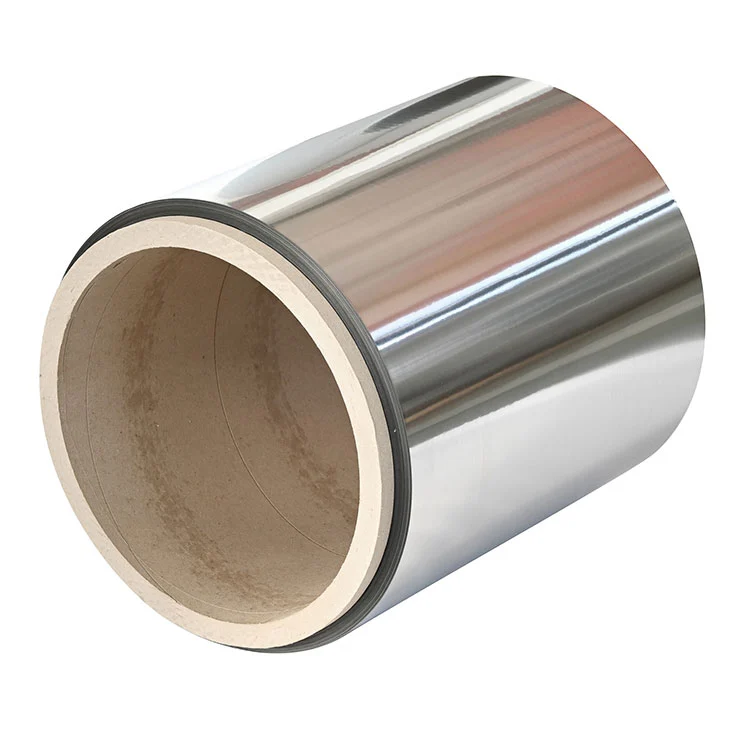
Key Factors Influencing Oxidation Resistance
| Factor | Effect on Oxidation Resistance | Practical Implication |
|---|---|---|
| Alloy Composition | Chromium and aluminum form protective oxide scales (Cr₂O₃, Al₂O₃) | Higher Cr/Al content improves resistance up to 1100°C |
| Operating Temperature | Accelerated diffusion and scale cracking above 800°C | Each alloy has a maximum continuous service temperature |
| Thermal Cycling | Repeated expansion/contraction causes scale spallation | Graded heating/cooling cycles extend coil life |
| Environmental Atmosphere | Sulfur, chlorine, or low oxygen partial pressure disrupts oxide layers | Filtration and atmosphere control are essential |
| Surface Finish | Smoother surfaces promote uniform scale adhesion | Precision rolling and cleaning reduce initiation sites |
How Huali Optimizes Oxidation Resistance
Huali employs controlled atmosphere annealing and precision surface treatment to enhance the natural protective layers of every High Temperature Alloy Coil. By strictly managing composition tolerances and surface quality, Huali ensures that coils resist pitting, scaling, and subsurface degradation even after thousands of thermal cycles.
Frequently Asked Questions about High Temperature Alloy Coil
Question 1: What is the first sign of oxidation failure in a High Temperature Alloy Coil during service?
Answer: The earliest visible sign is discoloration followed by fine surface cracking or localized dark scaling, typically starting at grain boundaries or mechanical damage points. As oxidation progresses, the coil develops a flaky, non-adherent oxide layer that spalls off easily. This exposes fresh metal to further attack, accelerating material loss. Regular visual inspection and weight gain measurements (due to oxygen uptake) help detect oxidation before structural integrity is compromised. In critical applications like gas turbines, a 0.5% weight increase often triggers detailed metallurgical analysis.
Question 2: Can applying protective coatings eliminate the need for oxidation-resistant base alloys in High Temperature Alloy Coils?
Answer: No. While coatings such as aluminides or MCrAlY overlays provide a sacrificial barrier, they cannot compensate for poor base alloy performance. Coatings inevitably develop pinholes or cracks during thermal cycling, and once breached, the underlying alloy must resist rapid oxidation. Furthermore, coating diffusion zones can embrittle the coil if the base alloy lacks proper chromium equivalent. The most reliable solution combines a proven oxidation-resistant substrate from Huali with an optional diffusion coating for extreme environments above 1000°C.
Question 3: How does previous thermal history affect the remaining oxidation life of a High Temperature Alloy Coil?
Answer: Prior exposure to high temperatures permanently alters the alloy microstructure. Each heating cycle consumes some of the chromium or aluminum reservoir needed to form protective scales. For example, a coil run for 500 hours at 900°C may have depleted its near-surface chromium from 20% to 12%, drastically reducing future resistance. Additionally, prior thermal stresses induce microcracks that act as oxidation highways. Huali recommends recording time-temperature profiles and using life consumption models to predict remaining service intervals. Rejuvenation heat treatments can partially restore oxidation resistance but never fully reset the material to original condition.
Best Practices for Extending Service Life
| Practice | Benefit |
|---|---|
| Avoid rapid temperature changes | Prevents scale spallation |
| Control fuel/air impurities | Reduces corrosive compounds (Na, S, V) |
| Use continuous monitoring | Enables predictive maintenance |
When oxidation limits are approached, replacing the High Temperature Alloy Coil with a fresh Huali coil restores system reliability and efficiency.
Contact Us
Need a High Temperature Alloy Coil engineered for superior oxidation resistance in your specific process environment? Huali provides custom alloy formulations, full traceability, and technical support from selection through commissioning. Contact our engineering team today to discuss your operating conditions and receive a tailored recommendation.