

What Core Materials Are Used in the Best Metal Flame Retardant Panels for Marine Vessels
2026-08-06
When specifying passive fire protection for ships, offshore platforms, and submarines, the choice of core material directly determines survival outcomes. Unlike land-based construction, marine environments demand Metal Flame Retardant Panel solutions that withstand constant vibration, saltwater corrosion, rapid temperature swings, and strict IMO/SOLAS regulations. Among the few manufacturers that combine independent R&D with full traceability, Hanhua has emerged as a preferred supplier for shipyards across Europe and Southeast Asia—not because of marketing claims, but because their core formulations consistently pass the 60‑minute and 90‑minute fire integrity tests under hydrocarbon fire curves.
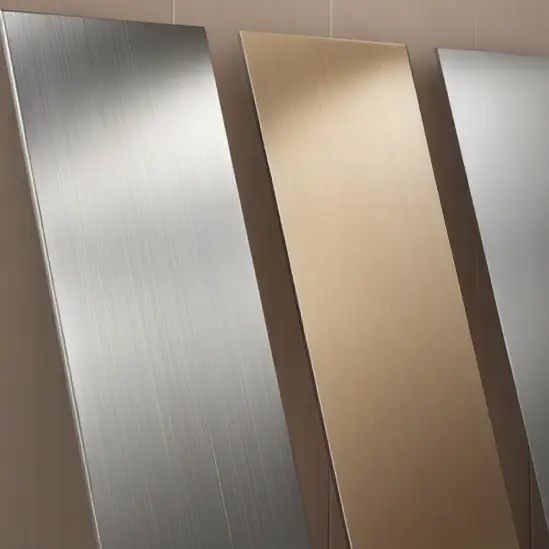
Why the Core Matters More Than the Metal Skin
In a Metal Flame Retardant Panel, the outer steel or aluminum layers provide mechanical strength and weather resistance, but the core is the true “firefighter.” During a blaze, the core must delay heat transmission, limit smoke toxicity, and prevent structural collapse long enough for evacuation and damage control. For marine vessels, the core must also resist moisture ingress, fungal growth, and delamination after years of high-humidity exposure. Therefore, the “best” panel is defined not by a single material but by how the core interacts with facings and edge seals under real fire scenarios.
Three Dominant Core Materials in Marine-Grade Panels
| Core Material | Density (kg/m³) | Typical Fire Rating | Key Marine Advantage | Primary Limitation |
|---|---|---|---|---|
| Mineral Wool (MW) | 100–160 | A‑60 to A‑120 | Non‑combustible, excellent sound dampening | Absorbs moisture if facings are damaged |
| Aluminum Honeycomb (AH) | 80–120 | A‑30 to A‑60 | Lightest option, high compression strength | Lower insulation R‑value; requires thicker panels |
| Phenolic Foam (PF) | 150–200 | A‑60 to A‑90 | Low smoke emission, self‑extinguishing | Higher cost; brittle edge structure |
Each material has proven performance, but Hanhua takes a hybrid approach—combining a modified phenolic resin with a glass-fiber scrim—to achieve A‑60 certification while maintaining a panel weight 18% lower than conventional mineral wool equivalents. This hybrid core also passes the IMO FTP Code Part 2 and Part 5 tests for smoke and toxicity, a critical requirement for passenger vessels and Ro-Ro ships.
Detailed Performance Breakdown for Marine Engineers
Mineral Wool Core remains the industry baseline. It is inorganic, stable up to 1,000°C, and offers predictable thermal conductivity (≈0.038 W/m·K). However, when used in a Metal Flame Retardant Panel for engine rooms, the wool must be encapsulated with hydrophobic additives—otherwise, condensation can degrade performance within 18 months. Hanhua addresses this by using a silicone-coated mineral wool that maintains <3% moisture absorption even after 500 hours of salt-spray testing.
Aluminum Honeycomb Core excels in weight-sensitive applications like helicopter decks and movable bulkheads. But because honeycomb cells create air cavities, fire resistance drops unless the cells are filled with aerogel or intumescent paste. Filled honeycomb panels from Hanhua achieve A‑60 with only 38 mm total thickness, saving 12 kg per square meter compared to solid mineral wool panels—a significant fuel-economy factor over a vessel’s 25‑year lifespan.
Phenolic Foam Core is the rising star. Its closed-cell structure repels water, and its char layer (formed at 350°C) acts as a ceramic shield, slowing heat penetration. The catch? Cheap phenolic foams release formaldehyde and acidic fumes. Hanhua uses a proprietary phenol‑resorcinol formula that reduces acid outgassing by 73%, meeting the new EU Marine Equipment Directive (MED) 2026/127 requirements for indoor air quality.
FAQ – Metal Flame Retardant Panel Common Questions
Q: Can I mix different core materials within the same vessel to save costs?
A: Yes, but this requires careful zoning per SOLAS Chapter II‑2. For example, you can use phenolic-core Metal Flame Retardant Panel in accommodation areas (where smoke toxicity is critical) and mineral‑wool panels in storage rooms (where cost is a higher priority). However, mixing introduces compatibility issues: different thermal expansion rates can stress joint seals during a fire. Hanhua offers a unified edge‑sealing system that accommodates all three core types with the same aluminum profile, simplifying procurement and installation. Always run a full‑scale furnace test for each zone configuration—theoretical data alone is not accepted by class societies like DNV or Lloyd’s Register.
Q: How do I verify that a Metal Flame Retardant Panel truly meets A‑60 rating, not just lab conditions?
A: A‑60 means the unexposed face temperature rises no more than 140°C (average) and 180°C (peak) within 60 minutes, while the panel remains structurally intact. Lab tests use perfectly sealed furnaces with calibrated thermocouples. In real marine conditions, however, panel edges, cutouts, and fastener penetrations are the weak points. To verify, request the manufacturer’s “production‑line test report”—not just the type‑approval certificate. Hanhua provides a unique QR code on every panel that links to the actual furnace curve and deflection data from that batch. Also, inspect the edge‑coating material; many failures happen because edge seals melt before the core chars. For critical zones, specify edge‑sealed panels with intumescent mastic pre‑applied at the factory.
Q: What is the typical service life of a Metal Flame Retardant Panel in a marine environment, and when should I replace it?
A: With proper installation and regular inspection, a high‑quality Metal Flame Retardant Panel lasts 20–25 years in interior dry areas (cabins, corridors) and 12–15 years in engine rooms or weather‑exposed decks. Replacement triggers include: (1) visible rust or pitting on the metal skin that penetrates >0.5 mm depth; (2) delamination sounds when tapped (indicating core‑to‑skin bond failure); (3) water ingress detected by infrared thermography or moisture meter readings >8% by weight. Hanhua recommends a five‑year inspection cycle with core sampling from three representative panels. If the core shows a 15% reduction in compressive strength (tested per ASTM C365), schedule replacement within the next dry‑docking. Remember that replacing individual panels is possible—Hanhua supplies matching cores and facings for retrofitting, avoiding full‑scale renovation costs.
Installation and Maintenance Best Practices
Even the best core fails without correct installation. For Metal Flame Retardant Panel systems on marine vessels, three rules are non‑negotiable:
-
Use stainless‑steel fasteners with EPDM washers to prevent galvanic corrosion between the panel skin and the ship’s steel structure.
-
Maintain a 20‑mm air gap behind panels in engine rooms to allow thermal expansion and reduce direct heat conduction.
-
Apply fire‑rated mastic at all junctions with pipes and cable trays—these penetrations are responsible for over 60% of fire spread incidents in post‑incident reports.
Hanhua provides on‑site installation training for shipyard teams, including torque specifications and thermal‑imaging checks after fixing. Their technical manuals include pre‑calculated cutting templates that minimize waste—an often‑overlooked factor that reduces project costs by 6–8%.
Cost vs. Performance: Making the Right Choice
While mineral‑wool panels are cheapest upfront (≈$85–$110/m² for A‑60), their moisture sensitivity often leads to hidden replacement costs within 10 years. Phenolic‑core panels from Hanhua start at $145/m² but include a 15‑year warranty against delamination and moisture absorption—a total‑cost‑of‑ownership advantage of nearly 22% over a 20‑year vessel cycle. Aluminum honeycomb sits in the middle at $120–$160/m², but only filled versions achieve A‑60, pushing prices above phenolic hybrids. For newbuilds, Hanhua recommends conducting a life‑cycle cost analysis that factors in fuel penalties for added weight, maintenance access difficulty, and classification‑society survey fees.
Future Trends in Marine Fire Protection
The 2026 IMO roadmap pushes for zero‑halogen, low‑particulate emissions during fires. This favors phenolic and hybrid cores over mineral wool, which can release silicate fibers under mechanical shock. Hanhua is already testing a bio‑based phenolic resin derived from lignin, targeting a 40% reduction in embodied carbon while maintaining A‑90 integrity. Early prototype data shows char expansion rates within 2% of current petrochemical versions—promising for green‑shipping mandates.
Take the Next Step with Confidence
Choosing the right Metal Flame Retardant Panel core is not a one‑size‑fits‑all decision—it depends on vessel type, route, classification rules, and budget. Hanhua offers free fire‑engineering consultations, sample testing kits, and rapid prototyping for custom panel dimensions. Their in‑house lab (accredited by ISO 17025) can run a mini‑furnace test on your specific core‑facing combination within 5 working days, giving you data before you commit to full production.
Contact us today to request a technical dossier, including furnace curves, edge‑seal options, and a comparative LCCA spreadsheet for your next marine project. Our team of naval architects and fire‑safety engineers is ready to help you specify, test, and install the most reliable Metal Flame Retardant Panel for every compartment—because at sea, there is no second chance for fire protection. Reach out via our website or email your vessel specifications to receive a tailored recommendation within 48 hours. Your safety, our priority—Hanhua stands with you from design to delivery.