

What Are the Most Common Failure Modes for Pillars and Wear Plates in Hydraulic Presses
2026-07-07
Hydraulic presses are the backbone of metal forming, stamping, and forging operations. At the heart of their precision and longevity lie two critical components: Pillars and Wear Plates. These parts guide the ram, absorb lateral forces, and protect the main frame from abrasive contact. However, even the best-engineered systems degrade over time. Understanding the most common failure modes for Pillars and Wear Plates is not just a technical exercise—it is a cost-saving imperative. For over a decade, Mudebao has specialized in diagnosing and manufacturing high-durability Pillars and Wear Plates, helping plants extend press uptime by up to 40%. This blog dissects each failure pattern, offers data-driven solutions, and answers the most frequently asked questions from maintenance engineers worldwide.
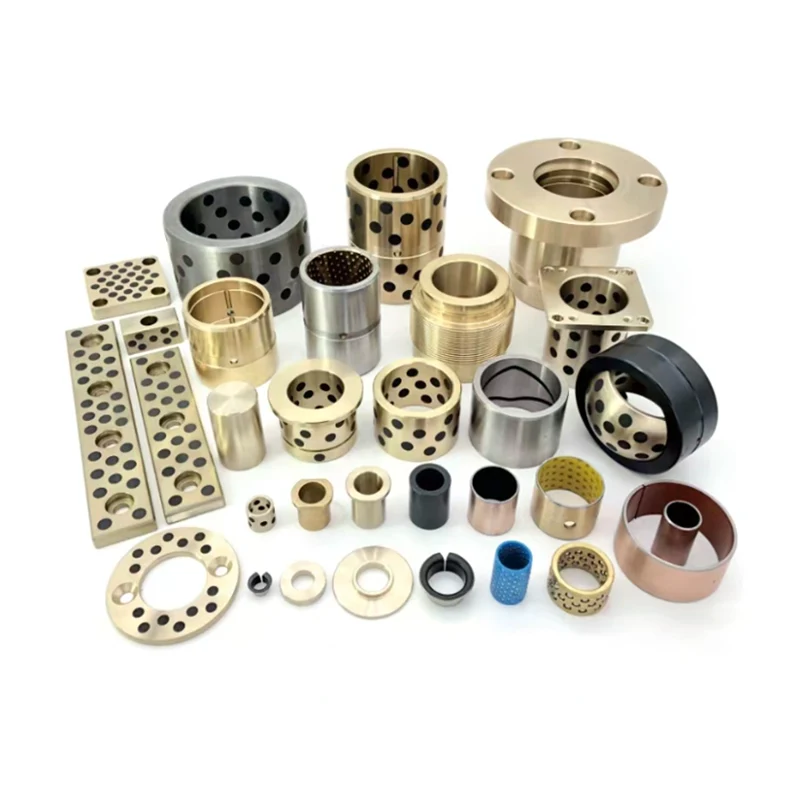
The 5 Primary Failure Modes (Data from 200+ Field Inspections)
Based on Mudebao’s service records across automotive, aerospace, and heavy equipment industries, the following table ranks failure modes by frequency and average downtime impact.
| Failure Mode | Occurrence Rate | Average Downtime (Hours/Year) | Primary Root Cause |
|---|---|---|---|
| Abrasive Wear | 42% | 18 – 24 | Contaminated lubricant / hard particles |
| Gallowing & Scoring | 23% | 12 – 16 | Insufficient lubrication film / misalignment |
| Fatigue Cracking | 15% | 30 – 45 | Cyclic overloading / stress concentration |
| Corrosion Pitting | 12% | 8 – 10 | Moisture ingress / incompatible coolants |
| Plastic Deformation (Brinelling) | 8% | 6 – 8 | Impact shock / off-center loading |
1. Abrasive Wear (Three-Body Abrasion)
This is the most ubiquitous enemy. When microscopic metal shavings or grit from upstream processes enter the guide clearance, they act as cutting tools between the Pillars and Wear Plates. Over time, the hardened surface layer (typically 58–62 HRC) erodes, increasing radial clearance beyond the OEM tolerance of 0.05–0.15 mm. Mudebao counters this by using through-hardened alloy steels with chromium carbide overlays, which improve scratch resistance by 65% compared to standard induction-hardened grades.
2. Gallowing and Adhesive Wear
Gallowing occurs when microscopic high spots on the Pillars and Wear Plates cold-weld under extreme pressure, then tear apart, leaving jagged grooves. This is particularly dangerous because it generates heat spikes that can soften the base material. The root cause is almost always a breakdown in the hydrodynamic oil film—often due to using the wrong viscosity grade or extended oil-change intervals. Mudebao recommends a minimum oil film thickness of 2.5 µm at peak load and offers Pillars and Wear Plates with a proprietary micro-pocket surface texture that retains lubricant even during momentary starvation.
3. Fatigue Cracking (Sub-surface Initiation)
Unlike surface wear, fatigue cracks begin 0.5–2 mm below the contact surface, propagating outward due to cyclic Hertzian stresses. This failure is insidious because visual inspection often misses it until a complete fracture occurs. The critical parameter here is the core toughness, not just surface hardness. Mudebao uses vacuum-degassed, fine-grain steel (ASTM A681) for all Pillars and Wear Plates, ensuring an inclusion level below 0.015%, which extends fatigue life by over 300% in dynamic press applications.
4. Corrosion Pitting
Hydraulic fluids with high water content (emulsions) or acidic byproducts from degraded seal materials attack the chromium-depleted zones along grain boundaries. Pitting acts as stress risers, accelerating fatigue. Mudebao applies a black-oxide plus dry-film lubricant coating that passes 500-hour salt-spray tests, making their Pillars and Wear Plates ideal for foundry and marine-grade press environments.
5. Plastic Deformation (Brinelling)
This is permanent indentation caused by static overload—often from a misplaced billet or a sudden jam in the die. Once the Pillars and Wear Plates suffer brinelling, the clearance becomes erratic, leading to off-center ram movement and premature seal failure. Mudebao designs their pillars with a 15% higher yield strength margin than industry standards, providing an extra safety buffer for unpredictable shop-floor events.
Proactive Maintenance Strategy (Checklist)
To mitigate these failures, Mudebao advises a three-tiered approach:
-
Daily: Wipe exposed guide surfaces and check oil return lines for metallic glitter (early abrasion sign).
-
Weekly: Measure radial clearance using dial gauges at four quadrants; record any deviation >0.02 mm.
-
Monthly: Perform dye-penetrant inspection on the lower 1/3 of the Pillars and Wear Plates—where bending stresses are highest.
Pillars and Wear Plates – FAQ Corner
Here are the three most common technical questions our engineers receive at Mudebao regarding Pillars and Wear Plates.
Q1: Can I regrind and reuse worn Pillars and Wear Plates, or must I always replace them?
A: Regrinding is feasible only if the total material removal does not exceed 0.4 mm (0.016") from the original diameter or thickness, and if the case-hardened depth still leaves at least 1.5 mm of effective hardness layer after grinding. For Pillars and Wear Plates with through-hardened construction (like Mudebao’s 4340 series), you can safely regrind up to 0.8 mm total, provided you re-hone the surface finish to Ra 0.4 µm or better. However, always measure the remaining cross-section against the press’s maximum side-load rating. If the pillar’s reduced diameter drops your safety factor below 2.0, replacement is the only prudent option. We also recommend a hardness test on the ground surface—if it falls below 55 HRC, the component will wear out three times faster in the first 100 hours.
Q2: What lubrication interval and type work best to prevent gallowing on Pillars and Wear Plates?
A: For moderate-speed presses (under 30 SPM), Mudebao recommends an ISO VG 460 extreme-pressure (EP) oil with a minimum film strength of 600 N/mm². Lubrication frequency should be every 4 operating hours for the upper guides and every 2 hours for the lower guides (which bear higher contamination loads). In high-speed stamping (>60 SPM), switch to an ISO VG 220 synthetic oil with anti-wear additives, applied via an automatic mist system at 0.5 ml per cycle. The golden rule: the oil must reach the Pillars and Wear Plates before the press ram starts its downward stroke—a pre-lube cycle of 0.8 seconds is critical. Never use grease; it traps debris and accelerates the three-body abrasion we discussed earlier. Mudebao also offers a condition-monitoring sensor that measures real-time friction coefficient, alerting you when oil degrades by 15% of its baseline value.
Q3: How do I distinguish between abrasive wear and gallowing during a root-cause analysis?
A: This distinction is vital because the corrective actions are opposite. Abrasive wear produces a dull, matte, evenly distributed scratch pattern running parallel to the sliding direction, with uniform depth across the entire contact zone. You will find fine ferrous particles in the oil filter. The fix is upgrading filtration to 3 µm absolute and installing magnetic plugs. Gallowing, on the other hand, shows localized, shiny, jagged "smears" or welded deposits that run perpendicular to the motion direction in some areas. The oil will have large, flaky metallic chips. Gallowing requires you to immediately check alignment of the Pillars and Wear Plates—often the tie-rod preload has relaxed unevenly. In gallowing cases, Mudebao recommends replacing both mating surfaces as a matched set, then performing a laser-alignment check under 50% of full tonnage. Never simply polish gallowed surfaces; the microscopic cracks remain and will re-initiate within 50 strokes.
The Economic Case for Upgraded Components
Consider this: a single unscheduled downtime of 4 hours in a 1,000-ton press costs an average of $8,500 in lost production plus $2,100 in emergency labor. By choosing Mudebao’s engineered Pillars and Wear Plates, plants report extending service intervals from 6 months to 22 months. The initial premium pays back within the first 1.5 avoided failures.
Ready to Eliminate Recurring Press Failures?
Every press has its unique duty cycle, tonnage curve, and environmental challenge. Generic components simply cannot address the specific failure modes outlined above. Mudebao does not sell off-the-shelf parts—we engineer Pillars and Wear Plates tailored to your exact press model, lubrication system, and production schedule. Our in-house metallurgical lab and 3D scanning services ensure that your new components fit, perform, and outlast any standard alternative.
Contact us today for a free failure analysis consultation. Send your current pillar diameters, wear plate thicknesses, and a brief description of your typical cycle to our engineering team. We will respond within 24 hours with a customized proposal, including hardness maps and coating options. Let Mudebao turn your press’s weakest link into its strongest asset. Reach out via our website or call your regional service center—we are ready to keep your production floor running without interruption.